
 English
 Español
 русский
ASTM A513 Grade 1010 Precision Gravity Conveyor Roller Tubing – 2 in x 0.065 in
ASTM A513 Grade 1010 Precision Gravity Conveyor Roller Tubing – 2 in x 0.065 in

Content
Most conveyor roller failures trace back to two manufacturing deficiencies: insufficient tube straightness and inadequate wear resistance. When either property falls short of specification, the consequences compound quickly — misaligned rollers accelerate belt wear, uneven load distribution overloads bearings, and surface degradation leads to material spillage and unplanned downtime.
In high-throughput environments such as mining, parcel logistics, and bulk material handling, a single failed roller can halt an entire line. Understanding what causes premature failure — and how tube quality at the manufacturing stage prevents it — is the starting point for smarter procurement decisions.
The two root causes are distinct but related. Straightness is a geometric property determined during tube forming and finishing. Wear resistance is a material and surface property governed by steel grade, wall thickness, and post-processing treatment. Both must be specified and controlled to achieve reliable service life.
A conveyor roller tube that deviates from true straightness introduces eccentricity into the assembled roller. Even a bow of 0.5 mm over a 1,000 mm length generates measurable radial runout at the shell surface, which the belt and loaded material experience as a cyclic impact with every rotation.
The practical consequences cascade through the system. Radial runout causes the belt to track unevenly, increasing edge wear and shortening belt life — a far more expensive consumable than the roller itself. Bearing seats at both ends of the roller receive alternating side loads rather than steady radial loads, leading to accelerated fatigue in races and balls. In high-speed applications above 2 m/s belt velocity, even modest straightness deviations generate vibration that transmits to the frame structure and affects adjacent equipment.
Dynamic balancing compounds the issue further. A tube with acceptable static straightness can still exhibit mass imbalance if wall thickness varies circumferentially — a defect common in lower-grade electric resistance welded (ERW) tubes where the weld seam creates a local density change. Conveyor roller tubes manufactured through cold drawing eliminate this seam-related imbalance and achieve tighter wall thickness uniformity, directly improving dynamic balance without additional correction steps.
Straightness tolerance for conveyor roller tubing is typically expressed as maximum bow per unit length, measured as the gap between the tube and a reference surface when the tube rests on two supports. The table below compares tolerance classes commonly referenced in procurement specifications.
| Standard / Grade | Max Straightness Deviation | Typical Application |
|---|---|---|
| EN 10305-3 (standard) | ≤ 2.0 mm / 1,000 mm | General conveyor rollers, light duty |
| EN 10305-3 (special) | ≤ 0.5 mm / 1,000 mm | High-speed belt conveyors, precision sorting |
| ASTM A513 (standard) | ≤ 3.0 mm / 1,000 mm | Gravity roller conveyors, pallet handling |
| DIN 2394 (precision) | ≤ 1.0 mm / 1,000 mm | Mining bulk handling, heavy-duty applications |
Achieving the tighter tolerance classes requires a dedicated straightening pass after cold drawing, followed by dimensional verification on each tube. Automated rotary straightening equipment, combined with laser-based runout measurement, is the industry benchmark for tubes destined for roller assembly. Simply purchasing to a nominal standard without specifying the tolerance class leaves the actual quality undefined.
The outer surface of a conveyor roller tube wears through two mechanisms: abrasive contact from the belt's inner face and impact loading from material drop points. The relative contribution of each depends on the application, but both are addressed through the combination of base material selection and surface treatment.
Carbon steel grades such as E235 and Grade 1010 are the default choice for general conveyor rollers. They offer tensile strength in the 340–470 MPa range and respond well to surface hardening treatments. For high-impact applications — mining idlers handling ore or coal — higher-strength grades with tensile strength above 500 MPa provide better resistance to denting and surface fatigue. Stainless steel grades, while more expensive, are the correct choice for food processing, pharmaceutical, and chemical environments where corrosion would otherwise accelerate surface degradation and contaminate the product stream.
| Material | Tensile Strength | Best For | Limitation |
|---|---|---|---|
| E235 / Grade 1010 carbon steel | 340–470 MPa | General logistics, warehouse conveyors | Requires surface treatment for outdoor use |
| ST52 / Grade 1020 alloy carbon steel | 500–650 MPa | Mining, bulk handling, heavy impact zones | Higher cost, not required for light-duty use |
| 304 / 316 stainless steel | 515–620 MPa | Food processing, chemical, pharmaceutical | Significantly higher cost per meter |
Surface treatment extends service life by adding a protective layer over the base steel. The three most relevant options for conveyor roller tubes are phosphating, e-coating (electrophoretic coating), and zinc galvanizing. Phosphating creates a micro-porous conversion layer that improves paint adhesion and provides moderate corrosion protection — suitable for indoor, controlled environments. E-coating deposits a uniform polymer layer through electrodeposition, offering better corrosion protection than phosphating alone and excellent coverage on complex geometries. Galvanizing provides the highest corrosion resistance for outdoor or high-humidity applications, with a zinc layer that sacrificially protects the steel even when scratched.
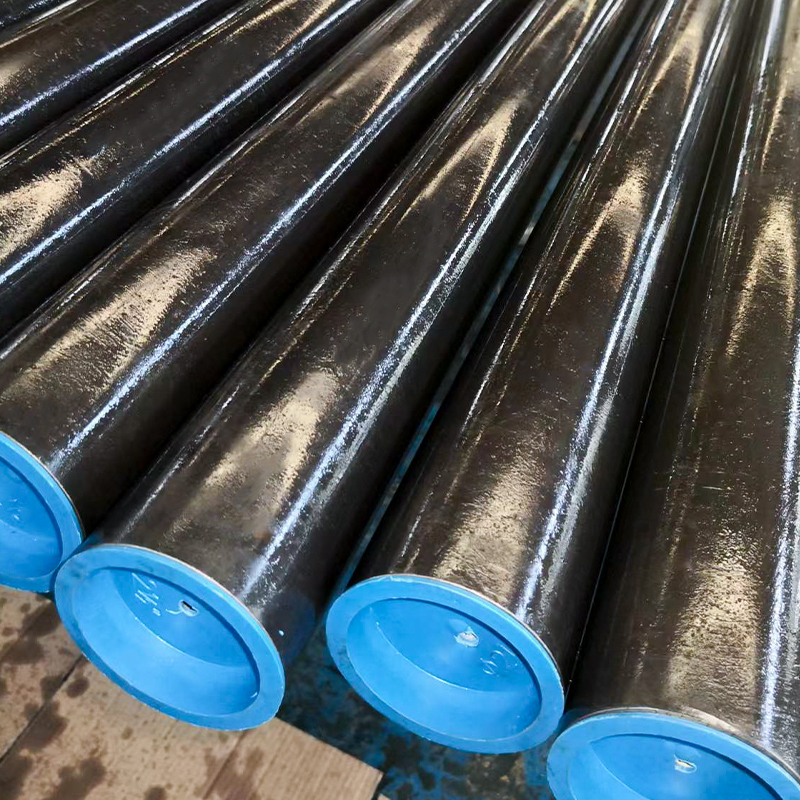
Surface-treated steel pipes combining phosphating, e-coating, and oil protection are available as ready-to-assemble solutions for roller manufacturers who require corrosion resistance without in-house coating capability.
The manufacturing route used to produce a conveyor roller tube has a direct and lasting impact on every quality parameter that matters in service. Two processes dominate the market: electric resistance welding (ERW) and cold drawing. Understanding the structural difference between them explains why specification writers increasingly require cold-drawn tube for precision roller applications.
ERW tubes are formed by rolling steel strip into a cylinder and welding the longitudinal seam with high-frequency current. The process is fast and economical, but it introduces a weld seam with locally different microstructure and residual stress. Wall thickness variation across the seam and away from it is inherent to the process. For general-purpose rollers operating at low speed with light loads, this is acceptable. For rollers where runout, dynamic balance, and consistent wall stiffness matter, the seam becomes a liability.
Cold drawing starts with a tube blank — either seamless or welded — and pulls it through a precision die under high tension. The process compresses the outer surface and refines the grain structure, simultaneously improving dimensional accuracy, surface finish, and mechanical strength through cold work hardening. Outer diameter tolerances of ±0.05 mm and wall thickness tolerances of ±0.1 mm are routinely achievable. The resulting tube has no seam, no differential residual stress zones, and a uniform cross-section that behaves predictably under the dynamic loads of a rotating roller.
For roller manufacturers assembling tubes onto shafts with pressed-in bearing housings, the dimensional consistency of cold-drawn tube also reduces assembly rejection rates. A tube that holds ±0.05 mm on the inner diameter allows interference-fit shaft assemblies to be specified with confidence, rather than requiring secondary machining of each tube end.
A cold-drawn welded steel tube (DOM tube) combines the material economy of a welded blank with the dimensional precision of cold drawing, making it a cost-effective intermediate option for medium-duty roller applications. For the most demanding cases — long rollers, high-speed applications, or installations where maintenance access is difficult — a cold-drawn seamless steel tube eliminates the original weld seam entirely and delivers the highest available uniformity.
Procurement specifications for conveyor roller tubes should reference one of three major international standards, chosen to match the end market and application requirements. Specifying a recognized standard — rather than relying on a supplier's nominal description — creates a clear, auditable basis for incoming inspection and supplier accountability.
Tubes produced to these standards that are also cold-drawn carry the additional benefit of tighter dimensional tolerances than the hot-finished or ERW baseline the standard was originally written around. When ordering, it is worth requesting the manufacturing method (cold-drawn vs. ERW) alongside the standard citation, and specifying the special straightness tolerance class where runout is critical.
Translating the technical principles above into a purchase specification requires addressing five parameters explicitly. Leaving any of them open to supplier interpretation introduces variability that typically resolves against the buyer's interests.
A supplier capable of meeting these specifications will typically offer straightening as a standard production step, in-line dimensional monitoring, and batch-level material traceability through documented heat numbers on the MTC. These capabilities — not price per kilogram — are the correct selection criteria when the cost of downtime in the target application exceeds the cost difference between standard and precision tubing.
For conveyor system designers sourcing tubing in volume, working directly with a precision tube manufacturer rather than through distribution ensures that specification requirements are translated correctly at the production stage, rather than interpreted loosely against a catalogue item. Custom OD, wall, and length combinations — combined with specific straightness and surface treatment requirements — are routinely accommodated by manufacturers with flexible cold-drawing and finishing lines.
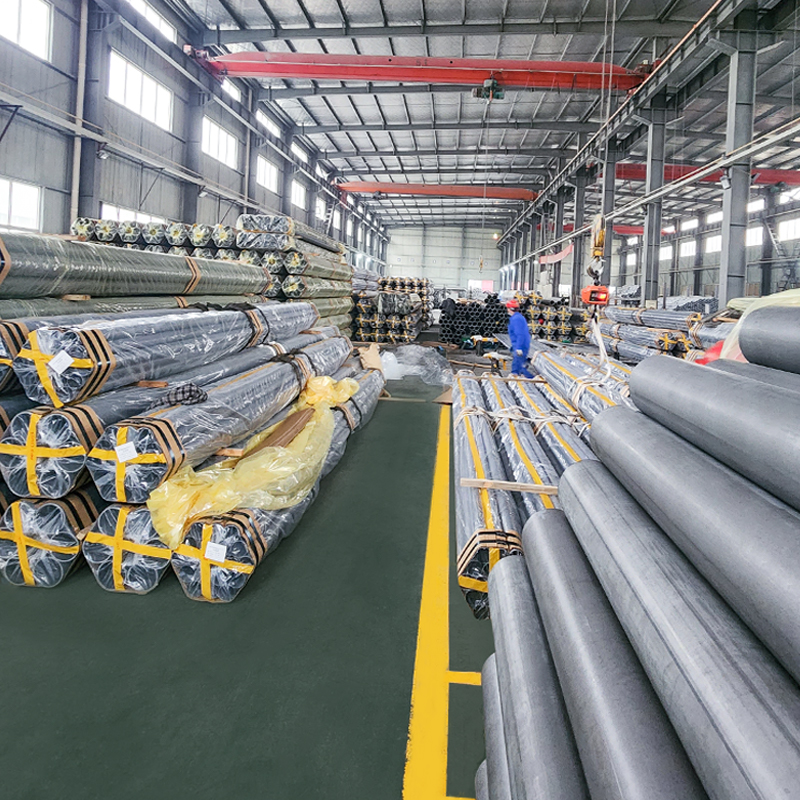
ASTM A513 Grade 1010 Precision Gravity Conveyor Roller Tubing – 2 in x 0.065 in
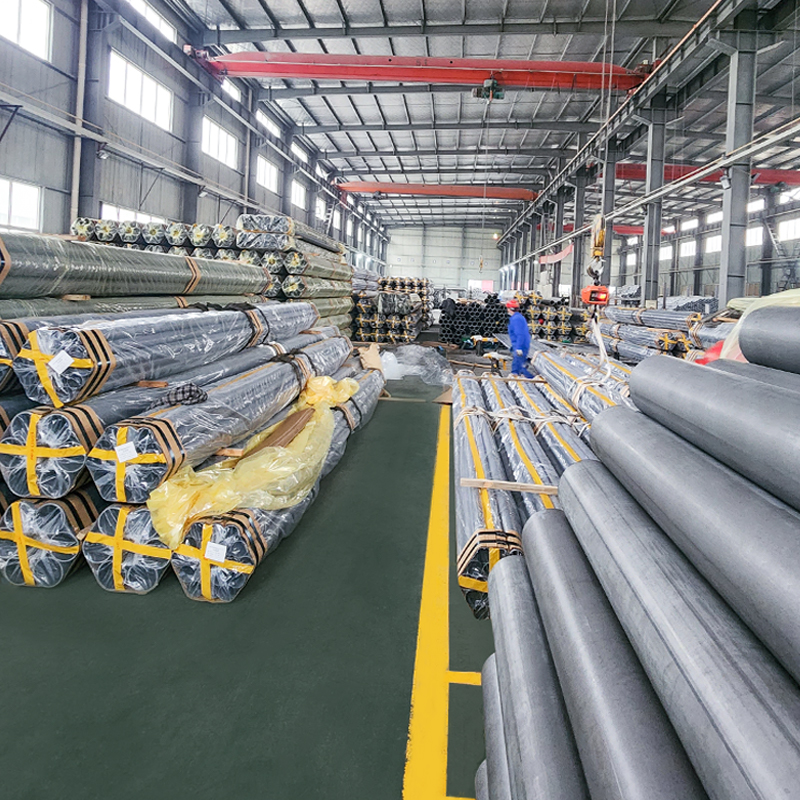
DIN 2394 ST37.2 Heavy-Duty Conveyor Roller Tubing – Ø89 x 3 mm for Mining & ...
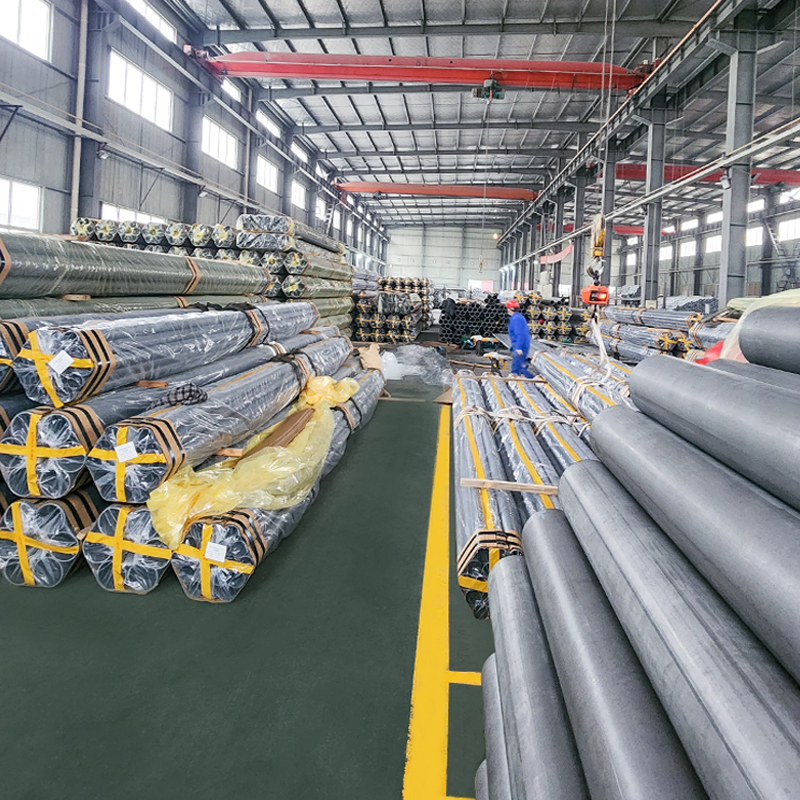
EN 10305-3 E235 Precision Conveyor Roller Tubing – Ø60.3 x 2.0 mm for Material H...
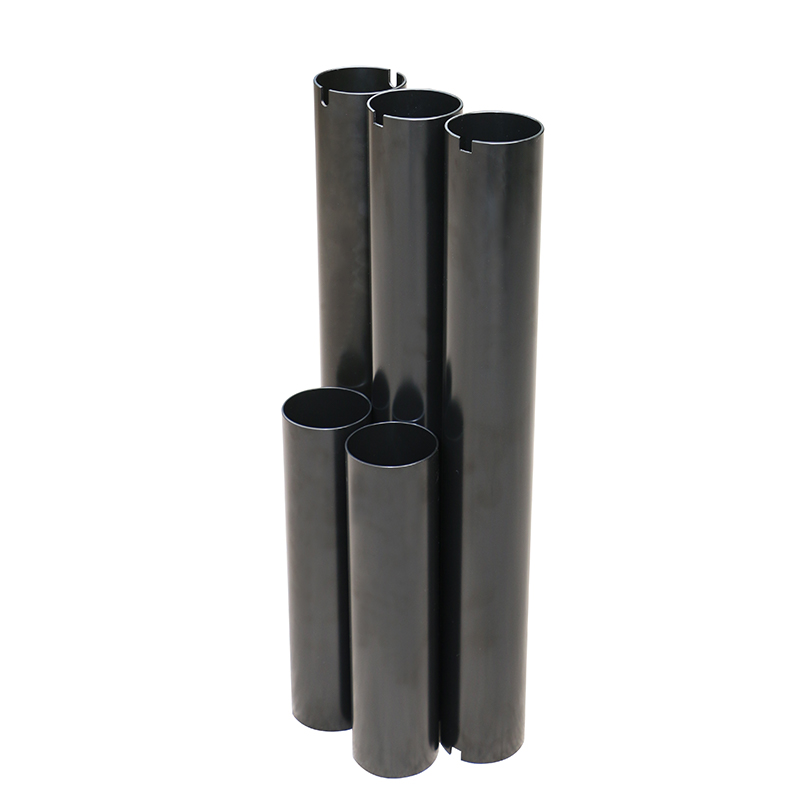
Our E-Coated Steel Pipes are treated with electro-coating (E-coating) to provide...
Our Hydraulic Cylinder Tubes are made from cold drawn seamless steel according t...
Our Hydraulic Cylinder Tubes (CDW) are produced according to EN 10305-2 E355, us...


