
 English
 Español
 русский
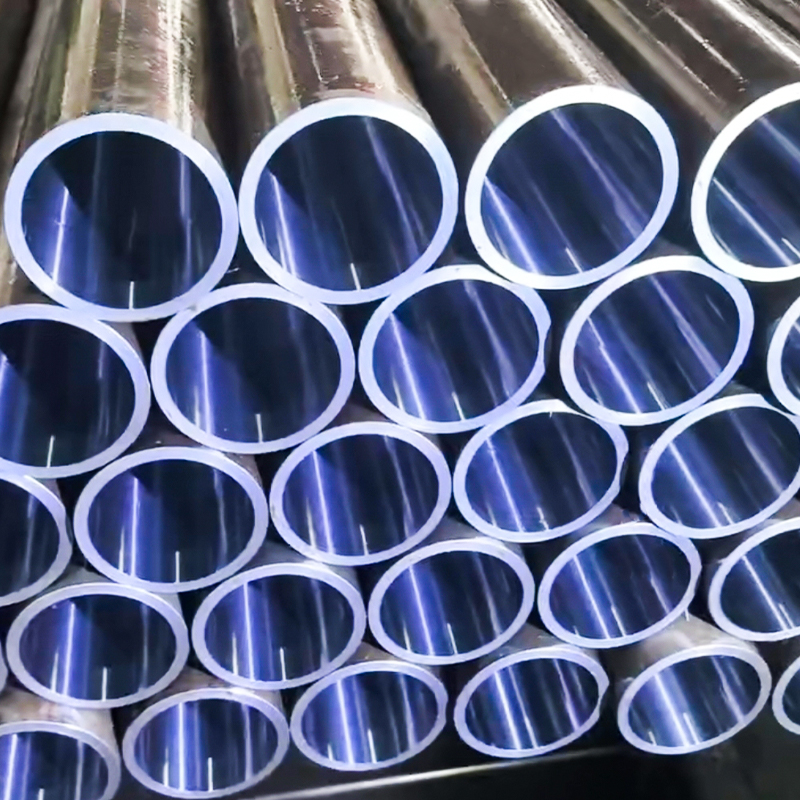
Hydraulic Cylinder Tube – Cold Drawn Seamless Steel EN 10305-1, E355, For Honing & SRB
Our Hydraulic Cylinder Tubes are made from cold drawn seamless steel according t...

Content
A hydraulic cylinder tube looks deceptively simple—a steel tube, open at both ends. But the tolerances it must hold, the pressures it must contain, and the surface finish it must maintain place it among the most precisely manufactured components in industrial supply chains. Understanding how that tube is made—from the moment steel arrives at the mill to the moment a signed inspection report goes out with the shipment—explains why two tubes that look identical on paper can perform very differently in service.
Every hydraulic cylinder tube begins as a steel tube blank, and the grade of that steel is not a minor detail. The most commonly specified grades in hydraulic cylinder tube supply chains are E355 (EN 10305), ST52.3 (DIN 2393), AISI 1045, and JIS STKM13C. Each offers a different balance of yield strength, machinability, and cold-working response, but all share the property that matters most at this stage: predictable, consistent composition from heat to heat.
Before any tube enters production, incoming inspection verifies three things. First, the material test certificate (MTC) is checked against the purchase order specification—confirming that carbon content, manganese levels, and yield strength match the required grade. Second, a sample from each incoming batch undergoes hardness testing and, on critical programs, tensile testing to verify that the mechanical properties match the certificate values rather than just the paperwork. Third, the tube OD, wall thickness, and straightness are measured at multiple points along the length to confirm that the incoming blank falls within the tolerance window needed for downstream processing.
This step is where many quality problems are prevented rather than detected later. A tube blank with excess wall thickness variation will propagate that imbalance through cold drawing and honing; catching it at incoming inspection costs minutes. Catching it after honing costs the full machining cycle.
Raw steel tube—whether hot-rolled seamless or electric resistance welded—carries dimensional variation that is incompatible with hydraulic cylinder service. OD tolerances of ±0.5 mm and inner surface roughness values of Ra 6.3 µm or higher are typical for hot-rolled product. A hydraulic cylinder bore requires Ra ≤ 0.4 µm and dimensional tolerances measured in hundredths of a millimeter. Cold drawing is what closes that gap.
In the cold drawing process, the tube blank is pulled through a precision die (which controls OD and roundness) over a hardened mandrel (which controls ID and wall thickness) at ambient temperature. The compressive and tensile stresses imposed by the die and mandrel simultaneously reduce the tube to its target geometry and cold-work the steel, raising yield strength by 20–40% compared to the hot-rolled parent material. The result is a tube with tight dimensional control, improved surface finish on both the OD and ID, and enhanced fatigue resistance—all without the dimensional variability introduced by thermal processes.
Two product types emerge from this process:
After cold drawing, the tube is cut to final length with end squareness held to ±0.05 mm—a tolerance that becomes critical when the tube end is faced and threaded for cylinder head installation.
Cold drawing produces a tube with good dimensional accuracy, but the inner bore surface—though improved over the hot-rolled blank—is still not ready for piston seal contact. The ID needs to reach a surface finish of Ra ≤ 0.4 µm and a bore diameter tolerance of H8 or better before it can reliably support a piston seal without premature wear or leakage. Two finishing processes achieve this: honing, and the increasingly preferred combination of skiving and roller burnishing (SRB).
Honing uses abrasive stones rotating inside the bore while the tube reciprocates axially. Material is removed gradually, and the characteristic crosshatch pattern left on the bore surface retains lubricating oil, which benefits seal performance. Honing is well-established and capable of reaching Ra ≤ 0.2 µm, but it is relatively slow, generates abrasive slurry that must be thoroughly cleaned from the bore, and removes material rather than displacing it.
Skiving and roller burnishing combines a skiving head (which cuts a precise bore in a single pass) with a roller burnishing head (which cold-works the cut surface, collapsing micro-peaks into the valleys). The roller burnishing stage densifies the surface layer rather than removing material, producing a bore with Ra ≤ 0.4 µm, improved hardness in the surface zone, and no abrasive residue to clean. SRB is faster per part, generates no slurry, and produces a bore that some seal manufacturers specifically recommend for extended seal life.
The choice between honing and SRB depends on bore diameter, tube length, production volume, and the specific Ra target. For large-diameter, long-stroke cylinder tubes, SRB's single-pass capability is a significant throughput advantage. For very tight Ra requirements below 0.2 µm, honing retains an edge. Many manufacturers use SRB for the bore and then apply a final honing pass for the most demanding specifications. The honed tube and SRB tube product line reflects both finishing paths, allowing buyers to specify the process that matches their application and pressure class.
A hydraulic cylinder tube that passes final inspection carries documented evidence that every critical parameter has been measured and conforms to specification. That documentation—not just the physical tube—is what qualified buyers require. The inspection sequence for a production lot typically covers the following checks:
| Inspection Item | Method | Typical Acceptance Criterion |
|---|---|---|
| Bore diameter | Air gauge / plug gauge | Per drawing tolerance, typically H8 |
| OD and wall thickness | Micrometer / ultrasonic gauge | ±0.05–0.10 mm per grade |
| Bore surface roughness (Ra) | Contact profilometer | ≤ 0.4 µm (SRB) / ≤ 0.2 µm (honed) |
| Straightness | Dial gauge on surface plate | ≤ 0.3 mm/m |
| Tube wall integrity | Ultrasonic testing (UT) | No indication exceeding acceptance level per EN 10308 or ASTM E213 |
| End squareness | Square and feeler gauge | ≤ 0.05 mm |
Ultrasonic testing deserves particular attention. UT sends high-frequency sound waves through the tube wall and detects reflections from internal discontinuities—laminations, inclusions, or subsurface cracks that are invisible to visual inspection. For hydraulic cylinders operating above 150 bar, UT on 100% of production tubes (rather than sampling) is increasingly specified by OEM customers, and a UT report traceable to the specific tube lot is expected with each shipment.
After dimensional and NDT inspection, accepted tubes receive an anti-rust treatment—typically a rust-preventive oil applied to the bore and OD—before being capped at both ends to protect the finished bore during transit. The final document package accompanying the shipment includes the MTC from raw material, the in-process inspection records, and the outgoing QC report. Buyers who request this full documentation trail as a standard delivery condition create a traceability chain that supports root cause analysis if any field performance questions arise.
A detailed overview of how these inspection stages are structured in production is available through the quality control process documentation.
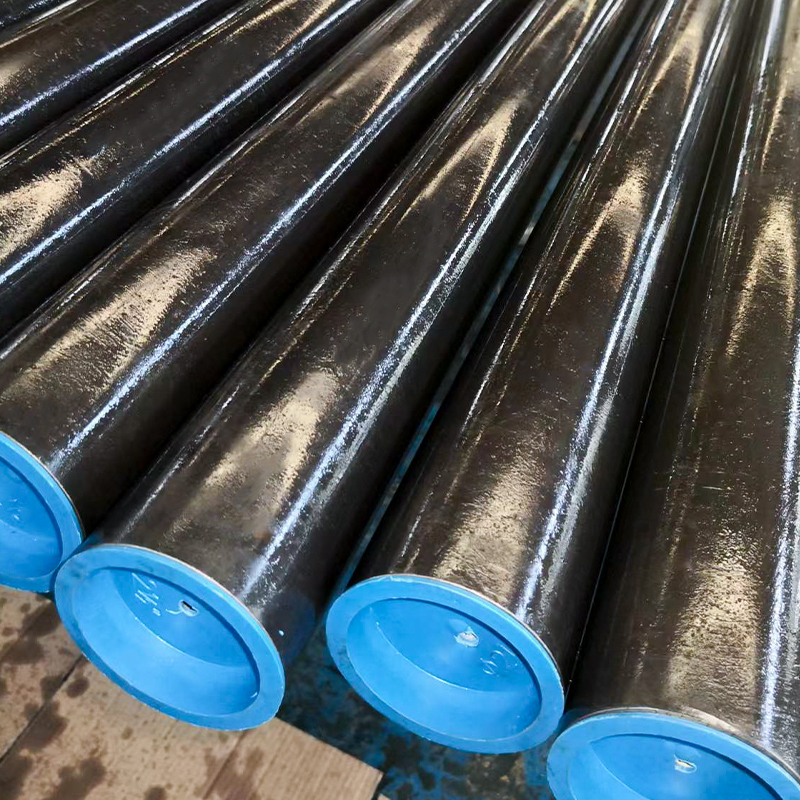
Our Hydraulic Cylinder Tubes are made from cold drawn seamless steel according t...
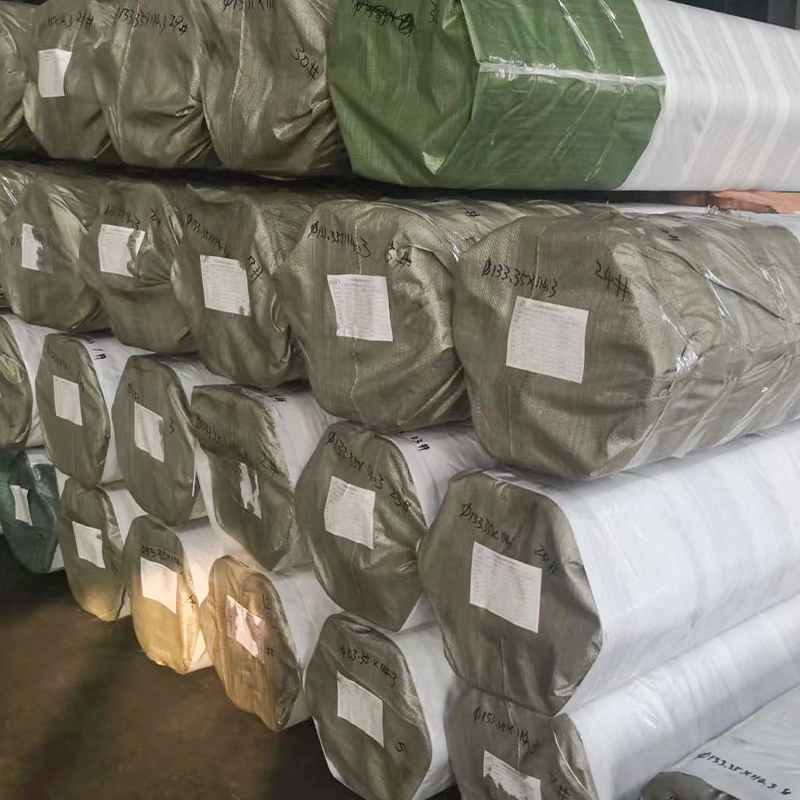
Our Hydraulic Cylinder Tubes (CDW) are produced according to EN 10305-2 E355, us...
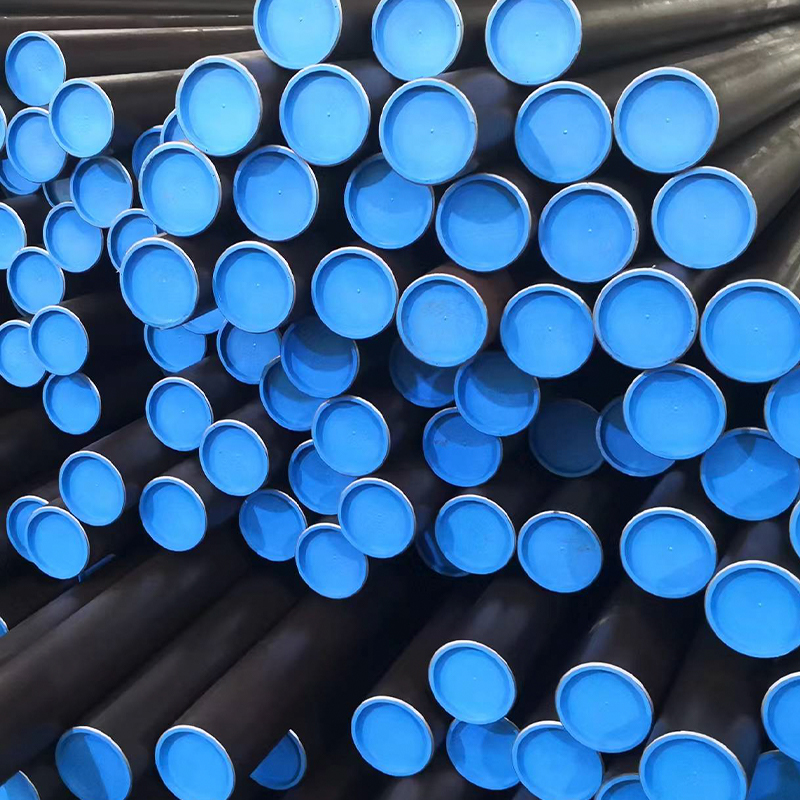
Our ASTM A519 Hydraulic Cylinder Tubes are precision-manufactured using cold dra...
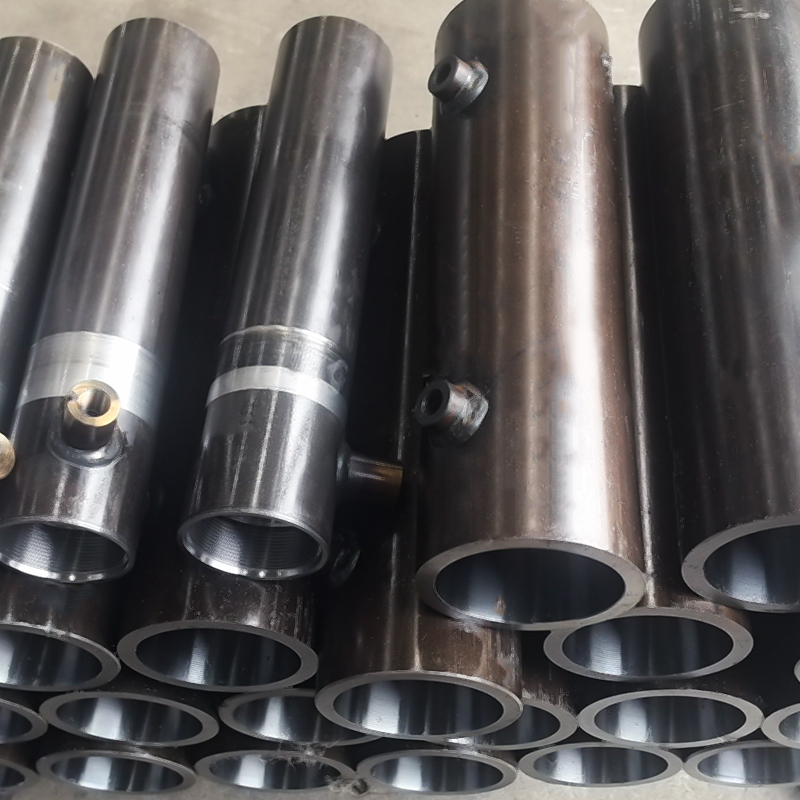
Our Finished Hydraulic Cylinder Barrels are precision-machined, honed steel tube...
Our Hydraulic Cylinder Tubes – ASTM A513 ST52 Cold Drawn Welded (CDW) are engine...
Our ASTM A513 Cold Drawn Welded (CDW) Honed & SRB Tubes are precision-


