Content
When a commercial treadmill runs smoothly at 12 mph under a 300-pound user, the roller tube is quietly doing most of the work. Yet in OEM procurement discussions, the tube itself is often treated as a commodity. Leading fitness equipment manufacturers know better. The dimensional and surface precision of the roller tube governs belt tracking stability, bearing life, operating noise, and long-term warranty exposure. Understanding what those specifications actually look like—in measurable terms—is the starting point for any serious sourcing decision.
A treadmill roller tube serves as the structural core around which the walking belt continuously rotates. Over the service life of a commercial unit, that tube may complete tens of millions of revolutions. Any deviation from true roundness, concentricity, or straightness is amplified through every rotation—generating vibration, accelerating belt edge wear, and forcing premature bearing replacement.
The diameter of the roller is one of the most consequential variables. Rollers measuring around 40 mm (roughly 1.6 inches) in diameter create tighter belt wrap angles and higher surface contact stress, which increases heat buildup and shortens belt life under sustained commercial use. Rollers at 50 mm (approximately 2 inches) and above distribute load more evenly, reduce friction heat, and maintain belt tension more consistently. This is why virtually every major OEM specifies a minimum front roller diameter of 50 mm for light-commercial machines and 60–80 mm for full-commercial platforms.
But diameter alone is not enough. A roller tube with the correct nominal diameter but poor roundness or wall thickness variation will still produce belt drift, vibration, and noise. Precision starts at the tube blank stage, before any end machining or bearing installation takes place.
OEM engineering teams typically define roller tube requirements across four core dimensional parameters. Understanding each one—and the tolerance windows that separate acceptable from non-conforming product—is essential for suppliers and procurement teams alike.
| Parameter | Residential Grade | Light Commercial | Full Commercial |
|---|---|---|---|
| OD Tolerance | ±0.15 mm | ±0.10 mm | ±0.05 mm |
| Wall Thickness Variation | ≤ 8% | ≤ 6% | ≤ 5% |
| Straightness | ≤ 1.0 mm/m | ≤ 0.5 mm/m | ≤ 0.3 mm/m |
| Roundness (Ovality) | ≤ 0.20 mm | ≤ 0.12 mm | ≤ 0.08 mm |
OD tolerance directly affects how consistently the belt wraps around the roller. A tube that measures 60.15 mm on one side and 59.85 mm on the other will create a slight crown effect during rotation, causing the belt to migrate laterally. Over time, this produces uneven belt wear and increases side-rail friction.
Wall thickness variation determines rotational balance. An eccentrically walled tube—even one with a perfectly round outer surface—has an off-center mass distribution that introduces vibration at operating speeds. For commercial treadmills running continuously 8–12 hours per day, this vibration fatigue accelerates both bearing wear and structural fastener loosening.
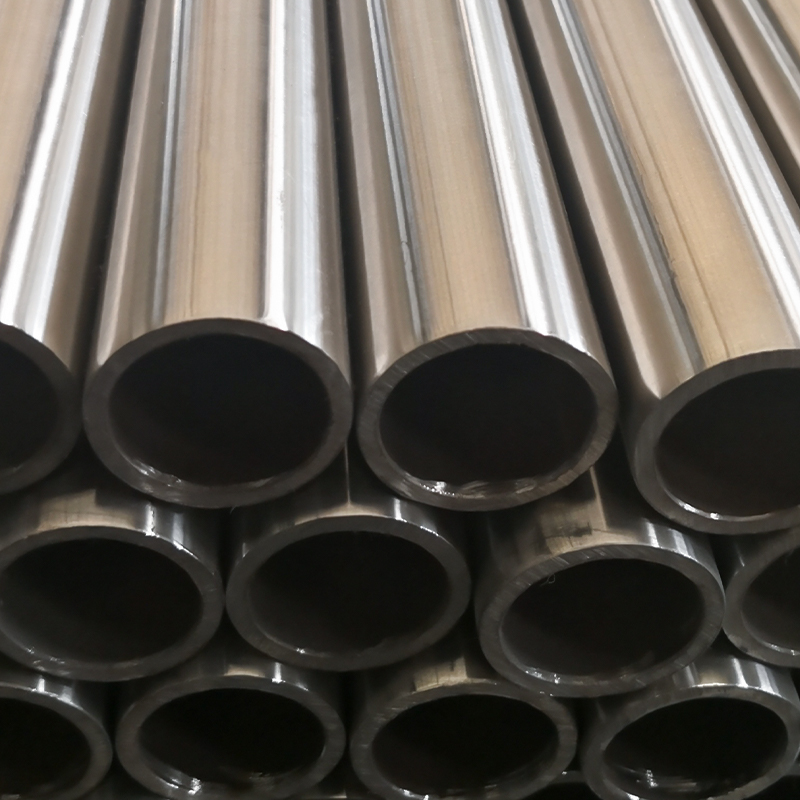
These tolerances align with the specifications outlined in standards such as EN 10305-1 and EN 10305-2 for precision cold-drawn steel tubes, which serve as the reference framework for many European and Asian OEM suppliers. Products like the conveyor roller tube produced to these standards provide the dimensional consistency that treadmill roller assemblies require.
While overall tube tolerances matter, the most demanding precision requirement in any roller assembly is concentrated in the bearing seat zones—the short sections at each end of the tube where the inner race of the bearing contacts the tube's inner diameter.
OEMs typically specify the bearing seat ID tolerance to an H7 or H6 fit class (per ISO 286), which corresponds to a tolerance band of roughly +0.025 mm to +0.000 mm for a 25 mm bore. This ensures a snug, non-slip fit between the bearing outer race and the tube, preventing fretting corrosion and micro-movement that would otherwise generate noise and heat.
Surface roughness in the bearing seat area is equally critical. Most OEM specifications call for a Ra value of 0.8 µm or better in this zone—the equivalent of a finely ground finish. A rougher surface creates stress concentration points at the bearing contact interface, which propagates fatigue cracks during cyclic loading. For the tube body outside the bearing zone, Ra values of 1.6–3.2 µm are generally acceptable, with the exterior OD surface sometimes requiring additional finishing if the tube will be exposed to direct user contact or aesthetic inspection.
End squareness is a frequently overlooked parameter. If the tube ends are not perpendicular to the tube axis within 0.05 mm, the bearing will be installed at a slight angle, creating skewed load distribution across the raceway and shortening bearing service life significantly.
The manufacturing process used to produce the tube blank is not a detail—it is the foundational factor that determines whether the dimensional tolerances above are even achievable in production volumes.
Hot-rolled tubes, while economical and available in large sizes, carry inherent dimensional variability from the thermal forming process. Scale formation on the surface, wall thickness deviation from non-uniform cooling, and OD variation from roller spread are all characteristics of the hot-rolling process that make it unsuitable for precision roller applications without significant downstream machining.
Cold-drawn tubes—produced by pulling a tube blank through a die and mandrel at ambient temperature—achieve significantly tighter dimensional control as a direct result of the process. The cold-working also increases the yield strength of the steel (typically by 20–40% compared to the hot-rolled parent material), which is beneficial for roller tubes that carry both radial belt load and axial bearing clamping forces simultaneously.
Two cold-drawn product types dominate treadmill roller tube supply chains:
For most OEM treadmill programs, the choice between seamless and DOM comes down to the roller diameter, the duty cycle classification, and the per-unit cost target. Both process types can meet full-commercial precision requirements when manufactured to the correct specification and subject to rigorous outgoing inspection.
OEM treadmill manufacturers operate within overlapping regulatory and standards frameworks that indirectly define the minimum acceptable precision of all major components, including rollers.
ASTM F2115-19 (Standard Specification for Motorized Treadmills) and ASTM F2276-10 (Standard Specification for Fitness Equipment) are the primary US market standards. While they address the assembled product rather than individual tube specifications, they establish performance requirements—such as belt tracking stability and minimum operational life—that can only be met with roller tubes manufactured to sufficient precision.
ISO 20957-6:2005 covers stationary training equipment treadmills specifically and applies to both power-driven and manually driven units in the European and many Asian markets. This standard classifies equipment into accuracy classes (A, B, and C) and usage classes (S for home use, H for commercial), with class H/A products implying the highest mechanical component precision.
For the tube material itself, EN 10305-1 (seamless cold-drawn) and EN 10305-2 (welded cold-drawn/DOM) are the European precision tube standards most commonly referenced in OEM supplier qualification documents. These define tolerance grades E4 through E8, with E4 representing the tightest dimensional control. Full-commercial treadmill applications typically require EN 10305 E6 or better. You can review the quality control process to understand how these standards are verified in production.
For North American-spec programs, equivalent guidance is found in ASTM A513 (DOM) and ASTM A519 (seamless mechanical tubing), with customer-specific tolerance addenda layered on top of the base standard in most OEM purchase orders.
When qualifying a precision roller tube supplier for a treadmill program, the following checklist captures the critical technical and commercial verification points that experienced OEM procurement teams typically require before approving first articles:
Treadmill programs that invest in precise tube specifications at the sourcing stage consistently report lower warranty claim rates, better belt life performance, and reduced field service costs over the product lifecycle. The quality differential between a well-specified precision tube and a generic alternative is rarely visible in the initial unit cost—but it becomes measurable within the first 12 months of commercial deployment.
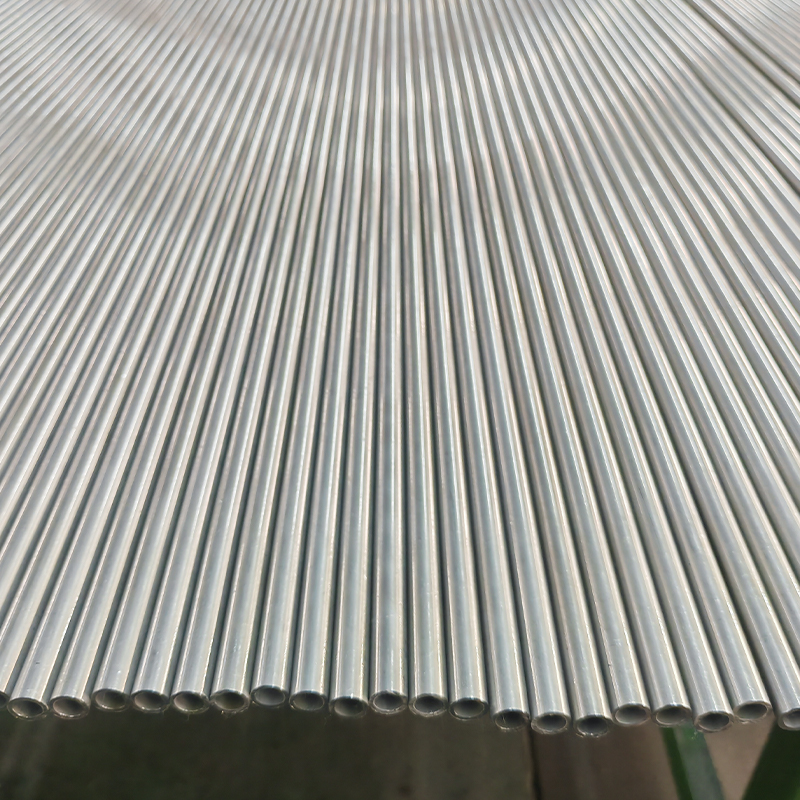
Our Hydraulic Tubes are manufactured from cold-drawn seamless steel (CDS) in com...
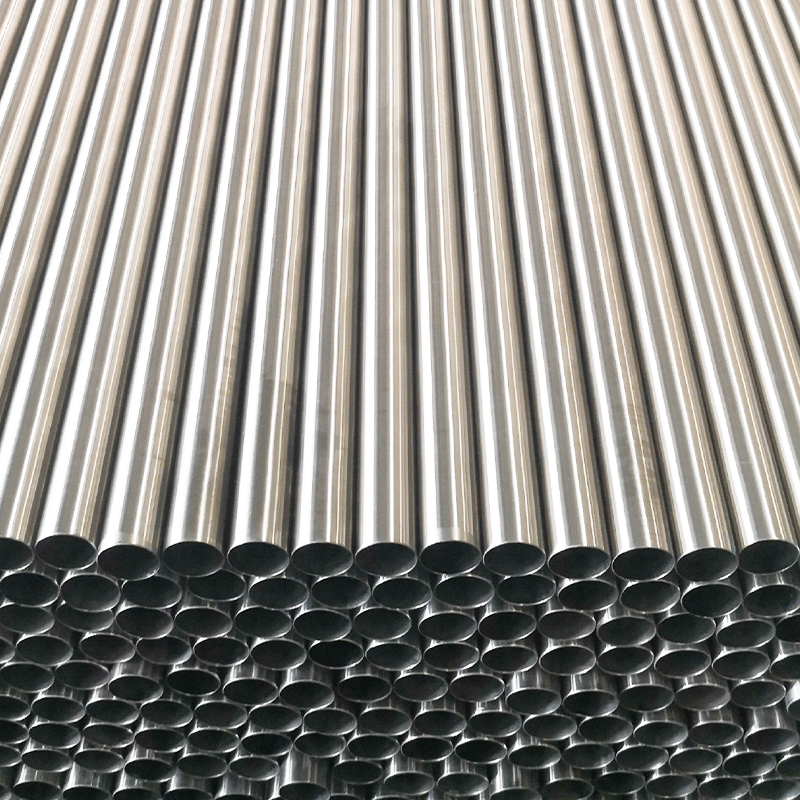
Our Chrome-Plated ID Pneumatic Cylinder Tubes feature a high-strength carbon ste...
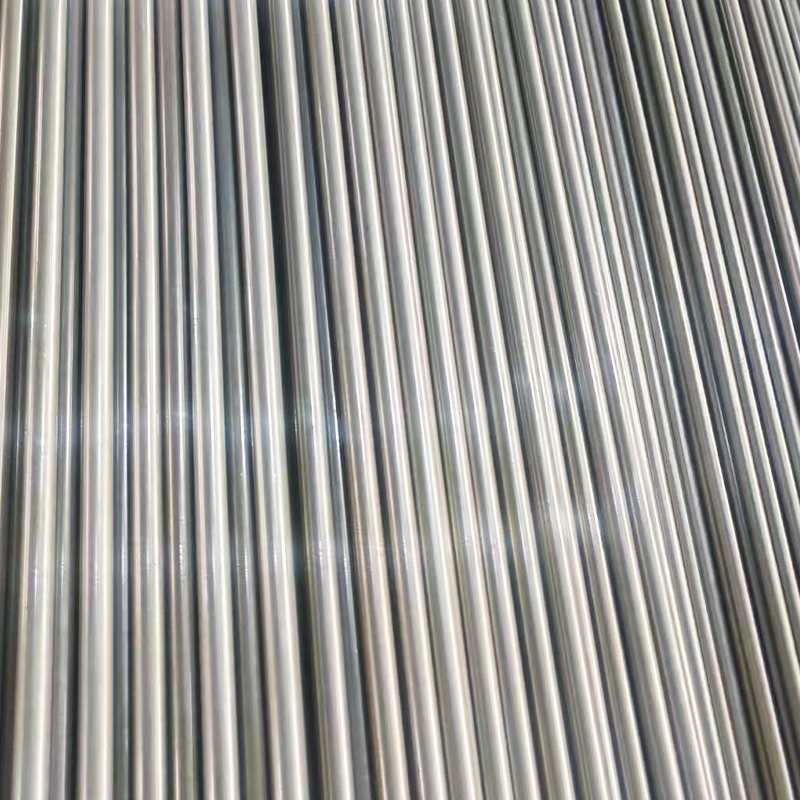
Our Welded Hydraulic Tubes are produced from cold-drawn or ERW-welded strip stee...
Our Seamless Shock Absorber Tubes are manufactured to EN 10305-1 using high-qual...
Our Hydraulic Shock Absorber Tube is manufactured to EN 10305-2 standards using




 English
 Español
 русский