
 English
 Español
 русский
Special Shaped Steel Pipes – Custom Profiled Tubes, Cold Formed / Hot Rolled, EN 10296-2, For Structural & Automotive Use
Our Special Shaped Steel Pipes are designed for applications requiring custom pr...

Content
A standard round tube quote can come back in hours. A custom shaped tube quote—oval, hexagonal, D-shaped, or a fully bespoke profile—often takes two to three days, and that's if the drawing is complete. If anything is missing, expect another round of emails before the supplier can even open a die calculation. The bottleneck is almost never the factory's schedule. It's the drawing.
This guide explains exactly which parameters a supplier needs to quote cold-drawn special shaped steel pipes in custom profiles quickly—and how to present them so the engineering team on the other side can start pricing immediately rather than asking follow-up questions.
Round tubes are catalogued. The supplier checks stock, pulls a wall thickness table, and confirms the grade. Shaped tubes—anything that isn't a plain circular cross-section—require a fundamentally different evaluation process. The factory must assess whether an existing die set can produce the geometry, whether a new die needs to be made, and which forming method (cold drawing, roll forming, or extrusion) fits the dimensional requirements.
Each of those decisions depends on information that only your drawing can provide. A missing corner radius, an undefined internal dimension, or a vague material callout forces the estimator to stop and ask. Every question adds at least a day. Submit a complete drawing the first time, and you collapse that process from days to hours.
For round tubes, a side view is enough. For shaped tubes, the cross-section view carries almost all the information the supplier actually uses. If this view is missing or incomplete, nothing else in the drawing compensates for it.
The cross-section must show the following, all fully dimensioned:
Include at minimum two views: the cross-section view and a longitudinal (side) view showing length, any end features, and the cut condition. For complex 3D profiles, a third isometric or perspective view helps, but it is the cross-section that drives the quote.
Tolerances determine manufacturing difficulty, and manufacturing difficulty determines price. Specifying tolerances correctly—neither too tight nor left undefined—is one of the fastest ways to get a more accurate and competitive quote.
For dimensions that do not require exceptional precision, referencing a general tolerance standard eliminates the need to mark every single feature on the drawing. The widely used ISO 2768 general tolerance framework for linear and angular dimensions provides four tolerance classes—fine (f), medium (m), coarse (c), and very coarse (v)—and calling out a single class in the drawing title block removes ambiguity for all non-critical features at once.
Reserve explicit tolerance callouts for the dimensions that genuinely need them:
A drawing that says "ISO 2768-m, critical dimensions per callout" is faster to quote than one that either tolerances every feature identically or leaves the entire drawing blank. The first tells the supplier exactly where to focus precision; the second forces them to make assumptions they will want to confirm with you before pricing.
| Feature Type | Recommended Approach | Impact on Quote Speed |
|---|---|---|
| Non-mating outer faces | Reference ISO 2768-m or -c in title block | High — no follow-up needed |
| Bore / internal guide surface | Explicit callout (e.g., H8, H9) | High — supplier can price directly |
| Corner radii | Explicit R value on every corner | Critical — prevents die assumption errors |
| Wall thickness | Nominal + tolerance (e.g., 2.5 mm ±0.2) | Medium — avoids back-and-forth on scrap rate |
| Length | Fixed cut length + tolerance (e.g., ±1.0 mm) | Medium — affects saw setup pricing |
Writing "steel" on a drawing is the single fastest way to guarantee a follow-up email. Suppliers source material by grade, and different grades carry significantly different prices, formability limits, and lead times. For shaped tubes, material choice also determines which forming method is viable.
Specify the grade using a recognized standard designation. Common options include E235 and E355 under EN 10305, SAE 1020 or 1026 under ASTM A513, and ST52 under the older DIN system. If your application involves elevated temperature, pressure cycling, or specific corrosion environments, state the application in the drawing notes—this allows the supplier to flag a grade substitution if a better option exists.
Wall thickness deserves special attention in shaped profiles. Cold forming redistributes material unevenly: corners typically thin out relative to flat faces, and tight-radius bends thin more than gentle ones. For custom profiled tubes made through cold forming or hot forming, the specified wall thickness should refer to the minimum acceptable wall—particularly at corners—not the nominal starting material thickness. If your application requires uniform wall throughout the profile, state that requirement explicitly, as it significantly affects process selection and cost.
Most suppliers can work with almost any file format eventually. The question is how quickly. Certain format combinations allow an estimator to start die assessment and material costing immediately, without converting, reconstructing, or guessing at geometry.
The fastest combination for shaped tube quoting is:
If you only have one file type, prioritize the PDF with a fully dimensioned cross-section. A complete 2D drawing is slow to import into CAM software, but it contains everything needed to calculate material, tooling, and yield—and that is enough for a firm quote.
Always label files with part number and revision. A file named "profile_v3_FINAL_2.dxf" is the industrial equivalent of a recipe on a Post-it note. It creates confusion and delays in ways that are difficult to trace back to the source.
The cross-section and tolerances are the hard part. Surface treatment, cut length, and quantity feel straightforward—but vague answers here consistently delay quotes that are otherwise complete.
For surface treatment, specify the type, not just the goal. "Corrosion resistant" is not a specification. E-coated and phosphated surface treatments for steel pipes serve different purposes and require different line setups. If you need a specific coating thickness, adhesion standard, or color, include it in the drawing notes. If the tube will be painted or coated downstream in your own facility, state that so the supplier can quote an appropriate pretreatment rather than a finished surface.
For length, provide the exact cut-to-length dimension with tolerance. If the tubes will be cut in your facility, specify "random length" or give a stock length preference. A precise cut length adds a saw operation to the cost; if your process can absorb slight length variation, say so—it may reduce per-piece pricing.
Quantity affects price through two mechanisms: raw material procurement (larger orders allow bulk purchasing) and setup amortization (die costs and machine changeover are fixed, so they cost less per piece at higher volumes). Provide both the immediate order quantity and, if known, the expected annual volume. A supplier who understands your annual demand may offer better pricing or hold safety stock on your behalf. For custom fabricated tubing with bent or welded sections, tooling and fixture costs are often amortized into the first order—knowing your projected volume upfront changes how that amortization is structured.
Before sending your drawing package, run through this list. Every item you check off is one fewer question the supplier needs to ask.
A drawing package that answers all ten points typically returns a quote within one business day. One that addresses seven or eight will usually come back with one clarifying question. Below seven, expect the process to stretch across multiple exchanges—each one avoidable with thirty minutes of drawing review before the first send.
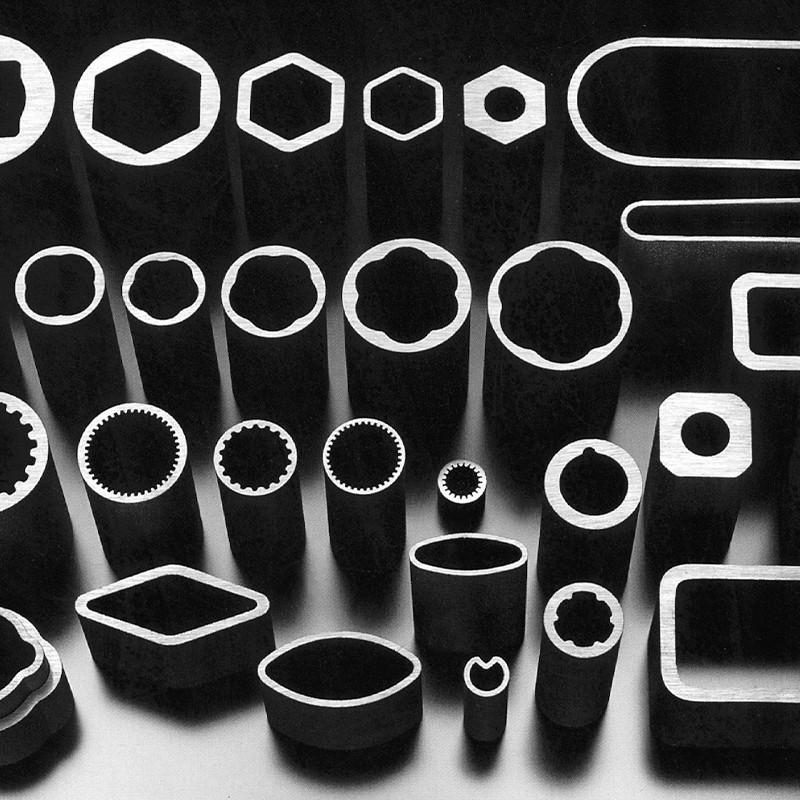
Our Special Shaped Steel Pipes are designed for applications requiring custom pr...
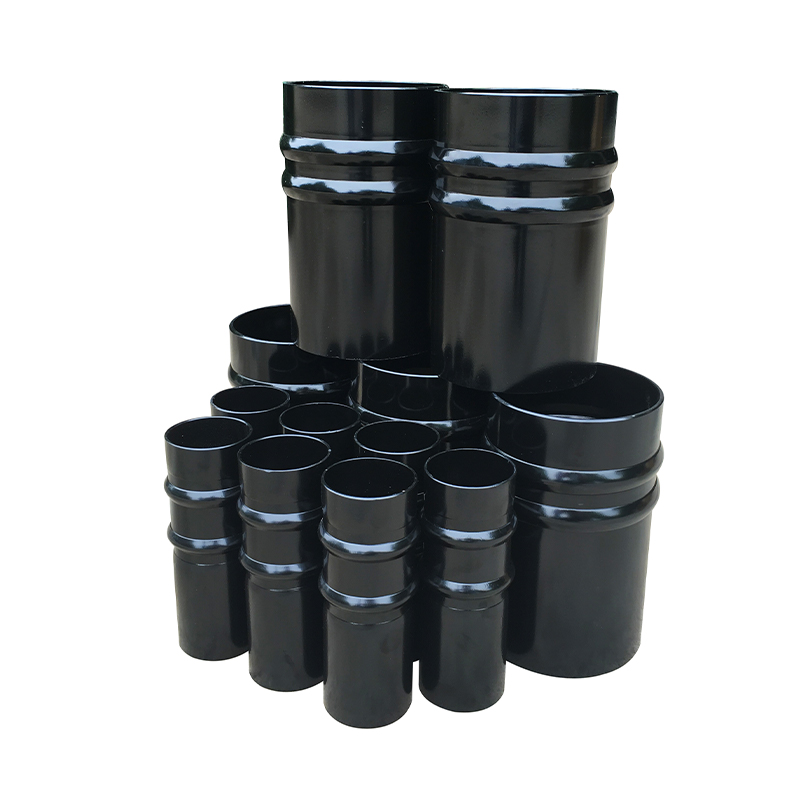
Our Custom Fabricated Tubing offers precision bent, welded, and shaped tubes tai...

Maximize storage efficiency with our ASTM A36 Foldable Steel Storage Rack, engin...
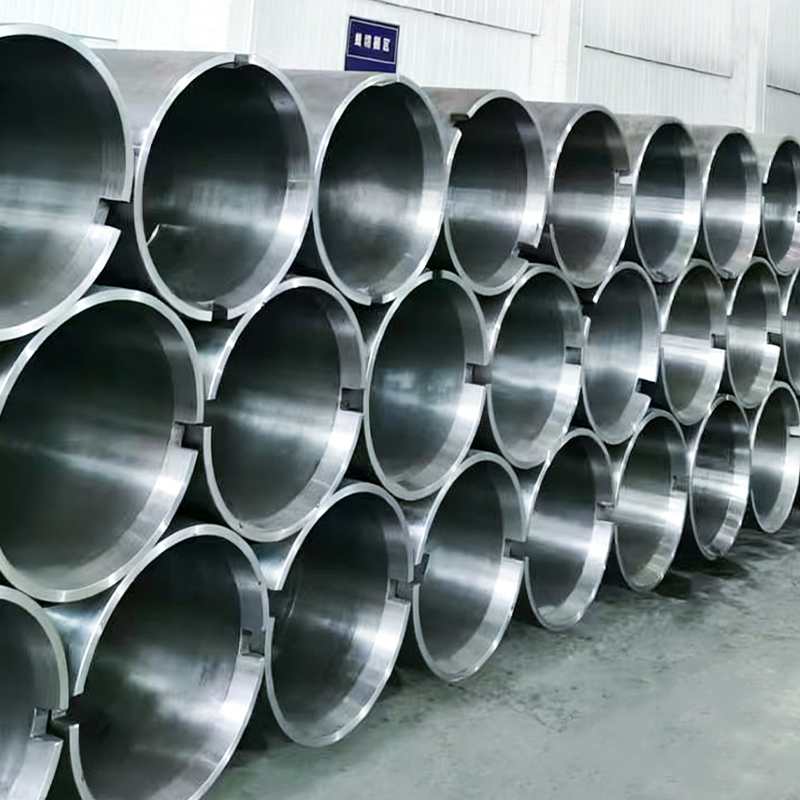
Our Centrifugal Casting Steel Tubes are engineered for high-strength, heavy-duty...
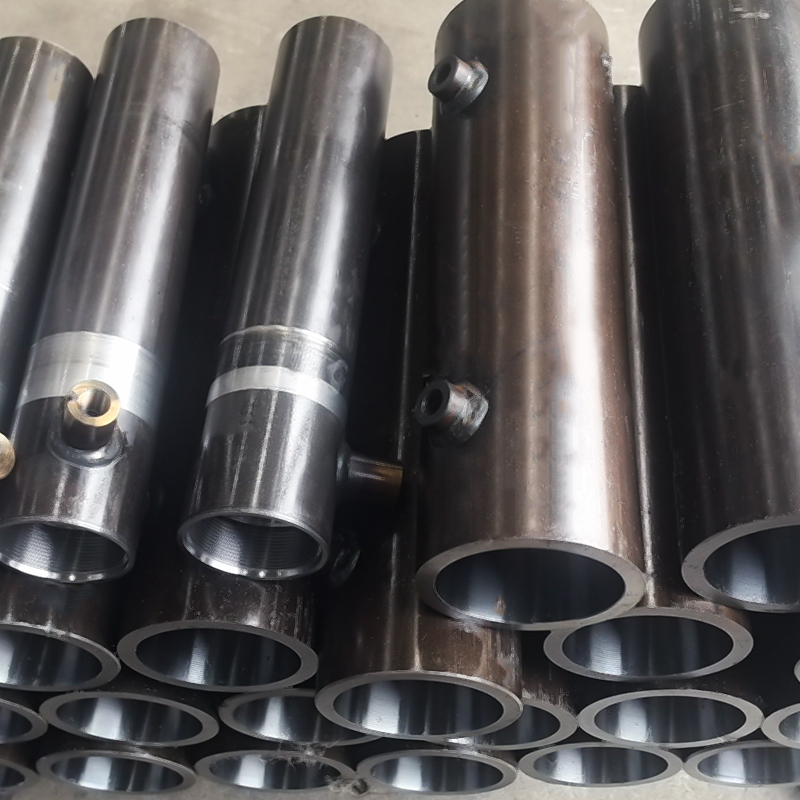
Our Finished Hydraulic Cylinder Barrels are precision-machined, honed steel tube...
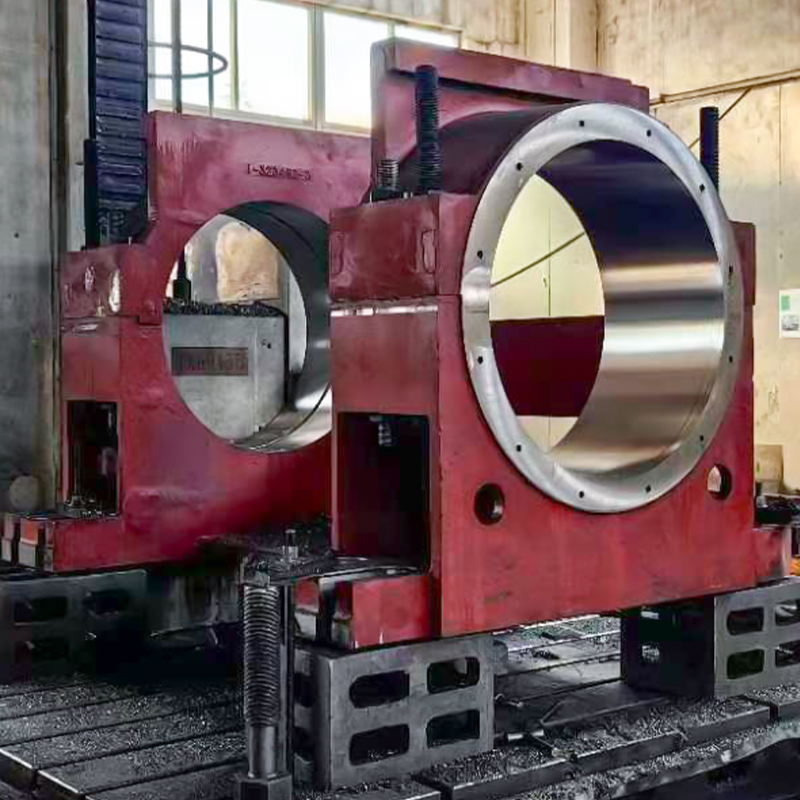
Our high-quality cast steel bearing housings are designed for extreme loads and ...


