
 English
 Español
 русский
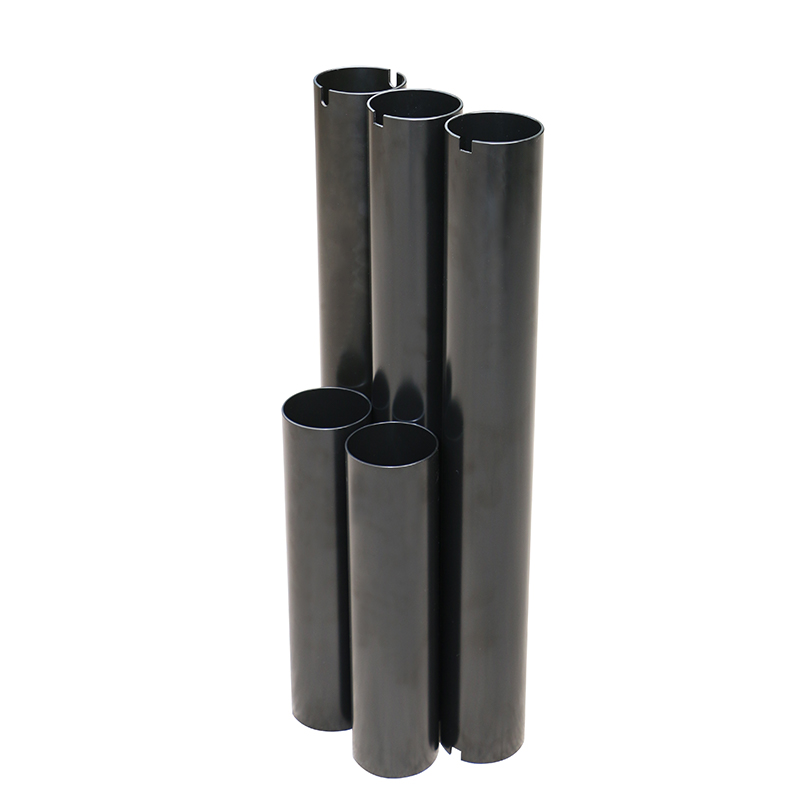
E-Coated Steel Pipe – Black Electro-Coating Finish, Anti-Corrosion Steel Tube
Our E-Coated Steel Pipes are treated with electro-coating (E-coating) to provide...

Content
Pick the wrong surface treatment for your steel tubes and you will find out quickly — rust streaks through a warehouse shipment, coating delamination on a hydraulic assembly, or a seized fastener on a machine that was only installed six months ago. The three finishes most commonly specified for precision steel tubing — electrocoating (e-coat), phosphating, and rust-preventive oiling — each protect the metal through a fundamentally different mechanism. Understanding those mechanisms, and matching them to your actual operating environment, is what separates a finish that lasts from one that fails on the job.
These three processes are not interchangeable variations of "anti-rust coating." They interact with the steel substrate in distinct ways, which is why their performance profiles diverge so sharply under real-world conditions.
E-coat is an electrochemical deposition process. The steel part is submerged in a water-based paint bath and an electric current drives charged resin and pigment particles uniformly onto every exposed surface — including recessed areas and complex interior geometries that spray processes cannot reliably reach. The deposited film is then cured in an oven, cross-linking into a dense, continuous polymer barrier typically 15–30 µm thick. That barrier physically blocks moisture, oxygen, and chlorides from contacting the steel. The result is our e-coated steel pipes with full anticorrosion barrier finish — a cured, permanent coating that needs no reapplication.
Phosphating is a chemical conversion process. An acidic phosphate solution reacts directly with the iron at the steel surface, converting it into a tightly bonded layer of zinc-iron or manganese phosphate crystals. This layer is itself non-metallic, porous, and microcrystalline. Alone, it offers only modest corrosion protection — typically 3–8 hours in salt spray before red rust appears on bare phosphated steel. Its real value is what it enables: the porous crystal network bonds chemically to oils and organic coatings far better than bare steel does. Our phosphated steel pipes pretreated for paint adhesion are specified precisely because the conversion layer gives subsequent coatings a dramatically stronger anchor.
Oiling applies a thin film of rust-preventive oil — either mineral-based or synthetic — over bare or phosphated steel. Unlike e-coat or phosphating, this film is not cured or chemically bonded; it is a sacrificial, wettable barrier. It prevents atmospheric moisture from contacting the steel by displacing and excluding water at the surface. This makes it exceptionally easy to apply and remove, but also inherently temporary: oil films thin out through handling, wicking into packaging, and evaporation over time. The protection window is measured in weeks to months under controlled indoor conditions, not years.
| Treatment | Protection Mechanism | Bond Type | Reversibility |
|---|---|---|---|
| E-Coat | Sealed polymer barrier film | Cross-linked, permanent | Not reversible without stripping |
| Phosphating | Conversion layer (crystal network) | Chemical conversion of base metal | Permanent, but porous alone |
| Oiling | Sacrificial moisture-exclusion film | Physical adhesion only | Fully reversible; wipes off |
The most widely used benchmark for surface treatment performance is the neutral salt spray test standardized in ASTM B117, the international standard for salt spray corrosion testing. Parts are exposed to a continuous 5% sodium chloride mist at 35°C, and engineers record how many hours elapse before red rust appears. The numbers below reflect typical performance for precision steel tubing under that protocol:
| Surface Treatment | Salt Spray Hours (to red rust) | Notes |
|---|---|---|
| Bare cold-drawn steel | < 4 hrs | No treatment baseline |
| Phosphating alone (zinc phosphate) | 3–24 hrs | Varies by crystal weight and coating class |
| Phosphating + rust-preventive oil | 72–240 hrs | Significant uplift from oil absorption into porous layer |
| E-coat (cured, 20–25 µm) | 500–1,000+ hrs | Continuous film; no pores for moisture ingress |
| Phosphating + E-coat | 800–1,500+ hrs | Conversion layer improves e-coat adhesion and undercutting resistance |
Two things stand out from this data. First, phosphating alone provides almost no independent corrosion protection — its value only materializes when combined with oil or an organic coating. Second, e-coat's barrier performance is in a different category from the other options, which is why it dominates in applications where long-term outdoor or high-humidity exposure is a given.
Rather than starting from "which process is better," experienced specifiers start from the environment the treated part will actually live in. The following scenarios cover most industrial applications for precision steel tubing.
Think food processing facilities, coastal warehouses, or agricultural equipment bays where humidity regularly exceeds 70–80% RH. Oil films deplete too quickly under these conditions to be relied upon for anything beyond transit protection. Phosphating alone offers negligible resistance. E-coat is the correct choice here — its sealed film is unaffected by ambient humidity and will not migrate or thin out over time.
Any application within a few kilometers of salt water — offshore equipment, marine hydraulic systems, port machinery — demands a coating that can withstand salt-laden air and occasional washdown with saline water. E-coat, ideally over a zinc phosphate pretreatment, provides the highest available protection in this category. Oiling is not a viable long-term solution, and phosphating alone fails rapidly.
For precision steel tubes shipped domestically in controlled-humidity packaging and used within 3–6 months of manufacture, phosphating + oil is entirely adequate and cost-effective. The phosphate layer stabilizes the surface, and the oil provides sufficient transit protection for the product's journey from mill to end-user. This is one of the most common specifications for structural and mechanical tubing shipped within temperate regions.
Components that undergo thread engagement, press-fitting, or sliding contact during assembly — such as fastener bodies, shaft tubes, or actuator rods — benefit from the lubricating properties of a phosphate + oil system. The porous phosphate crystal layer retains oil and solid lubricants, reducing galling during run-in. E-coat, being a rigid polymer, is not the right choice for surfaces that will experience metal-to-metal contact during assembly.
If the tube will receive a topcoat after delivery, the surface treatment at the mill is primarily a pretreatment — not a final finish. Phosphating is the correct specification in this case. The conversion layer provides chemical adhesion for organic topcoats that bare steel cannot match, dramatically reducing blistering and undercutting corrosion under paint. Applying e-coat to a part that will later be painted adds cost without proportional benefit and can interfere with topcoat adhesion depending on the paint chemistry.
The most durable real-world solutions are often combinations rather than single processes. Understanding when to specify a combined treatment — and which combination — is where specifying engineers often gain meaningful performance without excessive cost.
For precision steel tubes that will be fabricated, machined, or painted by the downstream customer, phosphate + oil is the industry-standard specification. The phosphate provides a stable, reactive surface that absorbs oil efficiently; the oil provides the corrosion protection. This combination is cost-effective, easy to apply at scale, and fully compatible with subsequent cleaning and coating operations at the customer's facility. The oil wipes off without residue, leaving a phosphate-primed surface ready for painting or e-coating.
When both maximum corrosion resistance and strong topcoat adhesion are required — as in automotive underbody components, hydraulic cylinder applications in construction machinery, or marine structural frames — the combination of zinc phosphate pretreatment followed by e-coat is the established solution. The phosphate layer increases e-coat adhesion and dramatically reduces undercutting corrosion at any film damage point. This two-step system consistently outperforms either process used independently, and it is the standard treatment sequence in high-volume automotive and agricultural equipment manufacturing.
Performance is rarely the only decision variable. The following factors typically influence final specification.
Oiling is the least expensive treatment by a significant margin — it requires minimal equipment and no chemical bath management. Phosphating involves chemical bath maintenance and rinse stages but remains a low-cost industrial process at scale. E-coat involves the highest capital and operational cost: electrocoating lines require controlled bath chemistry, electrical infrastructure, and curing ovens. For high-volume production, these costs per part become manageable; for small-batch or prototype orders, the cost premium over phosphating + oil is more significant.
Oiling and phosphating are rapid processes that integrate easily into continuous production lines. E-coating introduces a curing cycle (typically 160–180°C for 15–25 minutes) and requires batch scheduling on a dedicated line. For urgent orders or highly customized tube dimensions, phosphating + oil is generally the faster option.
This is frequently overlooked at the specification stage. E-coated surfaces are not suitable for direct welding without grinding back the coating in the weld zone — the cured polymer generates harmful fumes and disrupts arc quality. Phosphated and oiled surfaces can be welded after degreasing with no additional preparation. If the end-use involves field welding or field assembly with heat, phosphating + oil is the more compatible finish.
| Factor | E-Coat | Phosphating + Oil | Oil Alone |
|---|---|---|---|
| Long-term corrosion resistance | Excellent | Good | Temporary only |
| Cost per unit | Higher | Moderate | Low |
| Paint adhesion base | Moderate | Excellent | Poor |
| Field weldability | Requires prep | Good after degreasing | Good after degreasing |
| Interior tube coverage | Excellent (electrodeposition) | Good (immersion phosphating) | Variable |
| Assembly lubrication | None | Good | Good |
Precision steel tubing introduces a challenge that flat-sheet or simple machined components do not face: interior surface protection. Whether the tube is a hydraulic cylinder barrel, a conveyor roller body, or a structural assembly member, the inside diameter is just as vulnerable to corrosion as the outside — and far harder to coat by spray or brush.
This is where electrocoating's uniform deposition through electric current becomes a genuine engineering advantage. The E-coat film follows the electric field lines into tube interiors, producing consistent coverage even in long, narrow bore geometries. For tubes destined for hydraulic cylinder applications where internal corrosion will damage seals and reduce service life, e-coat on the exterior combined with honing on the interior bore is a well-established specification.
For tubes that will be customer-finished — painted, powder-coated, or assembled into painted structures — phosphating remains the right upstream treatment. The conversion layer ensures that whatever topcoat the customer applies will achieve maximum adhesion and durability. Our range of cold-drawn seamless steel tubes for hydraulic and industrial use can be specified with phosphating + oil as a standard transit finish, ready for the customer's downstream coating operation.
For export shipments, long transit times, or high-humidity destination markets, e-coat is the specification that eliminates the guesswork. The cured barrier film will hold through weeks of ocean transit and uncontrolled warehouse storage without any maintenance or reapplication. Our complete surface-treated steel pipe solutions covering all three finishes — e-coat, phosphate, and phosphate + oil — are available across our standard tube dimensions, with finish selection matched to your operating environment and downstream requirements.
The right surface treatment is the one that matches where your tubes will actually be used, how they will be handled, and what happens to them after they leave your facility. If you are unsure which specification fits your application, our technical team can review your environmental conditions and recommend a finish — or a combination — that gives you the protection you need without over-engineering the cost.
Our E-Coated Steel Pipes are treated with electro-coating (E-coating) to provide...
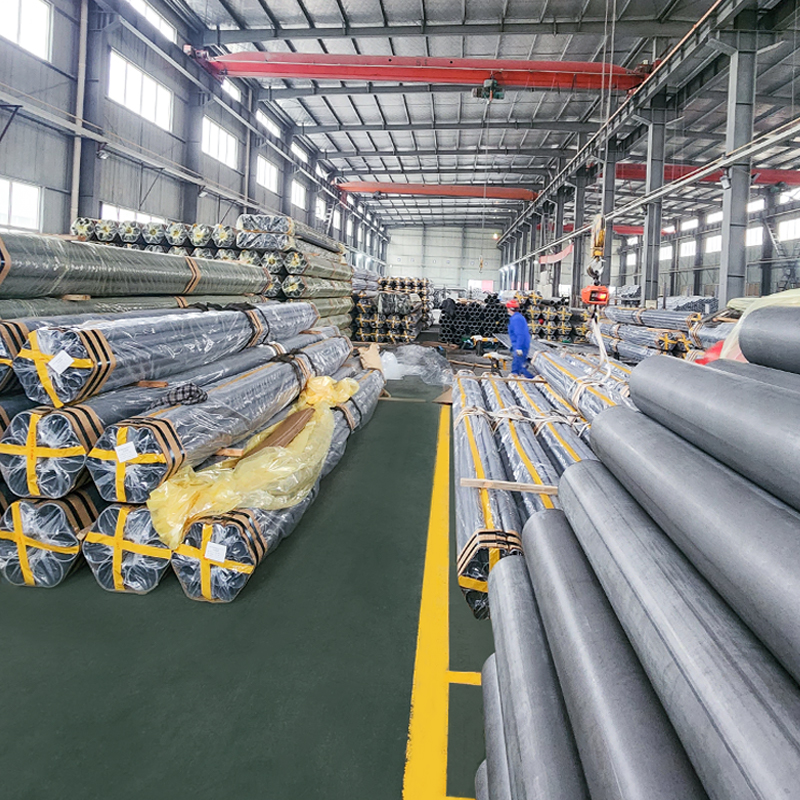
EN 10305-2 Precision Welded Drive Shaft Tubing – E355, E235, E420, E275 (Ø60 x 3...
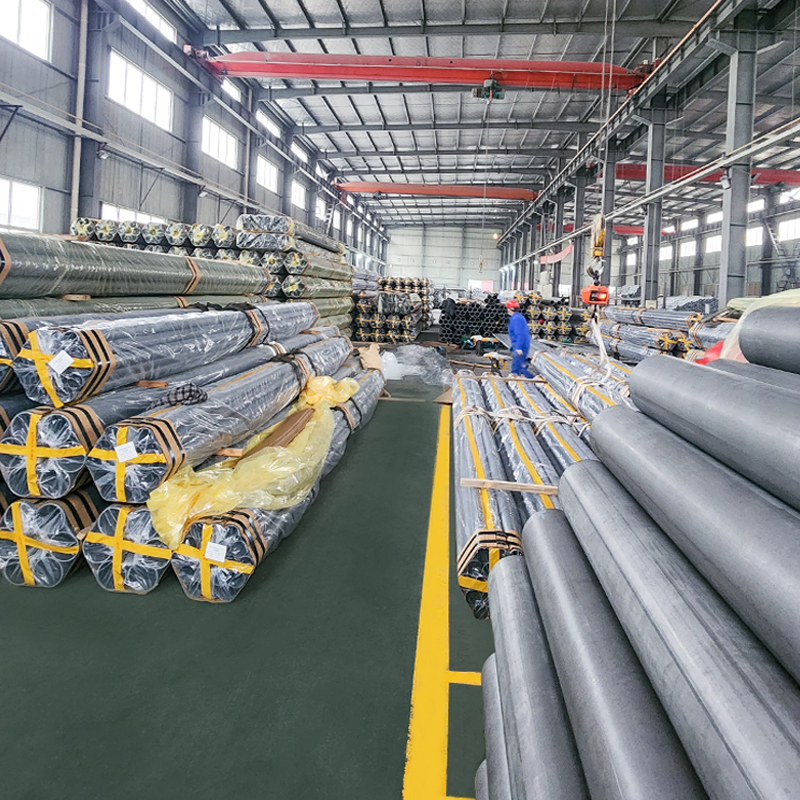
EN 10305-3 E235 Precision Conveyor Roller Tubing – Ø60.3 x 2.0 mm for Material H...
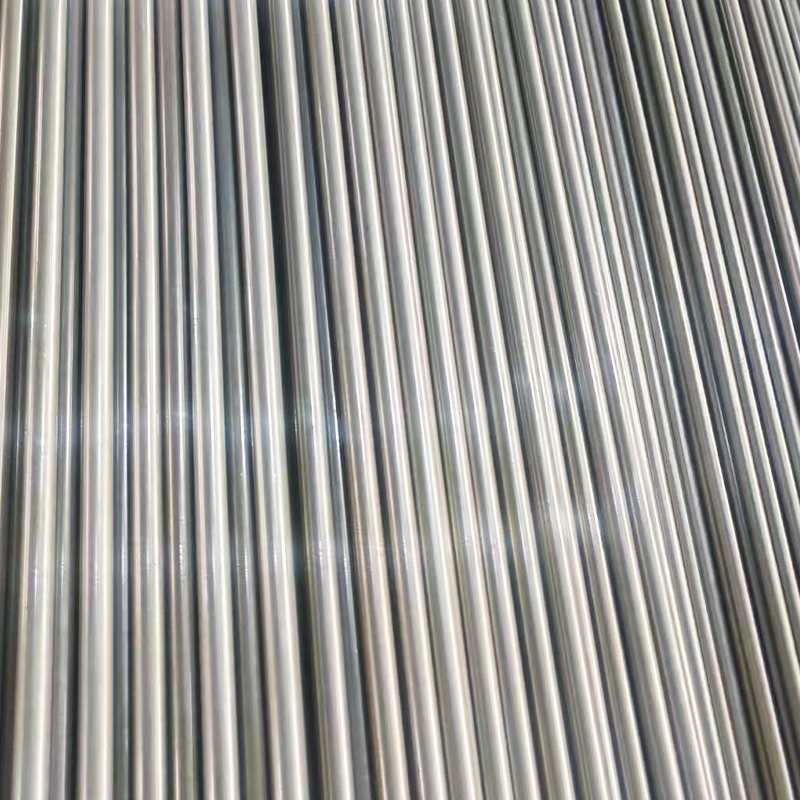
Our Welded Hydraulic Tubes are produced from cold-drawn or ERW-welded strip stee...
Our Honed and Skived & Roller Burnished (SRB) Tubes are manufactured from EN...
Our Hydraulic Cylinder Tubes (CDW) are produced according to EN 10305-2 E355, us...


