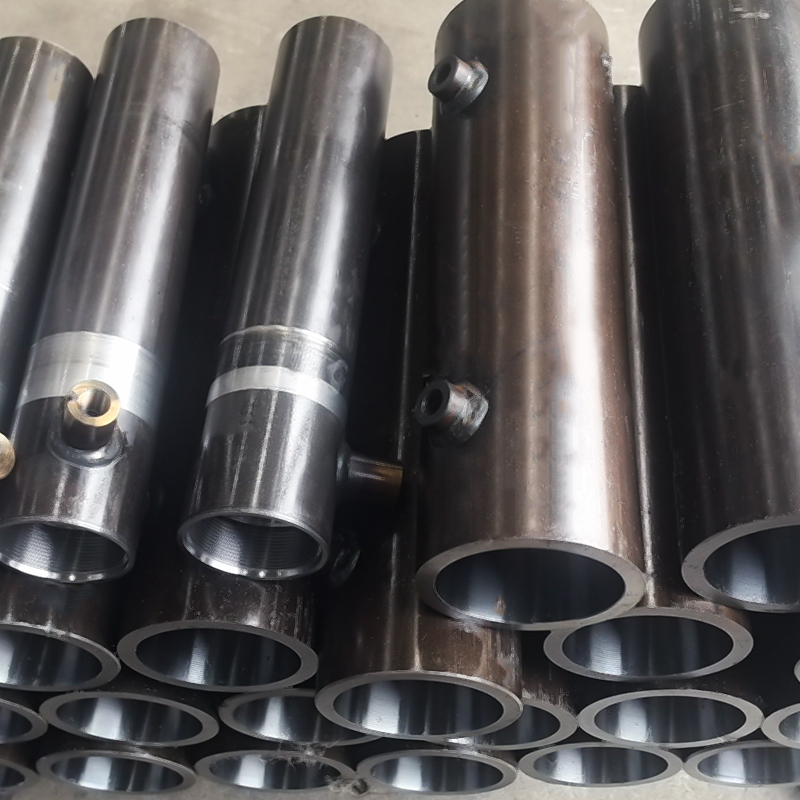
For Finished Hydraulic Cylinder Barrels, internal surface condition directly affects seal life, leakage rate, and overall system efficiency. In practical applications, Ra values are commonly controlled between 0.2–0.4 μm after honing. A smoother surface reduces break-in time, while excessive polishing can weaken oil retention. The balance between plateau honing and cross-hatch angle (typically 30°–45°) is especially critical for high-pressure hydraulic systems used in construction machinery and railways.
From our experience at Jiangsu Suao Metal Product Co., Ltd., maintaining consistent roughness across long barrel lengths requires stable cold drawing, precise heat treatment, and online dimensional monitoring before honing even begins. This upstream control often determines whether downstream finishing is predictable or not.
Dimensional Stability After Heat Treatment
Finished Hydraulic Cylinder Barrels frequently undergo stress-relief or normalization to minimize distortion during machining and service. However, improper heat treatment can introduce ovality or straightness drift, especially on thin-wall designs. For long-stroke cylinders used in wind energy or shipbuilding, straightness is commonly specified within 1/1000 of total length, while ID tolerance often falls in H8 or tighter.
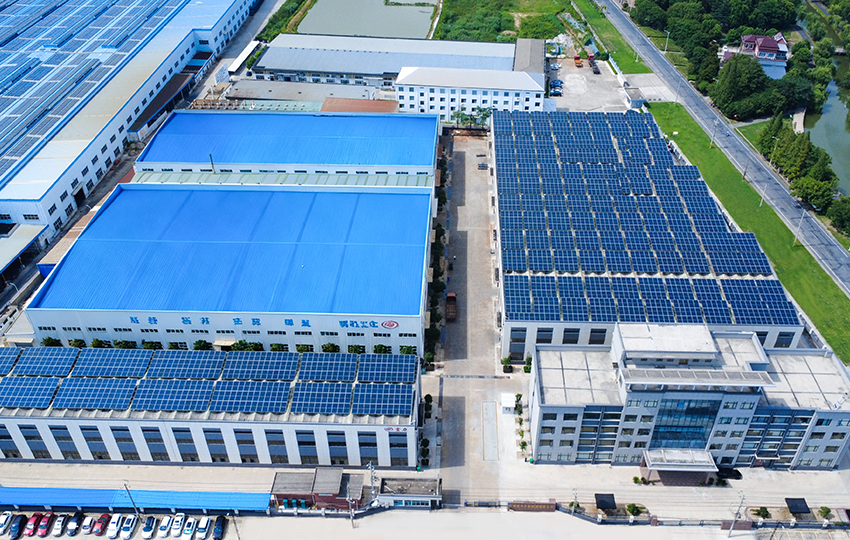
Because we integrate cold drawing, heat treatment, straightening, and finishing in-house across our two production facilities (over 36,000 square meters), we can adjust these parameters in real time. Personally, I find this vertical integration invaluable when customers request high-mix, low-volume Finished Hydraulic Cylinder Barrels with tight delivery schedules.
Choosing Surface Treatments for Storage and Assembly
Surface condition on the outer diameter of Finished Hydraulic Cylinder Barrels often determines how well parts survive transportation and warehouse storage. Depending on climate and logistics cycles, buyers typically select from Surface-Treated Steel Pipes – E-Coated, Phosphated, and Oiled.
- E-Coated barrels offer uniform corrosion protection, making them suitable for overseas shipping and humid environments.
- Phosphated surfaces improve paint adhesion and provide moderate rust resistance for secondary processing.
- Oiled finishes focus on short-term protection and machinability, often preferred for fast assembly lines.
As both Surface-Treated Steel Pipes – E-Coated, Phosphated, and Oiled Manufacturers and a Surface-Treated Steel Pipes – E-Coated, Phosphated, and Oiled Factory in China, we frequently help clients match treatment type to their actual storage duration and assembly flow rather than defaulting to the most expensive option.
Beyond visual checks, industrial buyers increasingly require documented inspection data. For Finished Hydraulic Cylinder Barrels used in automotive parts, oil & gas, or heavy hydraulics, traceability and repeatability are just as important as initial dimensions.
| Control Item |
Why It Matters |
Typical Method |
| Straightness |
Prevents piston binding |
Laser or mechanical gauges |
| ID Tolerance |
Ensures seal compatibility |
Air gauges / bore meters |
| Material Chemistry |
Guarantees mechanical strength |
Spectrometer analysis |
| Surface Defects |
Avoids premature failure |
Eddy current testing |
At Jiangsu Suao Metal Product Co., Ltd., these checks are supported by non-destructive testing, chemical analysis, and online dimensional monitoring, helping us maintain stable quality across our 50,000+ ton annual output.
Application-Driven Design Adjustments
Different industries impose very different requirements on Finished Hydraulic Cylinder Barrels. Construction machinery prioritizes impact resistance and fatigue life, hydraulic systems focus on sealing precision, while wind energy and shipbuilding emphasize corrosion protection due to long-term outdoor exposure. Railways often demand tighter straightness limits to ensure smooth actuation over extended strokes.
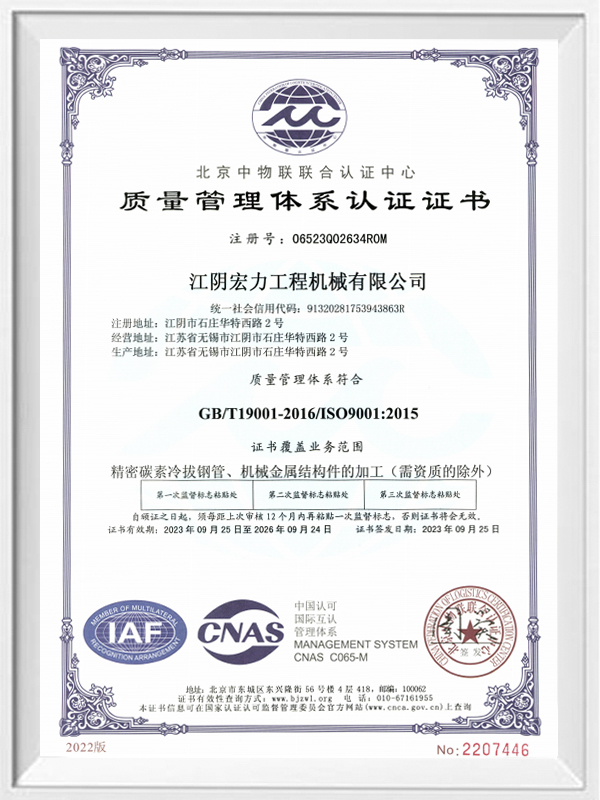
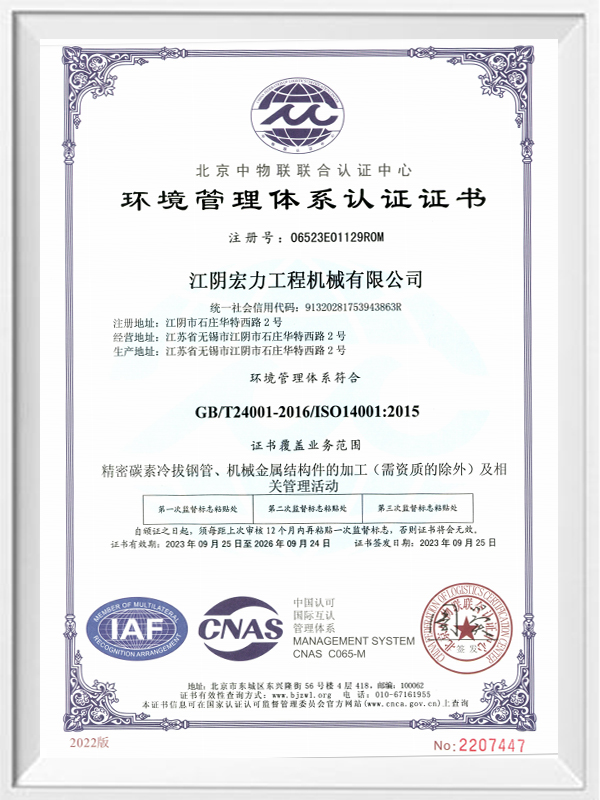
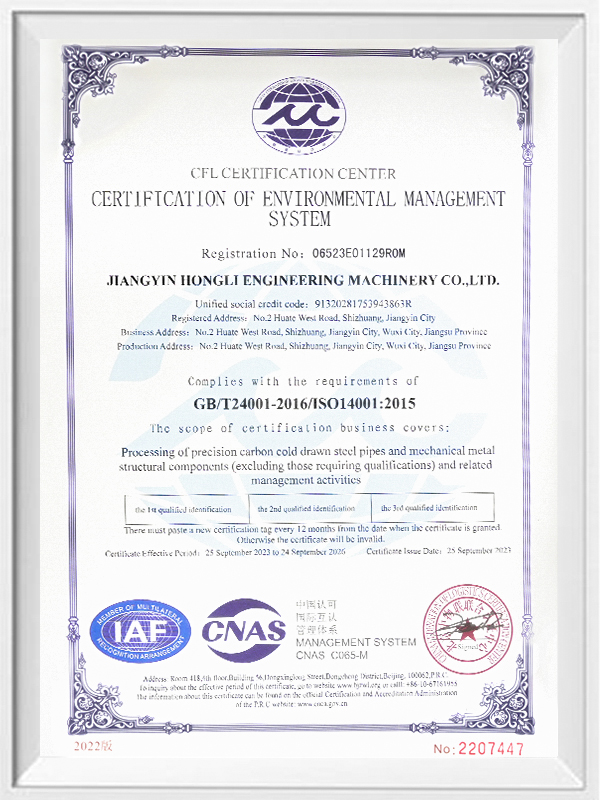
Because our products serve automotive, wind energy, shipbuilding, and oil & gas sectors, we routinely collaborate with customers on wall thickness optimization, surface treatment selection, and cutting/chamfering details. Certified to ISO 9001, ISO 14001, CE, and RoHS, we aim to act not just as a supplier, but as a long-term technical partner—sometimes small process tweaks on our side can save significant assembly time on yours.
With continuous investment in automation and smart manufacturing, we keep refining how Finished Hydraulic Cylinder Barrels are produced, inspected, and delivered—so global clients can rely on consistent performance even in demanding applications.


 English
 Español
 русский