
 English
 Español
 русский
Custom Fabricated Tubing – Steel / Stainless Steel, Bent & Welded, Customized Dimensions and Shapes
Our Custom Fabricated Tubing offers precision bent, welded, and shaped tubes tai...

Content
Mechanical tubing looks deceptively simple: it’s “just a round tube.” But the manufacturing route (welded vs. welded-then-drawn vs. seamless-then-drawn) drives the things engineers and fabricators care about—dimensional control, inside surface condition, consistency, machinability, fatigue behavior, and cost. The three labels that get compared most are:
They’re related—but not interchangeable.
ERW tubing is made from strip/coil formed into a tube and electric-resistance welded along a longitudinal seam. Mechanical tubing under ASTM A513 is a common ERW family.
DOM tubing is ERW tubing that has been cold-drawn through a die and over a mandrel after welding (typically after annealing). It’s commonly produced to ASTM A513 Type 5. DOM is not truly seamless—it starts as ERW.
CDS tubing means cold drawn seamless: the starting tube is seamless, then cold-finished (drawn) to improve tolerance and surface. In North America, a frequent spec is ASTM A519 (seamless mechanical tubing). In Europe/UK, “CDS” commonly points to EN 10305-1 (seamless cold drawn precision tubes).
Most ERW mechanical tubing starts as flat steel strip. It’s progressively roll-formed into a round and the edges are heated by electrical resistance and forged together to make the seam.
Two seam-related details matter in real designs:
If you’re buying to ASTM A513, the standard explicitly covers ERW mechanical tubing in multiple shapes and size ranges (including round, square, rectangular).
Practical consequence: ERW is usually the most economical way to get mechanical tube, but you must pay attention to ID condition, weld seam orientation, and the tolerance/straightness class you need.
DOM is best understood as a finishing process applied to welded tube:
This is why DOM is often chosen for machined parts and tight-fit assemblies (bushings, sleeves, pins, automotive and motorsport components): you’re paying for more controlled geometry and a better “machining starting point.”
Key reality check: DOM originates as welded tubing—the seam is heavily worked and typically far less “seam-like,” but the process lineage is still welded-first.
“Seamless” means the starting hollow isn’t made by rolling strip and welding edges—it’s formed as a hollow by a seamless route, then often cold drawn to hit tighter tolerances and surface requirements.
Two common specification families illustrate how CDS is used:
Why engineers pay for CDS: no longitudinal weld line, often excellent ID quality after proper cold finishing, and a strong foundation for honing/skiving/roller-burnishing when the tube becomes a cylinder or precision bore component.
A persistent myth is “DOM is always stronger than ERW” or “CDS is always stronger than DOM.” In practice, heat treatment and delivery condition can dominate the outcome.
A clean way to see the trade-off is in EN 10305-1 grades and delivery conditions, where minimum properties are stated for conditions such as +C (as drawn), +SR (stress relieved), and +N (normalized).
| Grade / condition | Yield strength (min) | Tensile strength | Elongation (min) | Fabrication implication |
|---|---|---|---|---|
| E355 +C | — | ≥ 640 MPa | ≥ 4% | High strength from cold work; low ductility, less forgiving bending/forming |
| E355 +SR | ≥ 450 MPa | ≥ 580 MPa | ≥ 10% | Better stability and ductility vs +C; good compromise for machining and moderate forming |
| E355 +N | ≥ 355 MPa | 490–630 MPa | ≥ 22% | More ductile and consistent for forming/welding; lower minimum yield than +SR/+C |
How to use this: when comparing ERW vs DOM vs CDS, don’t stop at the process label. Always ask: What grade? What delivery condition / heat treatment? What mechanical minima are specified on the certs?
If the tube is just a structural spacer, “tube-ish” is fine. If it becomes a bearing surface, a slip fit, a honed cylinder, or a precision sleeve, dimensional control becomes design-critical.
ASTM A513 distinguishes tolerance tables for different conditions, including tighter tolerance regimes for sink-drawn and DOM product forms.
Even straightness is called out in A513 dimensional guidance. For round tubing, a commonly cited straightness tolerance is 0.030 in per 3 ft up to 8.000 in OD and 0.060 in per 3 ft at 8.000 in OD and above.
Rule of thumb: choose ERW when the assembly tolerates more variation; choose DOM when you need better concentricity/ovality control; choose CDS when you need seamless behavior and/or a precision-bore pathway.
Engineers often specify ERW tube and then discover too late that the ID weld bead/flash interferes with:
While the outside bead is commonly removed, the inside flash may remain unless you request flash removal or controlled flash. DOM’s cold drawing step usually improves ID uniformity, but if your design is sensitive, you should still specify ID requirements rather than assume them.
For many static structures, ERW performs extremely well when properly specified and fabricated.
Where CDS can be preferred is when:
This doesn’t mean ERW fails or DOM is unsafe—it means that when the margin is tight, removing a variable (the longitudinal weld line) can be worth the extra cost.
Even without quoting volatile market prices, the cost drivers are stable:
Availability follows the same logic: ERW is ubiquitous; DOM and CDS are more dependent on mill/distributor programs and lead times.
| Attribute | ERW tubing | DOM tubing | CDS tubing |
|---|---|---|---|
| Starting form | Strip/coil formed + ERW seam | ERW tube, then cold drawn over mandrel | Seamless hollow, then cold drawn/finished |
| Longitudinal seam | Yes | Weld-origin (heavily worked) | No |
| OD bead | Commonly removed | Typically improved by drawing | Not applicable |
| ID flash | May remain unless specified | Typically more uniform after drawing | Often good; depends on finish route |
| Tolerances | Good, depends on type/condition | Generally tighter | Often very tight |
| Best fit | General fabrication, non-critical bores | Machined parts, tighter fits | Precision bores, fatigue-critical uncertainty reduction |
| Cost drivers | Lowest processing intensity | Added anneal + drawing steps | Most process-intensive |
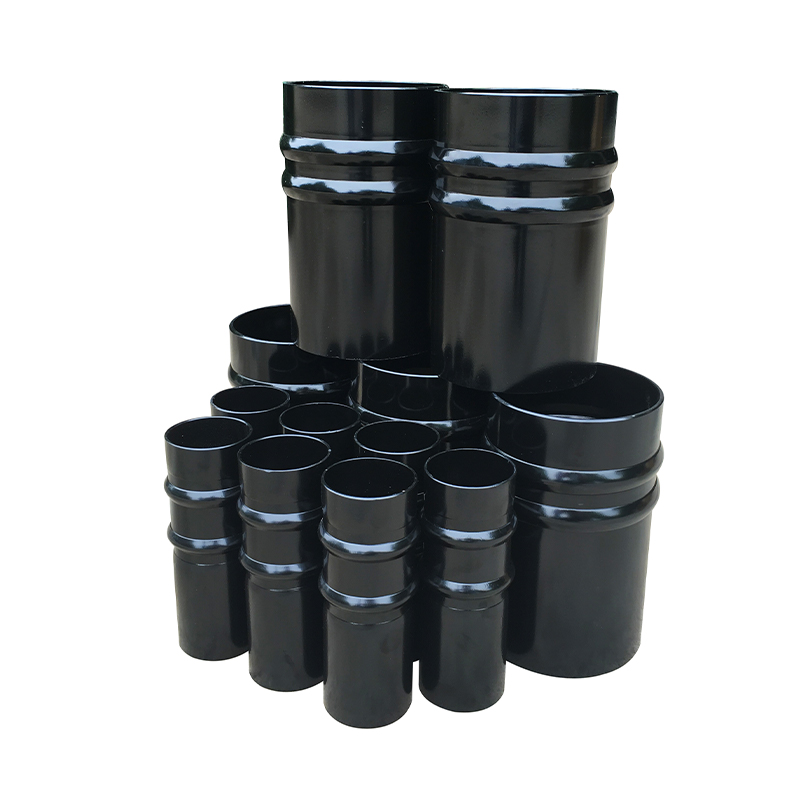
Our Custom Fabricated Tubing offers precision bent, welded, and shaped tubes tai...
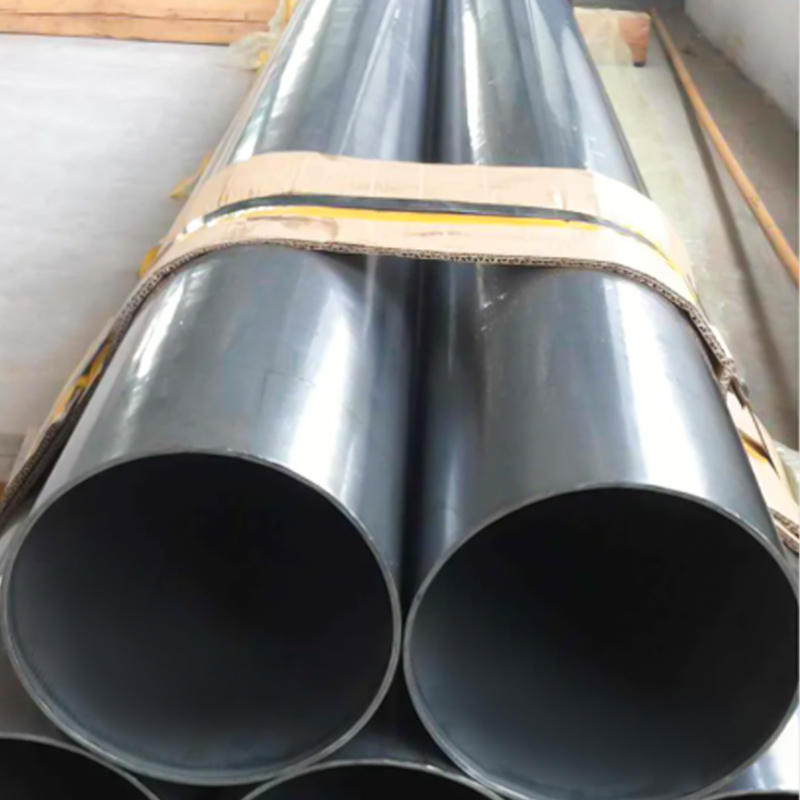
Cold-Rolled Steel Tube – ASTM A513 Type 2 Grades 1010, 1015, 1020, 1026 (1” x 0....
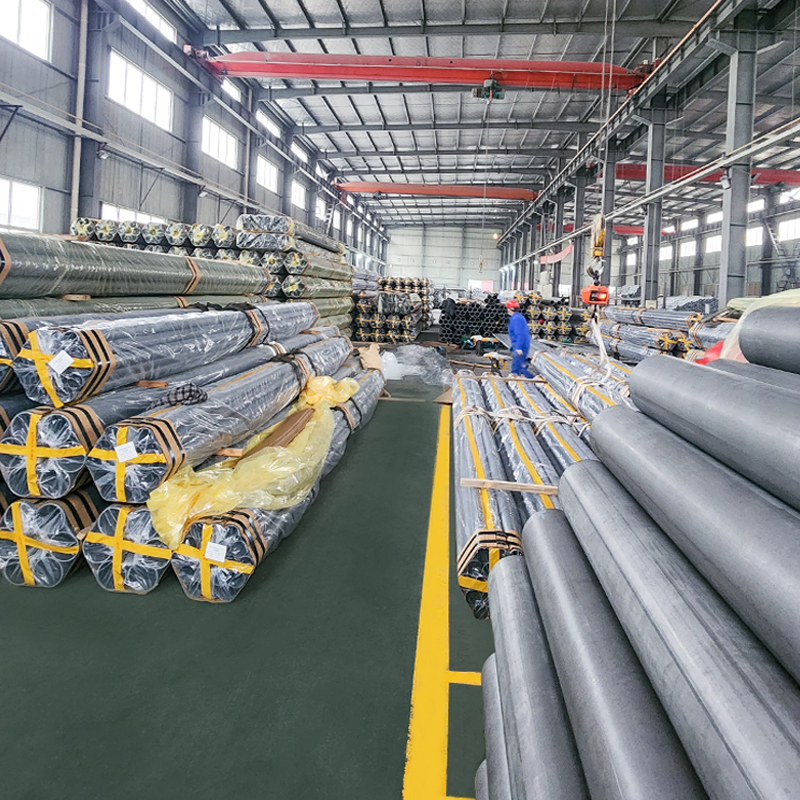
EN 10305-3 E235 Precision Conveyor Roller Tubing – Ø60.3 x 2.0 mm for Material H...
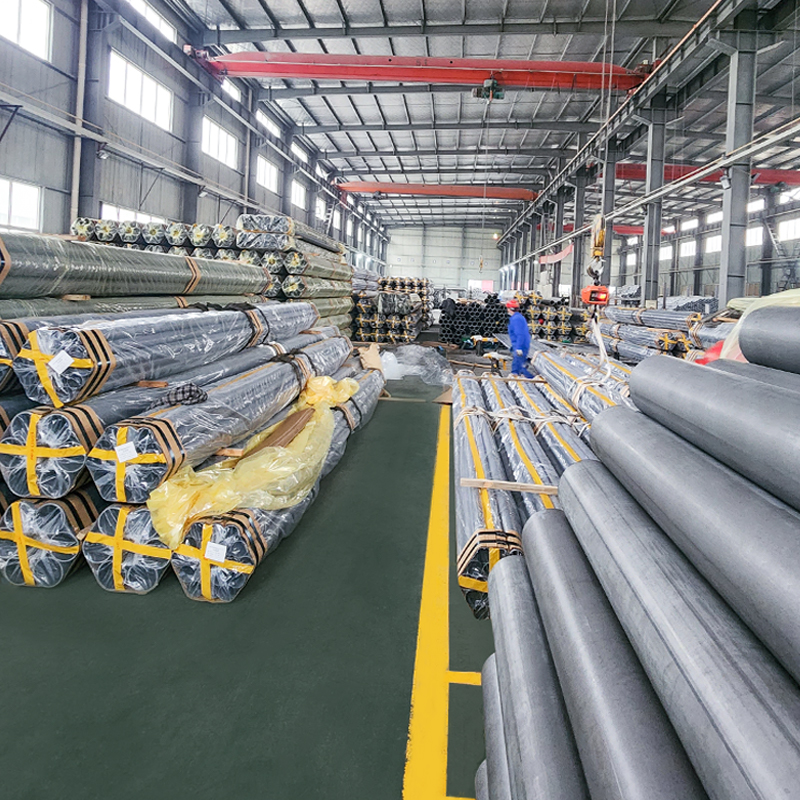
DIN 2394 ST37.2 Heavy-Duty Conveyor Roller Tubing – Ø89 x 3 mm for Mining & ...
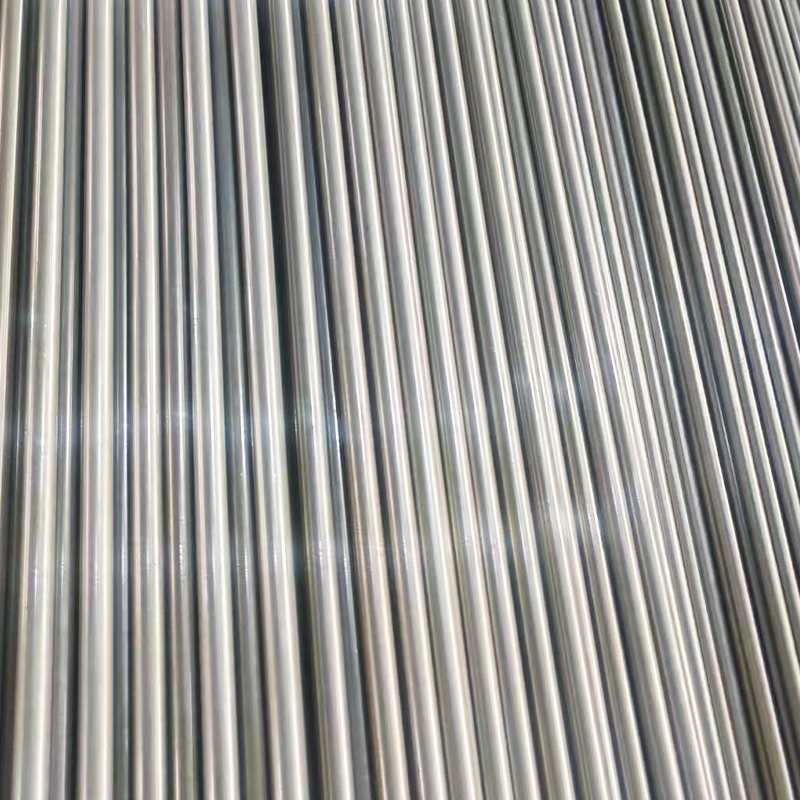
Our Welded Hydraulic Tubes are produced from cold-drawn or ERW-welded strip stee...
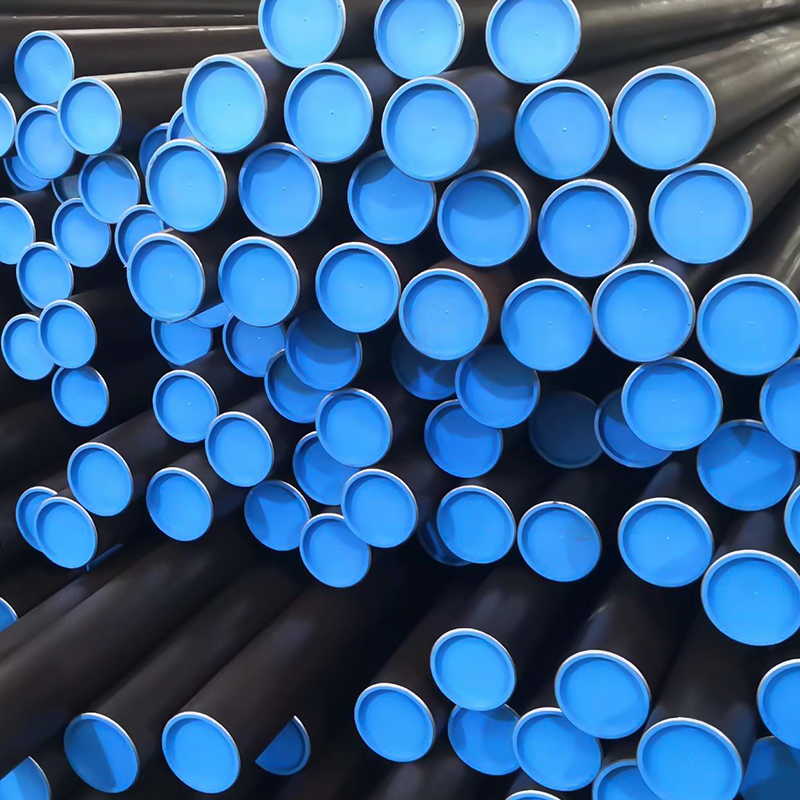
Cold Drawn Seamless (CDS) steel tubes manufactured according to EN 10305-1, avai...


