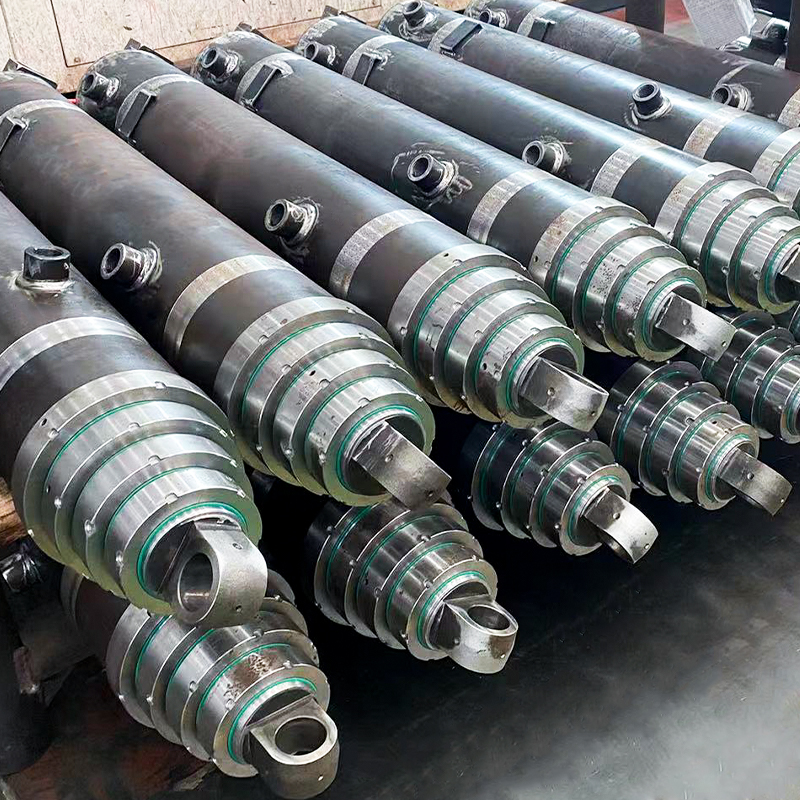
In Telescopic Cylinders, concentricity between successive stages directly determines load stability and side-force tolerance. Practical designs usually target radial clearances in the 0.05–0.15 mm range, depending on bore size and operating pressure. Excess clearance increases vibration and seal wear, while overly tight fits raise friction and risk scuffing during extension. For multi-stage assemblies used in dump trucks or lifting platforms, maintaining consistent straightness across every tube segment is often more critical than absolute diameter tolerance.
At Jiangsu Suao Metal Product Co., Ltd., we rely on cold drawing combined with precision straightening and online dimensional monitoring to keep these interfaces predictable before customers start honing or assembling stages. From my perspective, upstream tube accuracy saves significant alignment work later in cylinder integration.
Material and Wall Thickness Optimization for High Stroke Ratios
Telescopic Cylinders often achieve stroke-to-retracted-length ratios of 4:1 or higher, which puts unique demands on tube strength. Designers typically vary wall thickness by stage: thicker outer barrels handle bending loads, while inner stages prioritize weight reduction. Low-carbon steels such as E355 or equivalent grades are commonly selected for their balance of formability and fatigue resistance, especially when combined with controlled heat treatment.
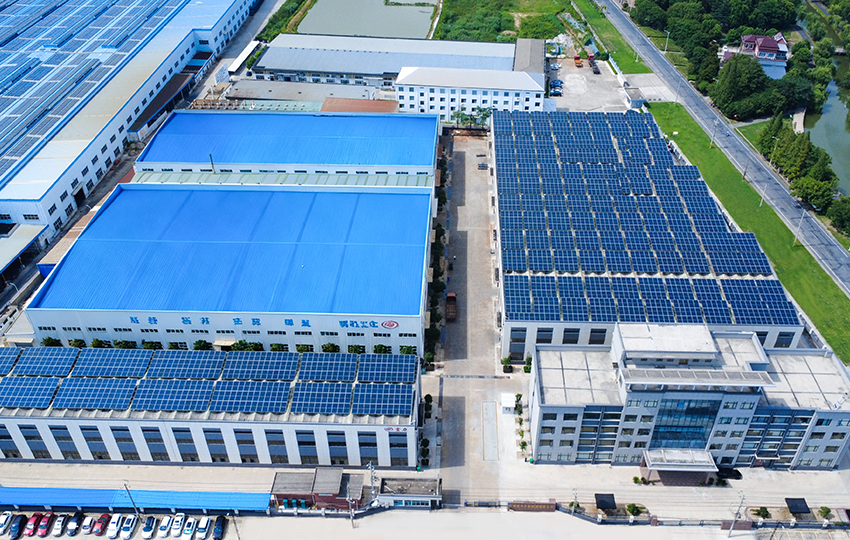
Because we integrate cold drawing, heat treatment, and finishing across two production facilities totaling more than 36,000 square meters, we can support customized wall profiles for high-mix, low-volume Telescopic Cylinders—something many OEMs appreciate when developing compact lifting systems.
Surface Treatment Choices for Nested Tube Assemblies
Nested stages in Telescopic Cylinders create multiple metal-to-metal interfaces, making corrosion protection and initial lubricity especially important. Depending on storage duration and operating environment, manufacturers typically choose among Surface-Treated Steel Pipes – E-Coated, Phosphated, and Oiled.
- E-Coated tubes offer uniform protection on internal and external surfaces, suitable for long-distance export or humid job sites.
- Phosphated finishes improve paint adhesion and provide a micro-texture that supports lubricant retention during early operation.
- Oiled surfaces focus on short-term rust prevention and smooth assembly, often favored for fast production cycles.
As Surface-Treated Steel Pipes – E-Coated, Phosphated, and Oiled Manufacturers and a dedicated Surface-Treated Steel Pipes – E-Coated, Phosphated, and Oiled Factory in China, we often help customers match treatment type to real-world logistics rather than relying on generic specifications.
Because Telescopic Cylinders operate with multiple moving stages, even small defects can amplify through the stack. For applications in construction machinery, railways, and hydraulic systems, buyers increasingly require documented inspection across both geometry and material properties.
| Inspection Item |
Function |
Common Method |
| Straightness |
Prevents stage binding |
Laser or mechanical gauges |
| Wall Thickness |
Ensures pressure capacity |
Ultrasonic measurement |
| Surface Defects |
Avoids premature seal failure |
Eddy current testing |
| Chemical Composition |
Confirms mechanical strength |
Spectrometer analysis |
At Jiangsu Suao Metal Product Co., Ltd., these controls are embedded directly into production, supported by non-destructive testing, chemical analysis, and online dimensional monitoring—helping us maintain consistent quality across our 50,000+ ton annual output.
Application-Driven Design Adjustments
Telescopic Cylinders used in automotive transport equipment emphasize compact retracted length, while wind energy and shipbuilding prioritize corrosion resistance and long fatigue life. In oil & gas or heavy lifting, pressure stability and material traceability become dominant concerns. These differences often lead to tailored chamfer angles, cutting tolerances, and surface treatments for each project.
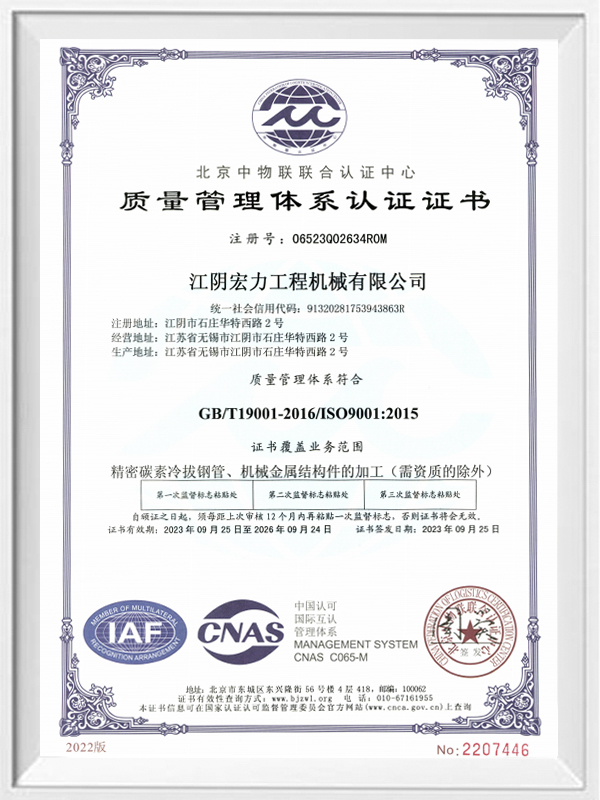
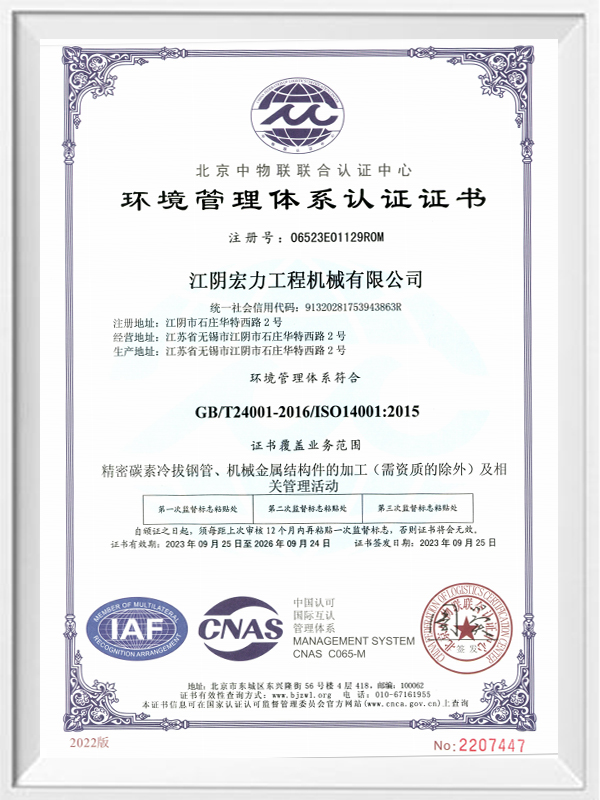
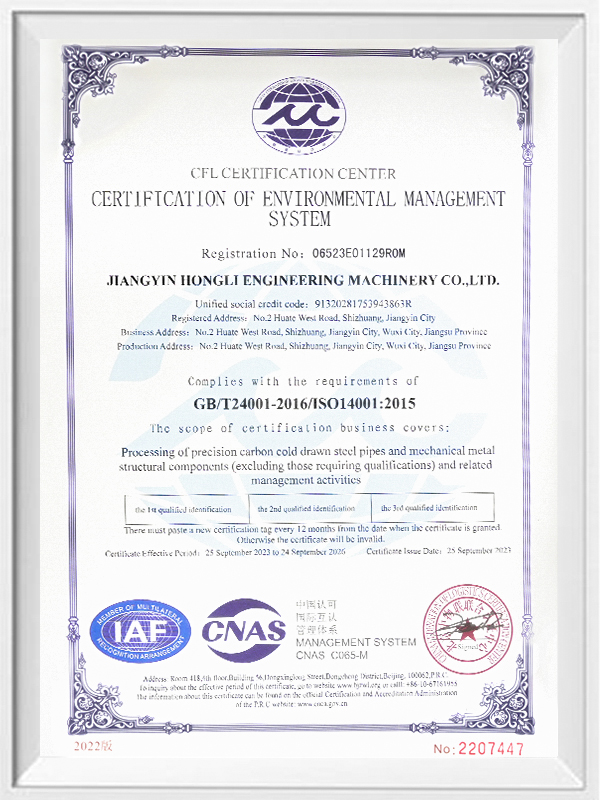
Since our tubes serve construction machinery, automotive parts, railways, and offshore sectors, we regularly collaborate with customers on finishing details and process sequencing. Certified to ISO 9001, ISO 14001, CE, and RoHS, we try to act as more than a material supplier—sometimes small adjustments in our cold drawing or surface treatment stages can significantly improve final Telescopic Cylinder performance.
With continuous investment in automation and smart manufacturing, we keep refining how tube components for Telescopic Cylinders are produced and delivered, supporting global partners who depend on reliable, repeatable hydraulic motion.


 English
 Español
 русский