
 English
 Español
 русский
Finished Hydraulic Cylinder Barrel – Custom-Machined, Honed Steel Tube, Ready-to-Assemble
Our Finished Hydraulic Cylinder Barrels are precision-machined, honed steel tube...

Content
If you have replaced the seals in a hydraulic cylinder twice in six months and the leak came back both times, the instinct is to question the seal supplier. Wrong material, wrong durometer, wrong profile — there must be something wrong with the seal. In most cases, there is not. The seal is doing exactly what a seal does when it is asked to run against a bore surface that was never properly finished. The inner diameter of the cylinder tube is the variable that determines how long any seal will last, and it is the variable that gets examined last, if at all.
A hydraulic cylinder seal does not fail in isolation. It fails in response to the surface it contacts, the pressure it manages, and the geometry it is asked to conform to on every stroke. When a seal fails prematurely — cutting, extruding, abrading, or simply leaking within a fraction of its rated service life — the post-mortem almost always focuses on the seal itself: grade, compatibility with fluid chemistry, installation damage, or incorrect sizing.
These are legitimate failure modes. But they are also the easy answers. A damaged seal is visible. A bore surface that is 0.4 µm Ra too rough is not visible to the naked eye. Neither is a bore that is 0.03 mm out of round. Neither is a honed surface where the cross-hatch angle drifted outside specification during a production run. These are the conditions that produce a cylinder that leaks every time a new seal kit goes in — and they can only be found by measuring the bore, not inspecting the seal.
The practical consequence is that maintenance teams replace seals repeatedly without resolving the underlying cause, accumulating downtime and parts cost while the bore continues to wear whatever seal is installed next.
The inner bore of a hydraulic cylinder serves two simultaneous functions that pull in opposite directions. It must be smooth enough that the seal lip glides across it without abrasive wear, and it must retain a controlled micro-texture so that a thin film of hydraulic fluid clings to the surface and lubricates the seal lip on every stroke. A surface that fails either condition shortens seal life — and the failure mode is different in each case.
When the bore is too rough, the peaks of the surface profile act as cutting edges against the elastomeric seal lip. Each stroke draws the lip across these micro-peaks. The damage is cumulative and invisible until the seal begins to pass fluid. In high-cycle applications — cylinders that stroke hundreds of times per hour — an over-rough bore can destroy a new seal within days. The failed seal will show consistent abrasive scoring along the lip contact zone, often misread as contamination damage.
When the bore is too smooth, the opposite problem develops. An excessively polished bore, with Ra values below the recommended floor, cannot retain the lubricating oil film that the seal lip depends on. Without that film, the seal runs dry against the bore surface at the beginning of each stroke, generating heat and accelerating elastomeric hardening. Over time, the seal lip loses flexibility, stops conforming to the bore, and begins to leak not because it is worn through but because it can no longer maintain contact geometry. This failure mode is frequently misdiagnosed as heat damage or fluid incompatibility.
The cross-hatch pattern produced by honing serves a third function beyond Ra control. The intersecting groove angles — typically specified between 30° and 45° from horizontal — create a directional micro-channel network that distributes lubricant evenly across the bore and prevents the seal lip from hydroplaning or running on a locally starved surface. A bore that was skipped-honed, over-honed in one direction, or finished by a process that did not produce a true cross-hatch will show uneven seal wear and erratic leak behavior that is extremely difficult to correlate to any single identifiable cause.
Industry-standard guidance on bore surface finish converges on a relatively narrow window. For piston seal applications — where the seal runs against the cylinder bore during each stroke — the widely referenced range is Ra 0.2 µm to Ra 0.8 µm (approximately 8 to 32 microinches). Within this range, the surface is smooth enough to avoid abrasive wear on the seal lip while retaining sufficient micro-texture to hold the lubricating film.
For rod seal applications, where the piston rod surface contacts the rod seal and wiper, the specification is tighter: Ra 0.1 µm to Ra 0.4 µm (approximately 4 to 16 microinches). Rod seals operate under external exposure and wiper contact, so a finer finish is needed to prevent ingress paths for contamination and to minimize the film thickness carried out of the cylinder on each extension stroke.
| Contact Surface | Ra (µm) | Ra (µin) | Primary Risk if Out of Range |
|---|---|---|---|
| Cylinder bore (piston seal) | 0.2 – 0.8 | 8 – 32 | Abrasive wear (too rough) / dry running (too smooth) |
| Piston rod (rod seal) | 0.1 – 0.4 | 4 – 16 | Contamination ingress / film carry-out |
These ranges assume the surface finish is also consistent across the full bore length. A bore that measures within specification at the measurement point but has localized rough zones — often at the ends of the honing stroke, where the tool reverses direction — will damage seals at those specific positions. Cylinders that leak only at the ends of stroke, or show seal wear concentrated at one edge, frequently have exactly this profile.
Surface finish is the most commonly discussed bore parameter, but geometric accuracy — specifically roundness and straightness — is equally capable of destroying seals, and is measured even less frequently in field maintenance practice.
A bore that is out of round forces the seal to distort on every stroke. As the piston passes through the high-diameter zone, the seal is compressed beyond its designed squeeze percentage. As it passes through the low-diameter zone, sealing contact pressure drops and fluid bypasses the lip. The seal experiences cyclical over-compression and under-compression hundreds or thousands of times per shift. The elastomeric material fatigues, loses memory, and either extrudes at the high-compression points or leaks permanently at the low-compression points. Roundness error as small as 0.02 mm in a mid-sized cylinder bore can halve seal service life under continuous duty conditions.
Bore straightness — the deviation of the bore axis from a true straight line along its length — introduces a related problem. A bore that curves or tapers along its length creates a side load on the piston and seal assembly that was not part of the original force calculation. This side load shifts the contact zone of the piston seal to one side of the bore, producing asymmetric wear that appears identical to externally caused side-loading damage. In practice, the two causes are often confused, and cylinders are returned for rod alignment corrections when the actual problem is in the tube bore geometry.
The bore finish that a cylinder operates with for its entire service life is established at the time the cylinder tube is manufactured — and it is largely a function of what kind of tube was used and how it was processed before the cylinder was assembled.
Standard structural steel tubes, even when honed after the fact, carry inherent limitations in achievable finish quality and dimensional consistency. The base material grain structure, the presence of residual seam weld zones in welded tubes, and the variable wall thickness that results from non-precision rolling processes all limit how tightly the bore can be finished and how consistently that finish holds its specification across the tube length.
Cold-drawn precision tubes — particularly those produced through a drawn-over-mandrel (DOM) process — arrive at a fundamentally different starting point. The cold-drawing process compresses the tube against a precision mandrel, producing an inner bore that is already close to the target diameter, dimensionally consistent along its length, and carrying a work-hardened surface layer that responds more predictably to honing. The resulting bore holds tighter roundness and straightness tolerances and reaches the target Ra range with less material removal, which preserves wall thickness and dimensional uniformity.
For applications where bore finish is the primary performance requirement, a hydraulic cylinder tube produced specifically for cylinder applications — rather than adapted from general structural or mechanical tubing — delivers a bore that is calibrated to seal-compatible specifications before it enters the honing stage. In demanding applications where standard honed bores still produce borderline seal life, a Special Smooth Inside Diameter (SSID) tube provides an inner bore surface engineered to tighter Ra and roundness tolerances than conventional honed cylinder tubing, reducing the sensitivity of seal performance to downstream machining variation. For systems requiring consistent dimensional accuracy across all tube surfaces, a precision seamless tube eliminates the weld-zone variability that limits structural alternatives.
Measuring the bore before a seal kit goes in costs minutes. Discovering that the bore was the problem after the third seal kit has failed costs significantly more. The following checks establish whether the bore is contributing to seal failures before the cylinder is reassembled.
Surface roughness measurement. A contact profilometer (surface roughness tester) with a stylus tip appropriate for the bore diameter will measure Ra directly. Take readings at minimum three positions along the bore length — near each end and at mid-stroke — and at two angular orientations at each position. Values outside the 0.2–0.8 µm range for piston seal applications require corrective honing or, if the bore is already at minimum wall thickness, tube replacement.
Roundness measurement. An internal bore gauge or air gauge at multiple axial positions identifies out-of-round conditions. Measure at each position in at least four angular orientations 45° apart. The difference between the largest and smallest reading at any single axial position is the roundness error at that location. For most seal applications, roundness error should not exceed 0.01 mm to 0.02 mm.
Straightness and taper check. Measure the bore diameter at the same angular reference at multiple positions along the bore length. Consistent diameter change from one end to the other indicates taper; a non-linear diameter profile indicates bore curvature. Either condition contributes to uneven seal loading and should be corrected before reassembly.
Visual inspection under magnification. A bore scope or illuminated inspection mirror will reveal scoring, galling, corrosion pitting, and honing pattern irregularities that instrument measurement alone may not fully characterize. Scoring that runs parallel to the bore axis — indicating metal-to-metal contact during a previous operation — is a reliable indicator that roundness or alignment issues were already present.
When bore measurements indicate that the tube is worn or finished beyond recoverable limits, the cost-effective path is replacement with tube stock that meets the dimensional and finish specifications the application actually requires — rather than fitting a new seal kit into a bore that will produce the same failure within the same interval.
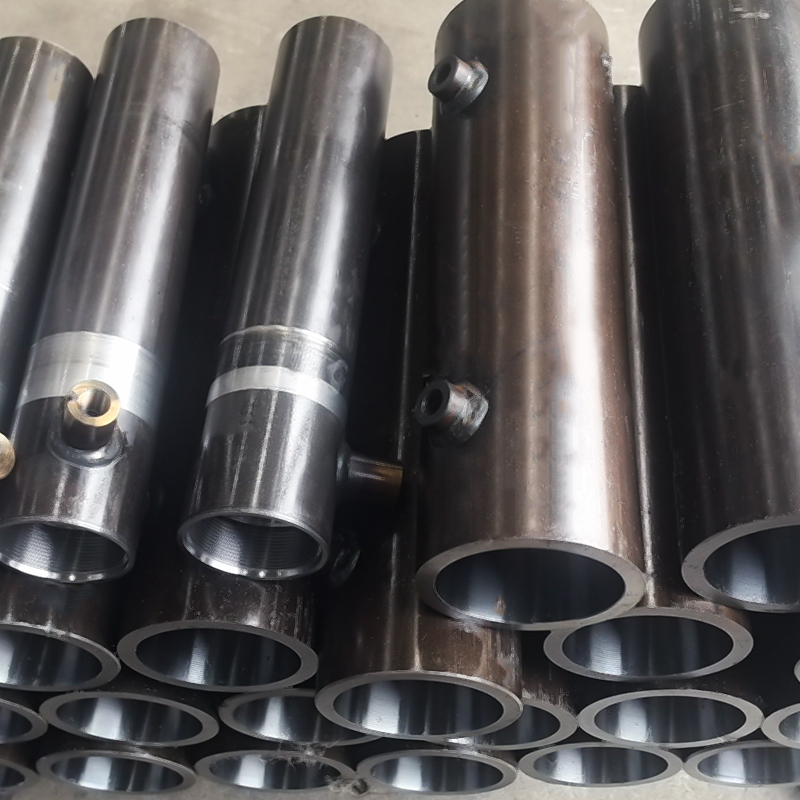
Our Finished Hydraulic Cylinder Barrels are precision-machined, honed steel tube...
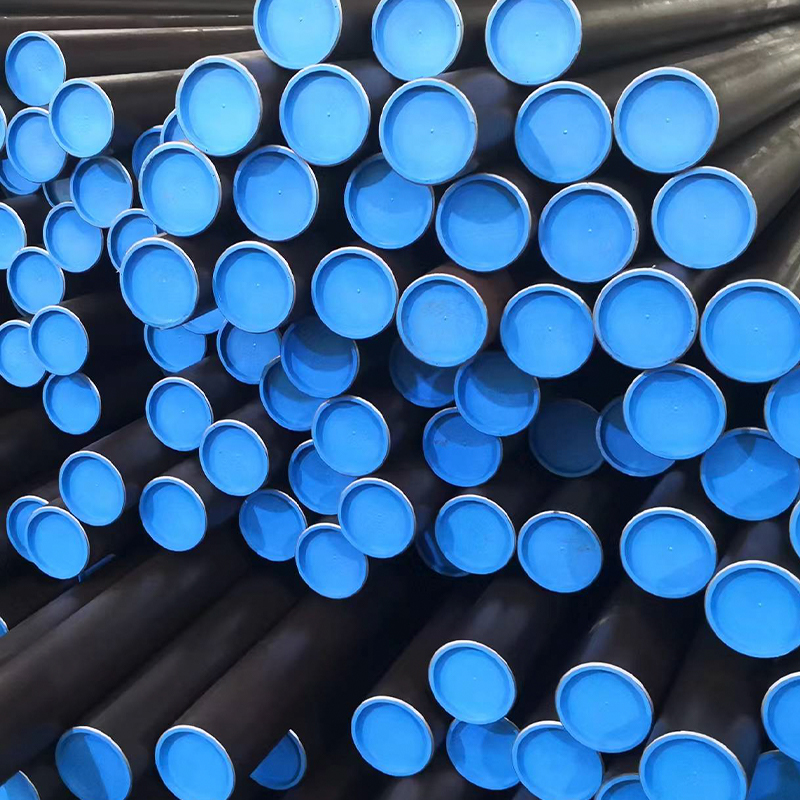
Our ASTM A519 Hydraulic Cylinder Tubes are precision-manufactured using cold dra...
Our Hydraulic Cylinder Tubes (CDW) are produced according to EN 10305-2 E355, us...
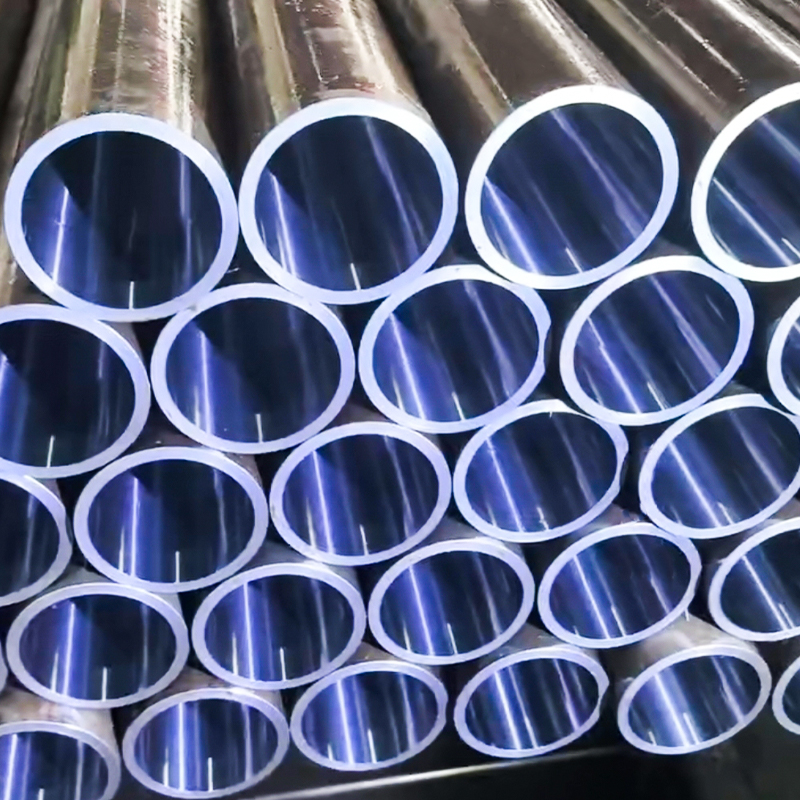
Our ASTM A513 Cold Drawn Welded (CDW) Honed & SRB Tubes are precision-
Our Honed and Skived & Roller Burnished (SRB) Tubes – ASTM A519 are precisio...
Our EN 10305-2 Cold Drawn Welded (CDW) Honed & SRB Tubes are precision-proce...


