
 English
 Español
 русский
Special Shaped Steel Pipes – Custom Profiled Tubes, Cold Formed / Hot Rolled, EN 10296-2, For Structural & Automotive Use
Our Special Shaped Steel Pipes are designed for applications requiring custom pr...

Content
When a procurement engineer needs 50 custom steel tubes for a prototype hydraulic assembly, the request looks simple on paper. But behind that order lies a chain of manufacturing decisions that a standard production run never has to face. Small-batch custom steel tubes are not simply "fewer of the same thing." They occupy a different category entirely — one where fixed costs loom large, material sourcing becomes awkward, and quality consistency demands far more discipline per unit than large-volume orders ever require.
Understanding exactly why small-batch custom orders are harder to produce — and what a capable supplier does to absorb those difficulties — gives buyers a clearer framework for evaluating potential partners before placing an order.
In a high-volume production run, every fixed cost — tooling preparation, machine setup, first-article inspection, process documentation — gets divided across thousands of pieces. The per-unit burden is negligible. In a small-batch order of 20, 50, or 200 tubes, those same fixed costs sit on top of a fraction of the output. The economics look entirely different, and so does the risk profile.
Custom specifications compound the problem. A buyer who needs tubes with a non-standard outer diameter, a tighter wall thickness tolerance than DIN or ASTM defaults, a specific material grade, or a particular surface finish is asking a manufacturer to depart from its default workflow. Each departure requires deliberate setup, verification, and documentation. On a short run, there is almost no room for process drift before the entire batch is at risk.
This is the central tension of small-batch custom manufacturing: the complexity is essentially identical to a large run, but the quantity available to absorb errors, setup losses, and yield variation is a fraction of the size.
Every custom tube specification requires dedicated tooling — drawing dies, roll sets, mandrels, end-forming tools, cutoff fixtures. For a standard product, this tooling investment was made years ago and has been fully amortized. For a custom specification, the supplier must either manufacture or procure new tooling, validate it through trial runs, and then configure the production line specifically for that order.
Setup time on a precision cold-drawing line or a welded tube mill can range from several hours to a full shift, depending on the complexity of the specification. On a batch of 1,000 tubes, setup represents perhaps 5% of the total production time. On a batch of 30 tubes, that same setup could represent more than 50% of the time invested — while the tooling cost remains unchanged.
Suppliers who cannot manage this economics well respond in one of two ways: they set high minimum order quantities to make small-batch custom work financially unviable, or they produce it but absorb the cost inefficiency in ways that affect lead time, pricing unpredictability, or quality attention. Neither outcome serves the buyer.
Raw material procurement creates a second layer of difficulty. Steel mills and primary material suppliers operate on their own minimum order quantities — typically measured in tons, not meters. A buyer who needs 50 tubes in an uncommon grade such as E355, 4130, or TP316L may find that the material required for their order represents a small fraction of the mill's minimum shipment.
A supplier without strategic material inventory management is left with three bad options: purchase far more material than needed and pass the overrun cost to the buyer; ask the buyer to absorb a longer lead time while material is sourced; or substitute a similar but not identical grade without full transparency.
For buyers in industries where material traceability is mandatory — hydraulics, medical equipment, aerospace sub-assemblies, energy applications — a material substitution without documentation is not a minor inconvenience. It is a compliance failure. The sourcing challenge for exotic or non-standard grades is real, and how a supplier manages it reflects directly on the reliability of their supply chain.
Quality control in a large production run benefits from statistical process control: measurements are taken regularly across a large population, trends are identified and corrected, and the overall process is continuously validated. The larger the batch, the more data points are available to confirm that the process is stable.
In a short run, the statistical foundation is thin. A first-article inspection confirms that the first pieces meet specification, but a short batch provides little opportunity to detect gradual dimensional drift, surface quality variation, or mechanical property inconsistency before the entire order is complete.
This is particularly critical for cold drawn precision steel tubes, where tolerances on outer diameter and wall thickness may be specified at ±0.05 mm or tighter. A single incorrect die setup, a drawing speed variation, or an inadequate lubrication condition can shift dimensions across the entire short run before any corrective action is possible. The result is a batch that passes first-article inspection but fails final dimensional verification — and with no remaining stock to recover from.
Experienced suppliers address this through more frequent in-process checks on short runs, not fewer. They treat small-batch custom orders as high-vigilance production events, not as scaled-down routine jobs.
The challenges outlined above are structural. They cannot be wished away with a better sales pitch. What differentiates a capable supplier is whether they have built specific capabilities to absorb these challenges systematically — rather than passing them on to the buyer as risk, cost, or delay.
Several practices separate strong small-batch custom suppliers from those who merely tolerate the work:
When evaluating suppliers for small-batch custom steel tube orders, price per unit is rarely the most useful metric. A lower quoted price that comes with a six-week lead time, no mill certificate traceability, or limited quality documentation often costs more in total — in project delays, rework, and supplier management overhead — than a slightly higher price from a supplier who has invested in the right infrastructure.
A more useful evaluation checklist includes: whether the supplier manufactures in-house or relies on third-party subcontracting; what their realistic lead time is on non-standard specifications; how they handle material sourcing for low-volume exotic grades; what in-process quality controls they apply specifically to short runs; and whether their documentation package meets your industry's compliance requirements.
It is also worth confirming that the supplier works to recognized international standards. Verifying whether a specification should follow ISO, DIN, and ASTM standards — and that the supplier understands the practical differences between them — is a straightforward but revealing test of technical competence.
Small-batch custom steel tubes are harder to make well. The right supplier knows this — and has built their capability around it. The wrong supplier treats every order as a large-run order in miniature, and the buyer absorbs the consequences. Asking direct questions about tooling flexibility, material inventory, and in-process quality controls early in the supplier qualification process is the most reliable way to tell the difference.
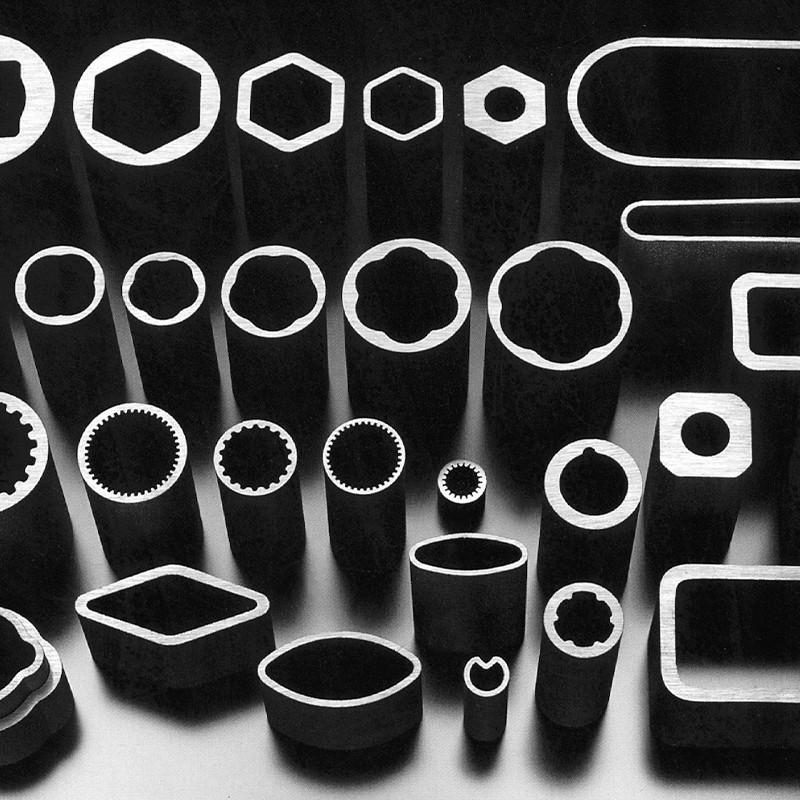
Our Special Shaped Steel Pipes are designed for applications requiring custom pr...
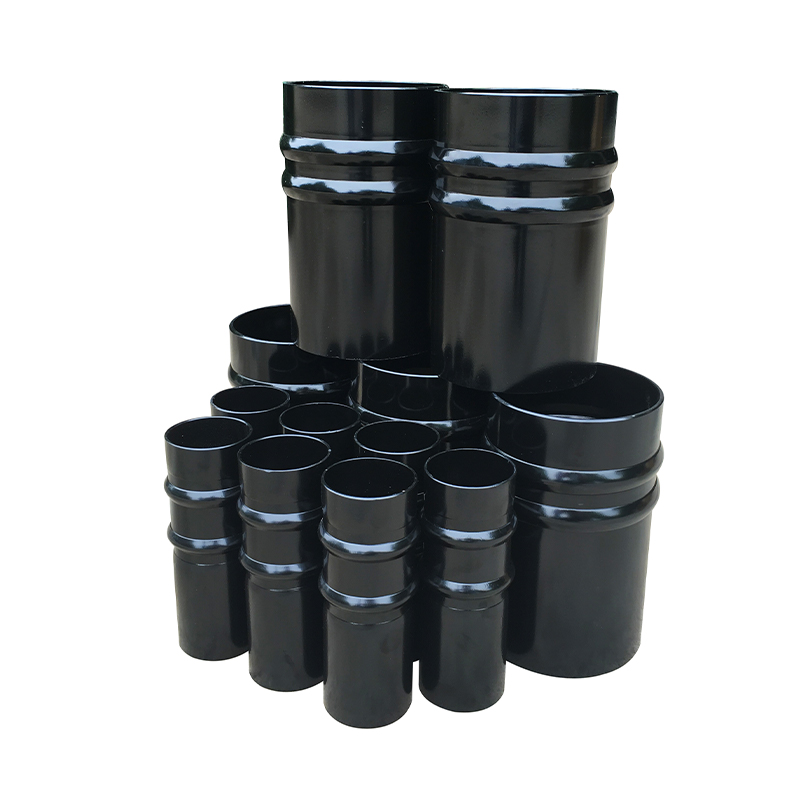
Our Custom Fabricated Tubing offers precision bent, welded, and shaped tubes tai...

Maximize storage efficiency with our ASTM A36 Foldable Steel Storage Rack, engin...
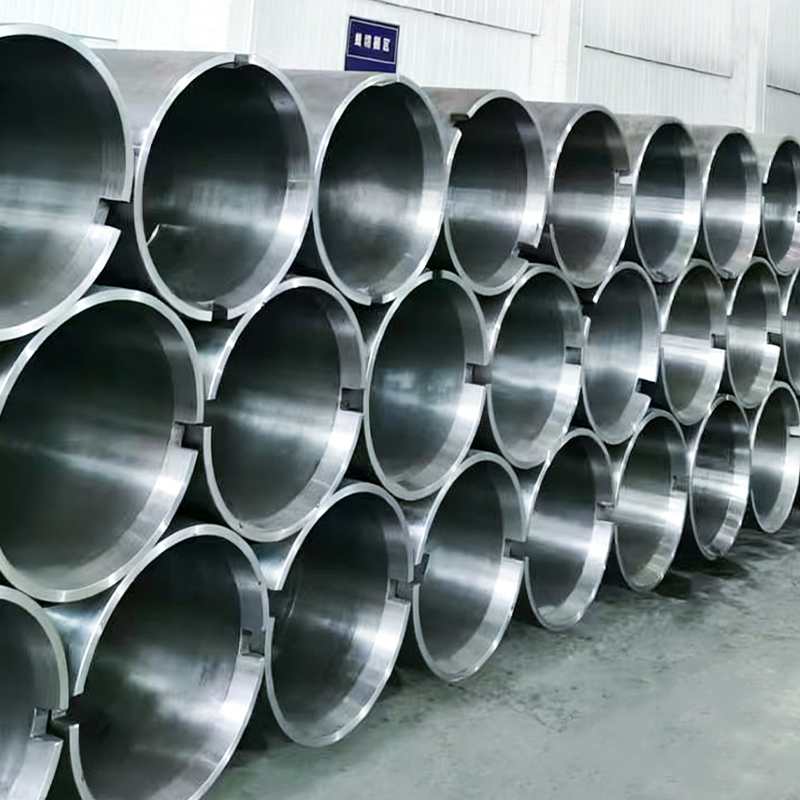
Our Centrifugal Casting Steel Tubes are engineered for high-strength, heavy-duty...
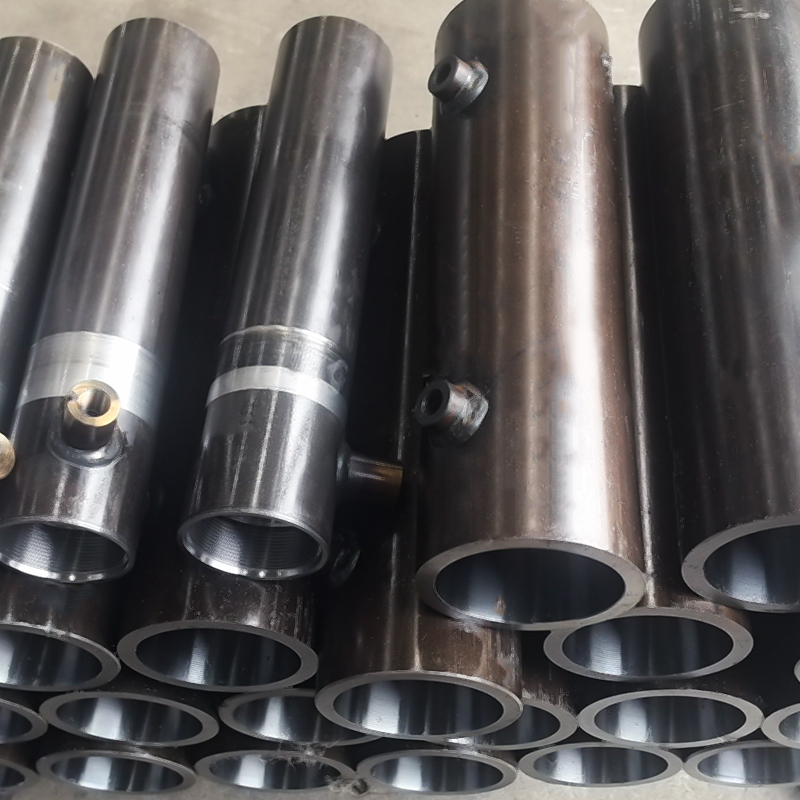
Our Finished Hydraulic Cylinder Barrels are precision-machined, honed steel tube...
Our stainless steel and alloy piston rods are precision-engineered for hydraulic...


