
 English
 Español
 русский

E-Coated Steel Pipe – Black Electro-Coating Finish, Anti-Corrosion Steel Tube
Our E-Coated Steel Pipes are treated with electro-coating (E-coating) to provide...

Content
A cold-drawn steel tube leaves the line with a bright, clean surface, and that is precisely the moment it becomes vulnerable. Bare steel has no defence against humid air, container condensation, fingerprints or chloride dust, and a precision tube that has travelled six weeks by sea can arrive with a haze of surface rust that no customer wants to see on the unloading dock. Anti-corrosion surface treatment is the practical answer, but it is not a single product. It is a family of processes, each with its own purpose, cost and downstream consequences.
Over the years we have coated, phosphated, oiled and chrome-plated a great many tube batches, and we have learned that the right choice depends far more on what happens to the tube after it leaves us than on the coating itself. This article sets out how we think about the problem.
Corrosion rarely begins in service. It begins in the gap between production and assembly, and it is usually triggered by three things: moisture, contamination and time. A tube stacked in a warehouse with a fluctuating temperature collects condensation on its surface every day. Drawing lubricant residue, cutting fluid, handling salts and airborne dust all sit on that surface and give the corrosion cell something to work with.
Cold-drawn and cold-rolled tube is more exposed than hot-rolled stock because the surface is chemically active and free of mill scale. The same clean surface that makes a honed cylinder bore or a mirror-finished rod possible also removes the thin oxide layer that would otherwise slow attack. For hydraulic and pneumatic applications, the consequence is not just cosmetic: a corrosion pit on an inner diameter can lift a seal lip, and a pitted piston rod will damage the wiper and the gland in a short time.
It is also worth saying plainly that a coating is not a repair. If a tube already has pits, scratches or embedded scale, no phosphate layer or paint film will fix it, and in fact those defects will show through the coating a few months later as blisters or adhesion failures.
Phosphating converts the steel surface into a fine crystalline phosphate layer rather than adding a film on top of it. Zinc phosphating is the usual choice for carbon steel tube, with coating weights typically in the range of 2 to 10 g/m² depending on whether the tube will be painted, oiled or used as a drawing base. The layer is porous on a micro scale, which is exactly what makes it an excellent anchor for primer, and it also holds rust-preventive oil in place far better than bare steel.
For structural tube, fabricated frames and parts that will be painted after delivery, phosphating is often the most cost-effective option we can offer. It works well with welded assemblies, provided the pre-treatment line is properly controlled.
 Phosphated Cold-Drawn Precision Steel PipePhosphate-coated cold-drawn tube improves corrosion resistance and paint adhesion, making it a cost-effective pre-treatment for welded structural frames painted after delivery.View Product →
E-coating, or electrophoretic deposition, uses an electric field to drive charged resin particles onto the tube. The result is a very even black film, typically around 15 to 25 microns, that reaches into bores and around edges where spray painting struggles. Cathodic epoxy systems give strong salt-spray performance and good mechanical resistance, and the process is water-based, which matters increasingly to customers with environmental reporting obligations.
We usually recommend e-coating where a tube is visible in the finished machine, where it will be exposed to outdoor or wash-down conditions, or where the inner surface needs protection but must not be greasy. The trade-offs are that e-coat must be stripped or masked before welding in some assemblies, and it adds a small but real thickness that has to be considered on close-tolerance fits.
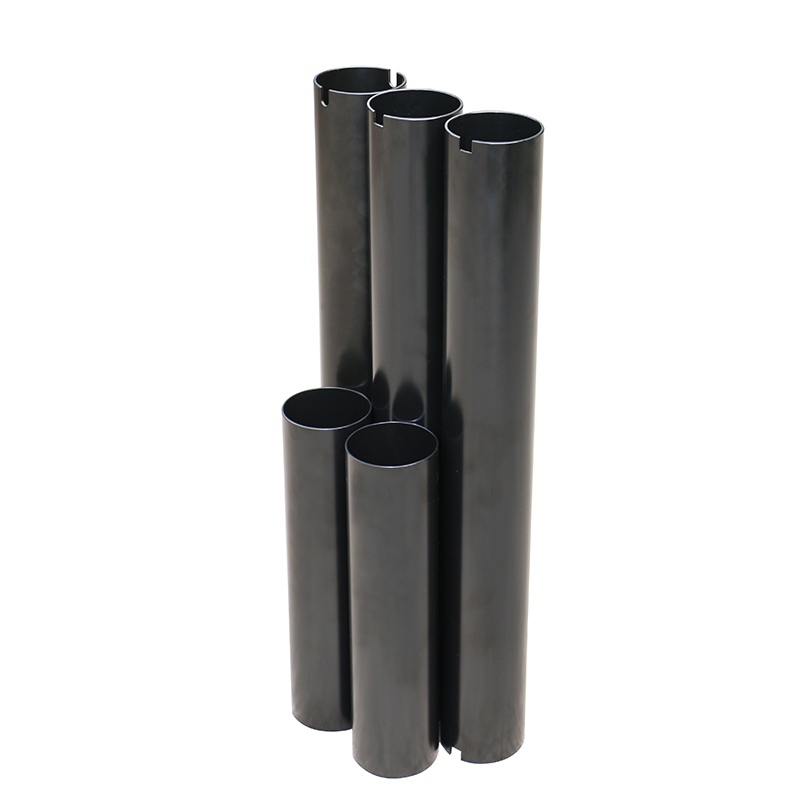 Black E-Coated Anti-Corrosion Steel PipeBlack electro-coating provides uniform internal and external coverage, suiting visible, outdoor or wash-down tube where a non-greasy protective finish is needed.View Product →
Rust-preventive oil remains the workhorse for tube that will be machined, welded or degreased by the customer anyway. A well-applied oil film handles short-term storage and inland transport very economically, and it can be removed with a standard alkaline wash. For longer sea freight we recommend a heavier preservative or a vapour-phase inhibitor combined with end caps and dry packing.
The main risk with oil is compatibility. A heavily oiled tube can contaminate a customer's cleaning bath, interfere with a subsequent phosphating step elsewhere, or trap swarf in a bore. Light, clean, well-drained films are almost always better than thick ones.
For piston rods and cylinder bores, corrosion protection and wear resistance have to be solved together. Hard chrome plating at 20 to 30 microns, applied over an induction-hardened substrate and finish-ground afterwards, gives a low-friction surface that resists both abrasion and attack from moisture and mildly aggressive media. The plating quality depends heavily on pre-treatment, bath control and post-plating grinding, and on crack density: a poorly controlled chrome layer can be porous enough to let corrosion start at the substrate.
 Hard Chrome Plated Induction Hardened Piston RodInduction-hardened 45# or 4130 steel bar with hard chrome plating offers wear and corrosion resistance for hydraulic and pneumatic cylinder rods.View Product →
Sometimes the most reliable anti-corrosion decision is to change the material rather than coat it. Cold-drawn stainless tube in TP304 or TP316L removes the coating question entirely for food, medical and aggressive-environment applications, and passivation restores the passive layer after mechanical working. We treat stainless as a design choice, not a coating substitute, and recommend it only when the duty genuinely calls for it.
The table below summarises how these treatments behave in practice. The film figures are typical ranges, not absolute limits, because bath chemistry, substrate condition and customer specification all shift the result.
| Treatment | Typical film | Best fit | Points to watch |
|---|---|---|---|
| Zinc phosphating | 2-10 g/m² | Tube to be painted, structural and welded parts | Needs a clean, active surface; porous layer requires oil or paint |
| Electrophoretic coating | 15-25 µm | Visible parts, bores, outdoor and wash-down duty | Thickness affects fits; masking needed before welding |
| Rust-preventive oil | 1-5 g/m² | Machining stock, short storage, inland transport | Limited humidity protection; removal and compatibility issues |
| Hard chrome plating | 20-30 µm | Piston rods, cylinder bores, sliding contact | Crack density control; diameter change after plating and grinding |
| Passivated stainless | Passive layer | Food, medical, chemically aggressive media | Higher material cost; chlorides still require care |
This is where most sourcing problems are actually born. A tube coated beautifully for long storage, but destined for a welding cell that will not accept a zinc-rich layer, is a coating failure regardless of how well it performed in a salt-spray cabinet. We ask three questions before recommending anything:
For finished hydraulic cylinder barrels supplied ready to assemble, for example, a dry or very lightly oiled bore is often preferable to a heavy preservative, because the assembly line will clean the part anyway and a sticky film traps dust. For tubes going into container shipping to a humid destination, a heavier system with end caps and desiccant packs pays for itself many times over.
Every treatment we offer depends on the steps before it. Degreasing must remove drawing and cutting oils completely; pickling or mechanical cleaning must expose a uniform, active steel surface; rinsing must remove residual salts that would otherwise sit under the film. Our processing line is controlled on bath concentration, temperature, dwell time and rinse water quality, and the film weight or coating thickness is checked on sample parts from each run.
None of this can hide a defective substrate, which is why we inspect straightness, dimensions and surface condition before coating rather than after. A coating applied over a scratch will fail at that scratch, and it will be blamed on the coating.
For buyers, the practical control is a written specification: which treatment, which standard, what film weight or thickness, what salt-spray duration if applicable, and how the part must be packed. We are always happy to help draft that specification, because a clear one saves both sides a great deal of correspondence later.
Anti-corrosion treatment is a small fraction of the cost of a precision tube, and it protects the whole value of the part. If you are unsure which route suits your application, send us the drawing, the material grade and a description of the environment, and we will tell you honestly which option we would choose and which we would avoid.
You can reach our technical team through the contact page, and for a closer comparison of three common treatments you may find our note on e-coating versus phosphating versus oiling useful as a starting point.
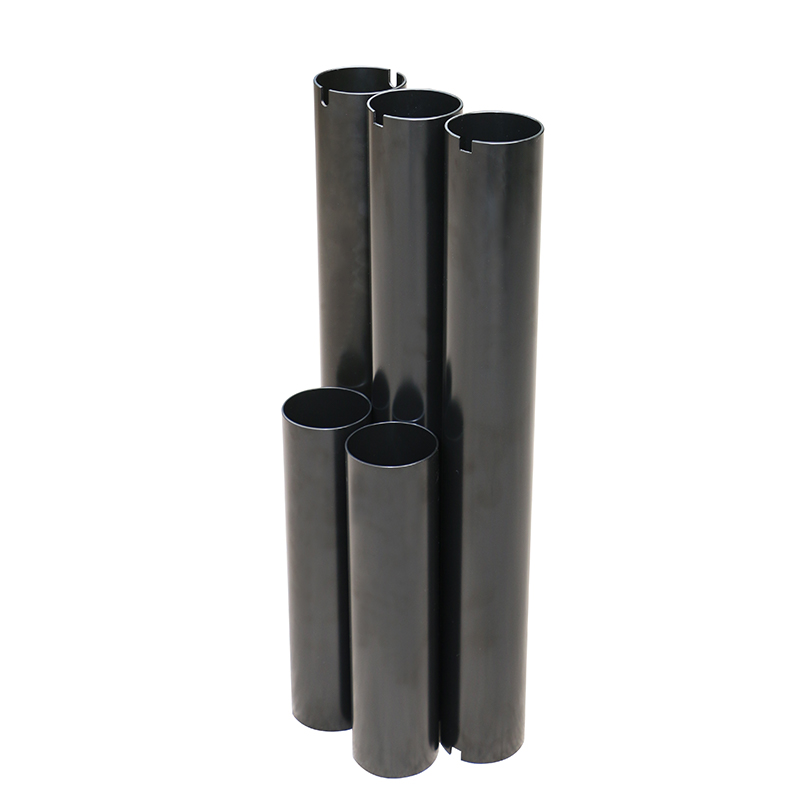
Our E-Coated Steel Pipes are treated with electro-coating (E-coating) to provide...
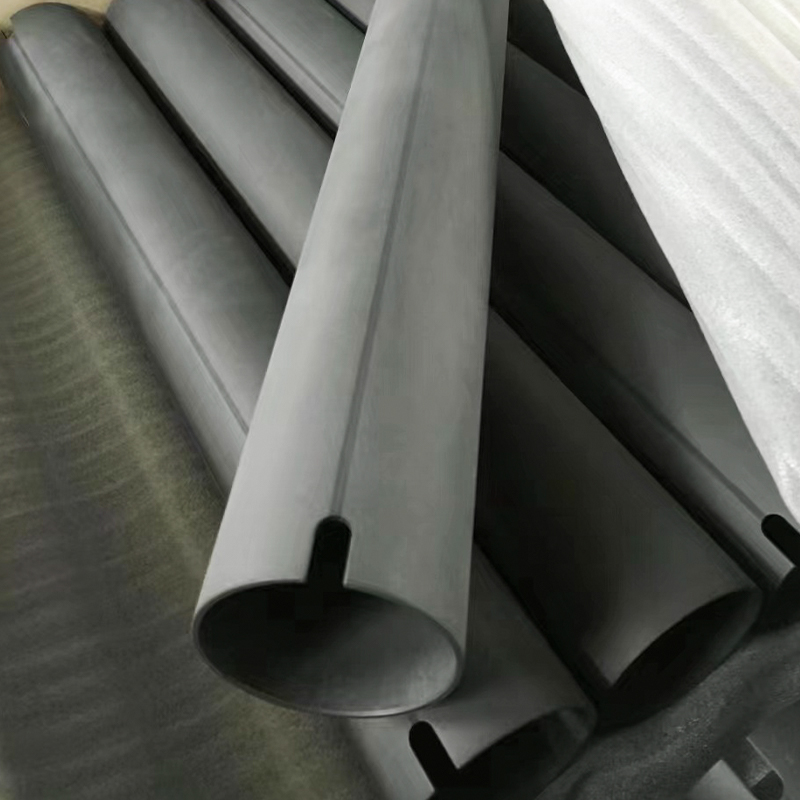
Our Phosphated Steel Pipes are treated with a phosphate coating to provide
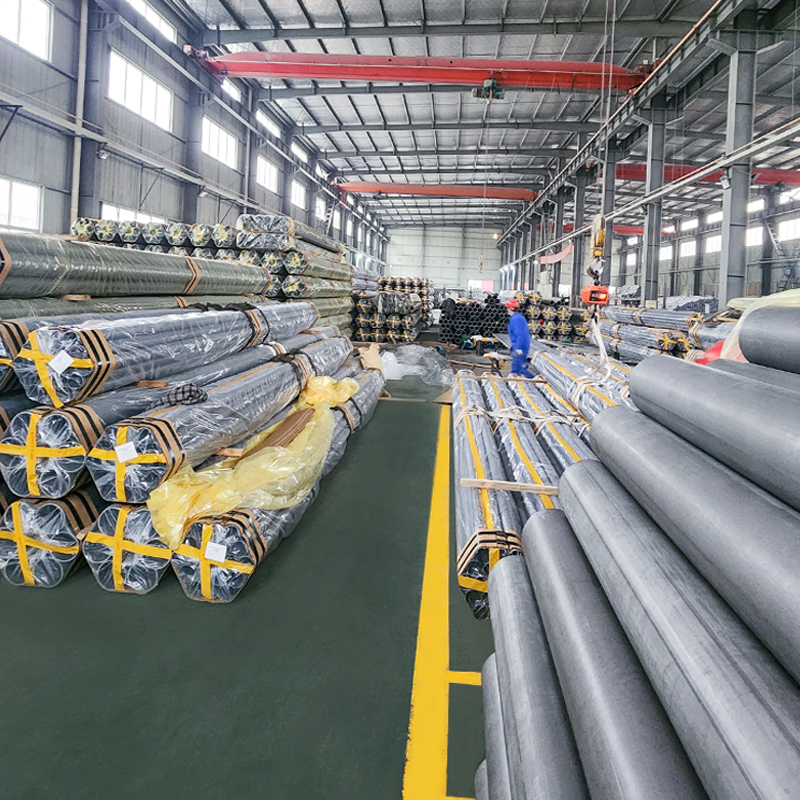
EN 10305-3 E235 Precision Conveyor Roller Tubing – Ø60.3 x 2.0 mm for Material H...
Our Welded Hydraulic Tubes are produced from cold-drawn or ERW-welded strip stee...
Our Hydraulic Tubes are manufactured from cold-drawn seamless steel (CDS) in com...
Our Special Shaped Steel Pipes are designed for applications requiring custom pr...


