
 English
 Español
 русский
Pneumatic Cylinder Tube – Stainless Steel 304/316, Polished ID for Corrosion-Resistant Applications
Our Stainless Steel Pneumatic Cylinder Tubes are precision-manufactured from 304...

Content
Pick the wrong tube material for a pneumatic cylinder, and the consequences show up fast—seized seals from corrosion, excessive bore wear from inadequate surface hardness, or a weight penalty that drives up your actuator's inertia load cycle after cycle. The tube is not a passive housing; it is the precision interface between compressed air and mechanical output. Its inner diameter tolerance, surface roughness, and material properties determine how long the seals last, how smoothly the piston reciprocates, and whether the assembly survives its operating environment. Three materials dominate the market: carbon steel, stainless steel, and aluminum alloy. Each has a genuine home—and a context where it fails. This guide walks through all three so you can make the call with numbers, not guesswork.
A pneumatic cylinder tube must satisfy demands that pull in opposite directions. It needs a bore ground or honed to tight tolerances—typically ISO H7 or H8—so the piston seal maintains consistent contact without binding. The inner surface must reach a roughness of Ra ≤ 0.4 µm to minimize friction and extend seal service life. At the same time, the wall must be strong enough to contain operating pressures (commonly 0.4–1.0 MPa for industrial pneumatics) and resist deformation under side loads or mounting stresses. Material choice sits at the center of all these requirements. It governs what surface finish is achievable, how the tube responds to the working environment, how much the assembly weighs, and what it costs per unit and over its service life. Understanding precision-honed pneumatic cylinder tubes starts with understanding which base material makes those tolerances achievable and sustainable in your specific application.
Carbon steel remains the most widely specified tube material in general industrial pneumatics, and the reason is straightforward: it offers high mechanical strength at significantly lower raw material cost than either stainless steel or aluminum alloy when measured on a strength-per-dollar basis.
Common grades include E355 (St52) per EN 10305 and ASTM A519 SAE 1026 for seamless cold-drawn tube, and ASTM A513 for cold-drawn welded (CDW/DOM) tube. E355 delivers a minimum yield strength of 355 MPa and tensile strength of 500–650 MPa—sufficient for high-cycle pneumatic duty. The cold-drawing process refines the grain structure, tightens dimensional tolerances to IT8–IT10 on the outer diameter, and leaves the inner bore in a condition suitable for subsequent honing or skiving-and-roller-burnishing (SRB) to reach the Ra ≤ 0.4 µm finish standard seals require. Explore the full range of cold-drawn steel tubes engineered for pneumatic and hydraulic cylinder applications when precise dimensional control is the priority.
The primary limitation is corrosion susceptibility. Carbon steel oxidizes readily in humid, wet, or chemically active environments. Without a protective surface treatment, rust forms on the bore and destroys seal integrity rapidly. The standard mitigations are hard chrome plating, electroless nickel coating, phosphating with oil, or an E-coat (electrocoat) primer. These treatments add process steps and cost but are well-proven. In dry indoor environments—machine tools, packaging lines, general automation—carbon steel tubes with basic surface protection offer excellent long-term value. In outdoor, food-processing, or washdown environments, the protection requirement escalates and the cost advantage narrows against stainless alternatives.
Best fit: General factory automation, heavy machinery, construction equipment, and any application where operating pressures are moderate-to-high, the environment is dry or controlled, and minimizing material cost is a stated procurement goal.
Stainless steel solves the corrosion problem at the material level rather than through coating—and that distinction matters in environments where coatings are damaged, stripped by cleaning agents, or simply not permissible under food safety or pharmaceutical regulations.
Two grades see the majority of pneumatic cylinder tube applications. SUS304 (1.4301) contains approximately 18% chromium and 8% nickel, delivering excellent resistance to oxidation, atmospheric corrosion, and many organic acids. It is the default choice when corrosion resistance is required but the medium is not highly aggressive. SUS316 (1.4401) adds 2–3% molybdenum, which dramatically improves resistance to chloride-induced pitting—the failure mode most relevant in marine environments, coastal installations, and food-processing facilities using chlorinated CIP cleaning solutions. The cost premium for 316 over 304 is real (roughly 20–30% higher), so its use should be justified by a genuine chloride exposure risk rather than applied as a blanket upgrade. For stainless steel pneumatic cylinder tube with polished ID surfaces meeting the dimensional requirements of high-cycle sealing applications, refer to stainless steel cylinder tube solutions and the dedicated cold-drawn stainless steel tubing for corrosion-critical environments.
Mechanically, austenitic stainless steel (304/316) has a yield strength of approximately 205–310 MPa depending on cold-work condition—somewhat lower than E355 carbon steel. However, its work-hardening rate is high, and for pneumatic pressures up to 1.0 MPa the wall thickness can be sized to compensate without meaningful weight penalty in most bore sizes. The real trade-off is machinability: stainless steel is harder to hone than carbon steel, tool wear is higher, and cycle times on the bore finishing step are longer. This translates directly into a higher finished tube price—typically 50–80% more than an equivalent carbon steel tube, even before any coating is applied to the carbon steel version.
Best fit: Food and beverage processing, pharmaceutical manufacturing, chemical handling, marine and offshore applications, and any installation subject to regular washdown with chlorinated or alkaline cleaning agents.
Aluminum is the standard tube material for compact and mid-size pneumatic cylinders in industrial automation—and there is a structural reason for that dominance beyond simple cost. Aluminum's density is roughly one-third that of steel (2.7 g/cm³ vs. 7.85 g/cm³ for steel). In high-cycle applications—pick-and-place robots, conveyor diverters, packaging machinery operating at hundreds of cycles per minute—the reduced reciprocating mass lowers inertia loads, reduces cushioning demand at end-of-stroke, and cuts the energy consumed per cycle.
The dominant alloy is 6061-T6, which offers a yield strength of approximately 276 MPa—adequate for pneumatic duty up to 1.0 MPa with appropriate wall thickness—combined with excellent machinability and anodizing response. Anodizing creates a hard aluminum oxide layer (Type II: 5–25 µm; Type III hard anodize: 25–75 µm) that significantly improves wear resistance on the bore surface and provides moderate corrosion protection. The anodized bore can be further honed to achieve the ID tolerances and Ra values required for long seal life. Extruded aluminum profiles—the rectangular cross-section tubes common on ISO 15552-compliant cylinders—allow T-slot grooves for magnetic sensor mounting to be formed in the same extrusion step, simplifying assembly.
Aluminum's limitations are concentrated at the extremes. It is softer than steel (Vickers hardness ~60 HV for 6061-T6 vs. ~150–200 HV for E355 cold-drawn), making it more susceptible to bore damage from particulate contamination in the air supply if filtration is inadequate. It also performs poorly in strongly alkaline environments (pH > 11), where the oxide layer dissolves—ruling it out for certain chemical process applications. For heavy-duty applications with bore diameters above 100 mm and high side-load conditions, the lower yield strength of aluminum may require a wall thickness that negates part of the weight advantage.
Best fit: Industrial automation, robotics and end-of-arm tooling, conveyor systems, semiconductor equipment, and any application where weight, cycle speed, and profile-integrated sensor mounting are primary design criteria.
| Property | Carbon Steel (E355 / SAE 1026) | Stainless Steel (SUS304 / SUS316) | Aluminum Alloy (6061-T6) |
|---|---|---|---|
| Yield Strength | 355–550 MPa | 205–310 MPa | ~276 MPa |
| Density | ~7.85 g/cm³ | ~7.93 g/cm³ | ~2.70 g/cm³ |
| Corrosion Resistance | Poor (requires coating) | Excellent (intrinsic) | Moderate (anodize recommended) |
| Machinability / Honing | Excellent | Moderate (higher tool wear) | Good (soft; requires sharp tooling) |
| Relative Material Cost | 1.0× | 2.0–2.5× | 1.3–1.6× |
| Surface Finish Achievable | Ra ≤ 0.2 µm (honed) | Ra ≤ 0.4 µm (polished) | Ra ≤ 0.4 µm (honed/anodized) |
| Weight (relative, same bore/wall) | High | High | Low (~33% of steel) |
| Typical Industries | General manufacturing, construction, agriculture | Food, pharma, marine, chemical | Automation, robotics, packaging |
Four questions will resolve the material choice for most buyers. Work through them in order—the first decisive answer is usually sufficient.
Material selection is only half of the tube specification. Regardless of whether you choose carbon steel, stainless steel, or aluminum, the finished bore must meet the same geometric and surface requirements for the sealing system to function correctly. These are non-negotiable across all three materials.
Inner diameter tolerance: ISO H7 (tighter, used in precision applications) or ISO H8 (standard for most pneumatic duty) is required to maintain the designed diametral clearance between piston seal and bore. Deviations beyond this range cause either excessive seal squeeze—leading to high friction and heat—or insufficient seal contact and leakage past the piston.
Bore surface roughness: Ra ≤ 0.4 µm is the widely adopted target for pneumatic cylinder bores. Some high-performance applications specify Ra ≤ 0.2 µm. Surface finish directly controls the mixed lubrication regime at the piston seal contact zone—rougher surfaces accelerate seal wear and increase breakaway friction; smoother surfaces reduce both. Honed and SRB (skiving and roller burnishing) processing achieves these values on carbon steel and stainless steel. Anodized aluminum bores are typically honed after anodizing to restore roundness and reach the required Ra. For a closer look at how honed and SRB tube with a mirror-finish inner bore delivers the consistent surface geometry that seal longevity depends on, the specification details clarify what to specify and verify upon receipt.
Straightness and roundness: Bore straightness (typically ≤ 0.3 mm/m) and cylindricity control ensure the piston travels without side-loading the rod seal—a failure mode that appears as accelerated rod seal wear at a specific angular position around the bore. Cold-drawing provides inherently better straightness than hot-rolled or normalized tube, which is one reason cold-drawn feedstock is used for all three materials in cylinder tube production.
Specifying these finish and tolerance parameters in your procurement documents—alongside the material grade—is the most effective single step to ensure tube quality across suppliers and production batches.

Our Stainless Steel Pneumatic Cylinder Tubes are precision-manufactured from 304...
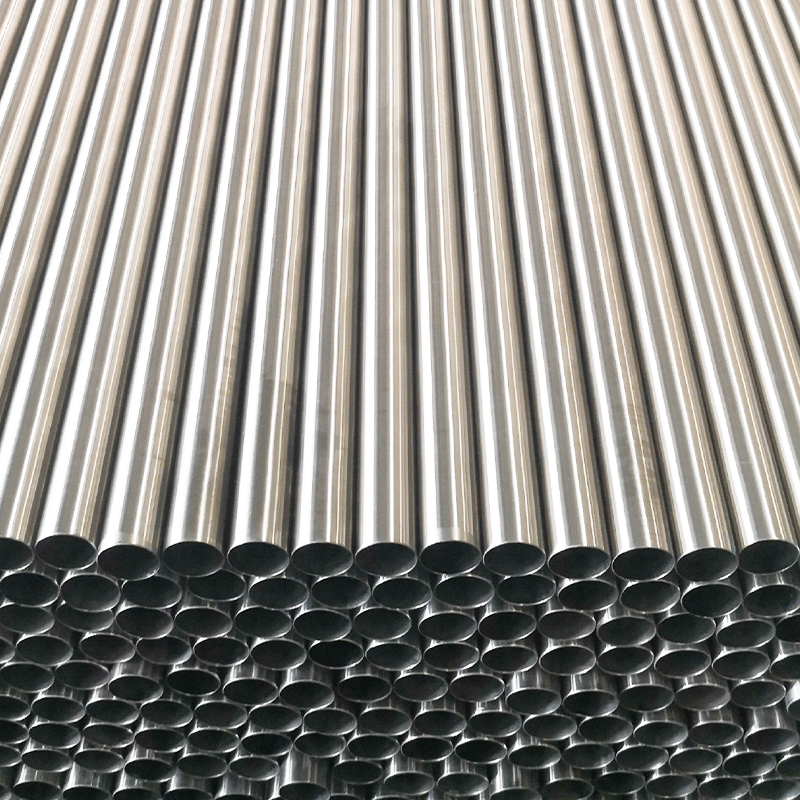
Our Chrome-Plated ID Pneumatic Cylinder Tubes feature a high-strength carbon ste...
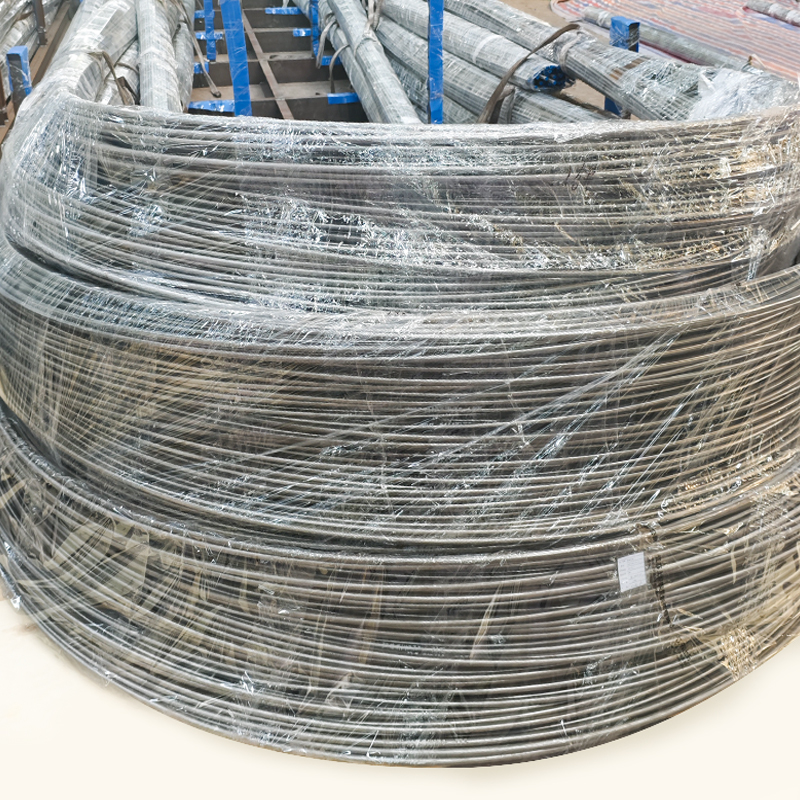
Our Carbon Steel Heat Exchanger Tubes are designed for use in low- to medium-tem...
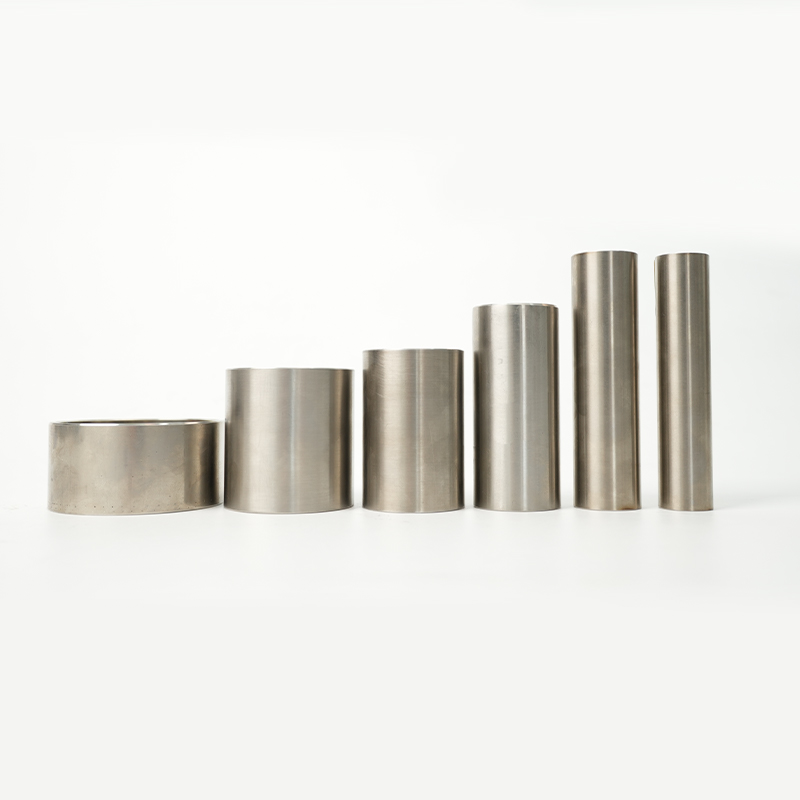
Our Aluminum Alloy 6063-T5 Pneumatic Cylinder Tubes are precision-engineered for...
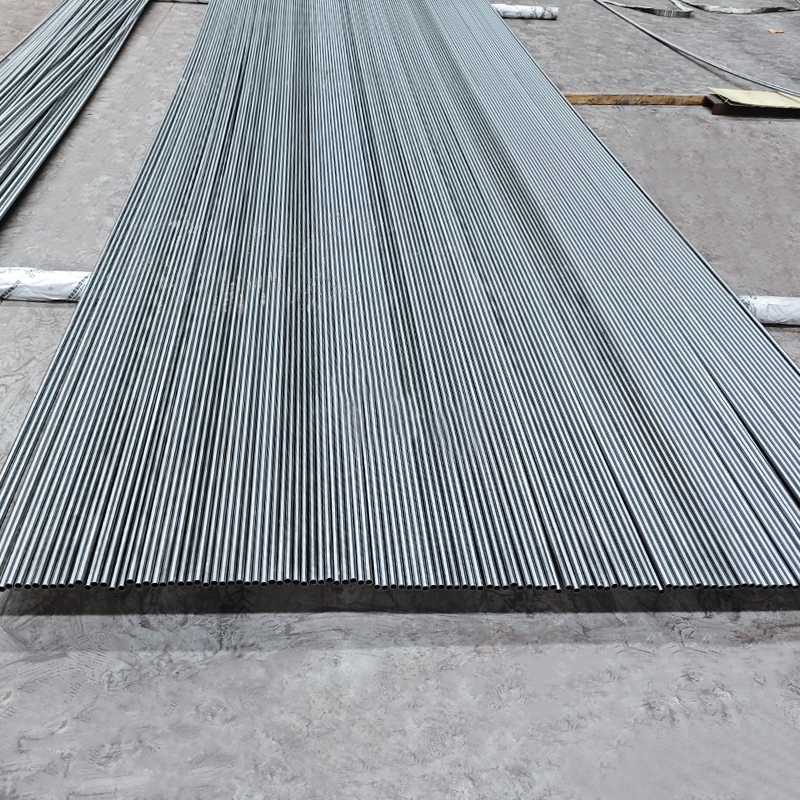
Our Stainless Steel Heat Exchanger Tubes are engineered for applications requiri...
Our Hydraulic Cylinder Tubes are made from cold drawn seamless steel according t...


