
 English
 Español
 русский

Pneumatic Cylinder Tube – Stainless Steel 304/316, Polished ID for Corrosion-Resistant Applications
Our Stainless Steel Pneumatic Cylinder Tubes are precision-manufactured from 304...

Content
Stainless steel cylinder tube is one of those items where the grade decision often gets made in a hurry — usually at the end of a drawing review, when somebody asks whether 304 is good enough or whether the project should simply absorb the cost of 316. Having cold-drawn, honed and polished both grades for hydraulic and pneumatic cylinder builders over many years, we have watched the cheaper grade run for a decade without a blemish, and we have also investigated 316 tubes that pitted because the bore finish or the cleaning chemical was the real culprit.
So this is not a "buy the better grade" article. It is a practical walk through what separates 304 from 316 in cylinder service, where the extra alloying genuinely pays for itself, and where it quietly adds cost without adding life. If you are still comparing the two families of cylinder tube at specification level, our stainless steel cylinder tube overview shows how bore size, wall thickness and finish are normally defined before the grade question even comes up.
Before anyone argues about alloy content, four questions usually settle the matter:
Answer those four and the grade usually chooses itself. It also helps to remember what grade cannot do. Both 304 and 316 are austenitic, non-magnetic in the annealed condition, and cannot be strengthened by heat treatment. A cylinder's pressure capacity comes from wall thickness, bore diameter and the cold-drawing or honing route — not from moving up to 316.
The table below is the comparison we use in internal discussions. It is deliberately short, because most of the other differences people quote are secondary once the chloride question is answered.
| Property | 304 / 304L | 316 / 316L |
|---|---|---|
| Chromium | 18.0–20.0% | 16.0–18.0% |
| Nickel | 8.0–10.5% | 10.0–14.0% |
| Molybdenum | None specified | 2.0–3.0% |
| Carbon, standard / L grade | ≤0.08% / ≤0.030% | ≤0.08% / ≤0.030% |
| Pitting resistance equivalent (approx.) | 18–19 | 24–26 |
| Chloride pitting and crevice resistance | Moderate | Good |
| Strength at elevated temperature | Adequate to about 500 °C | Better creep strength above about 500 °C |
| Relative material cost | Baseline | Typically 20–40% higher |
| Typical cylinder duty | Dry air, indoor, mildly corrosive | Marine, chemical, washdown, chloride-bearing |
Molybdenum is the whole story. Adding 2–3% raises the pitting resistance equivalent from roughly 18 to roughly 25, which in practice means the passive film on the bore surface recovers faster and breaks down later when chlorides are present. That matters most in the places a cylinder actually fails: stagnant pockets behind seals, the bottom of a vertical bore where condensate collects, weld-affected zones around ports and end caps, and surfaces that were scratched during assembly and never repassivated.
It is important not to oversell this. 316 is more tolerant of chlorides, not immune to them. Warm, stagnant, concentrated chloride conditions will attack 316 as well, and where the risk is genuinely severe — stagnant seawater, brine dosing, heavy de-icing salt exposure — the honest recommendation is a higher-molybdenum or duplex grade rather than a thicker 316 wall. For the large majority of washdown, coastal and chemical-adjacent duties, though, 316L cold-drawn tube is the sensible working choice, and the low-carbon version keeps welded joints clean.
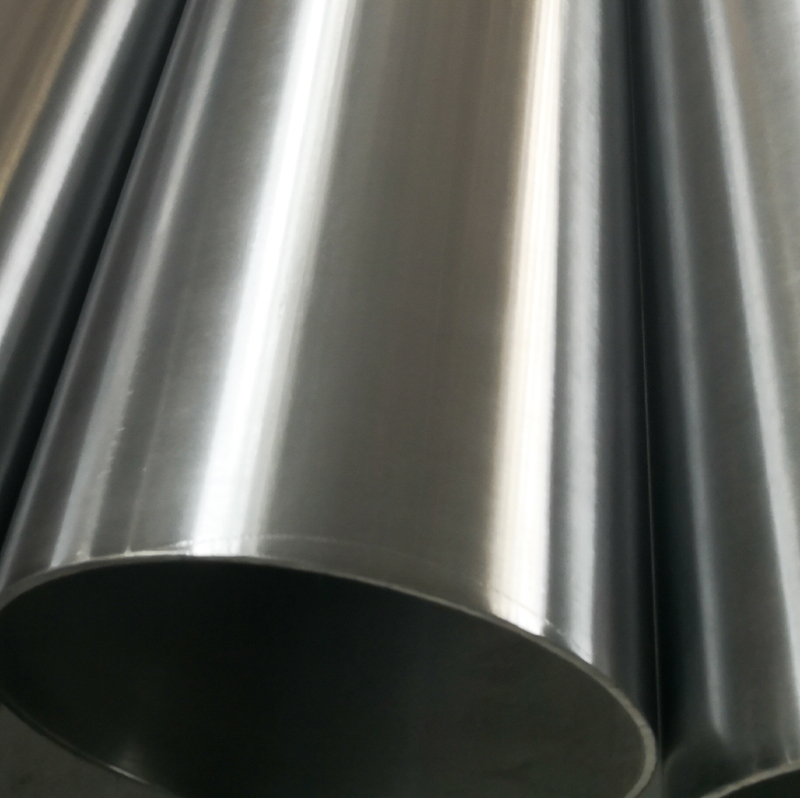
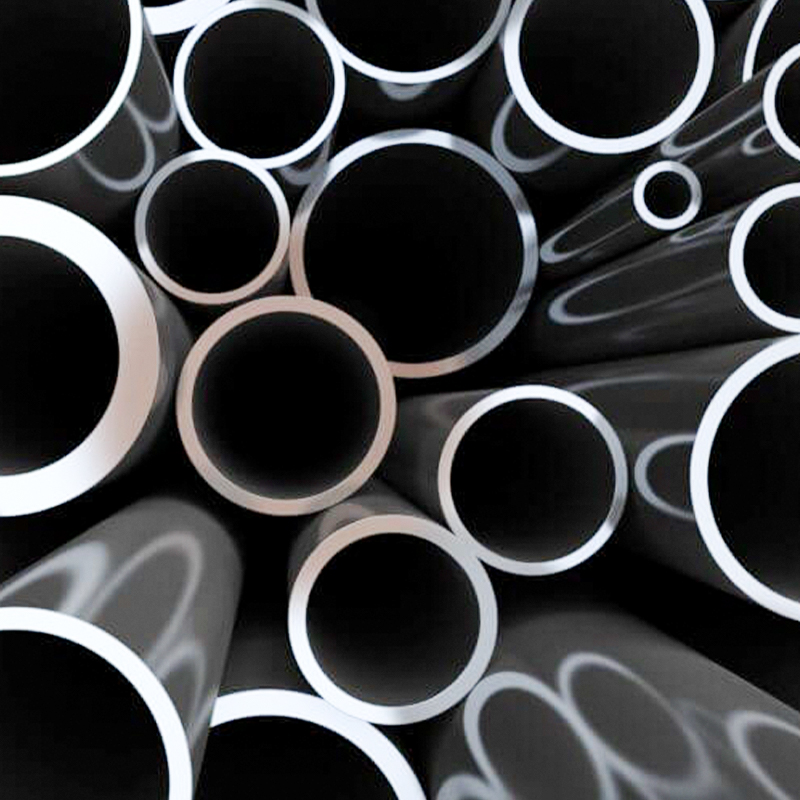 Cold-Drawn Stainless Steel Precision Tube TP304/TP316LASTM A269 cold-drawn precision tube in TP304/TP316L, with featured 100 mm OD x 2 mm WT; 316L suits chloride-rich washdown and chemical-adjacent duties.View Product →
In the annealed condition the two grades are close: minimum tensile strength around 515 MPa and yield around 205 MPa, with elongation comfortably above 35%. Cold drawing is what gives cylinder tube its useful strength, and both grades respond to it in a similar way, so a 304 tube drawn to the same reduction will not be meaningfully weaker than a 316 one at room temperature.
The gap opens with heat. Above roughly 500 °C, 316 holds its creep strength better and is the conventional choice for continuous hot service, while 304 remains perfectly serviceable for most ambient and moderately warm duties. At the cold end, low-carbon grades are the safe option for sub-zero and cryogenic work, since the L versions retain toughness where standard carbon levels start to embrittle.
It matters wherever you weld. The L grades cap carbon at 0.030% instead of 0.080%, which limits chromium carbide precipitation in the heat-affected zone and therefore limits sensitisation — the mechanism behind intergranular corrosion along weld seams. If your barrels carry welded ports, end caps or mounting bosses, specify 304L or 316L, or a dual-certified 304/304L heat. If the tube is machined and threaded only, standard carbon levels are usually fine and often easier to source.
Dry compressed air systems, indoor automation, machine guards, general hydraulic power packs in clean plants and most food equipment that never sees chlorinated sanitisers are all comfortable 304 territory. Pneumatic cylinder tube in 304 with a polished bore is one of the highest-volume stainless products we make, and it performs year after year because the internal medium is dry and the external environment is controlled. Choosing 316 there buys corrosion margin you will never use, and it ties up budget that would be better spent on bore finish or straightness.
 TP304 Cold-Drawn Stainless Steel Precision Tube, 50.8 mm ODASTM A269 TP304 tube at Ø50.8 x 2 mm for dry air, indoor automation and general hydraulic duties where 304 corrosion resistance is sufficient.View Product →
Marine and offshore equipment, chemical dosing skids, water treatment, pharmaceutical and dairy lines cleaned with chloride-based sanitisers, and any cylinder that lives outdoors near salt spray should be 316L as a default. In hygienic service the grade is only half the requirement; documentation, surface finish and cleanability carry equal weight, which is why we point customers toward this guide on stainless cylinder tubes for food and medical compliance before they finalise a purchase order. One useful habit: write the environment on the drawing, not just the grade. Suppliers quote more accurately, and inspectors know what they are checking.
Pitting almost always begins at a defect — an inclusion, a scratch, a weld spatter, a rough turn mark. A tube with the right grade and the wrong bore is a liability, which is why we treat internal finish as a specification in its own right: H8 or better dimensional tolerance, Ra 0.4 µm or finer for hydraulic service, and mirror-grade polished bores for pneumatic and hygienic cylinders. Honing and skiving with roller burnishing both produce a surface that sheds chloride deposits instead of trapping them, and both leave compressive stress that resists crack initiation in the bore.
Passivation after machining is the step most often skipped. Cutting fluids, tool steel particles and handling marks leave free iron on the surface, and that free iron rusts first even on 316. A citric or nitric passivation to ASTM A967, plus a clean rinse and dry before packing, is cheap insurance on a component that will not be inspected again until it leaks.
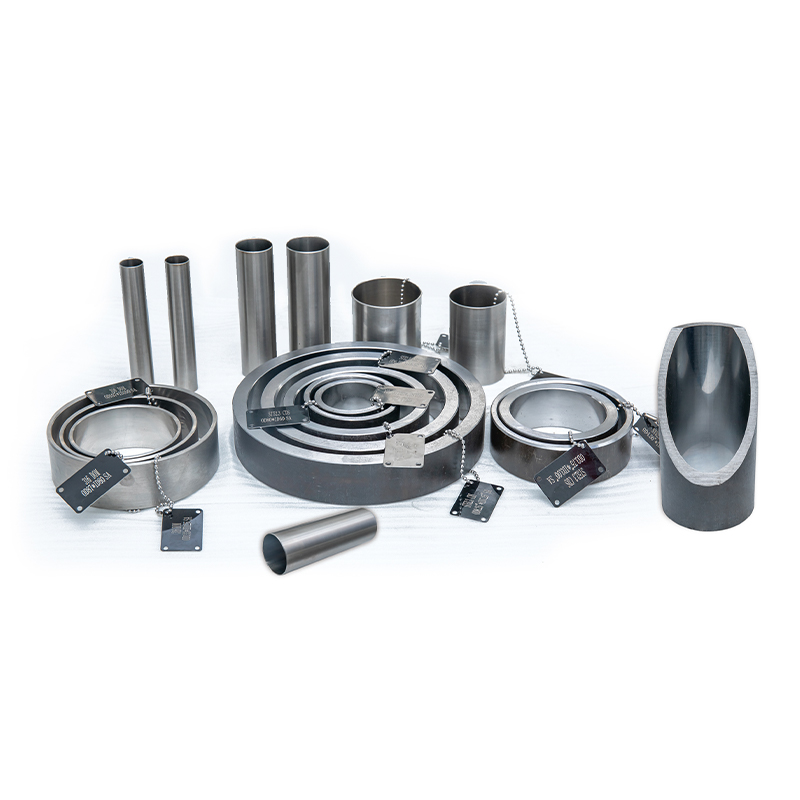 Polished-ID Pneumatic Cylinder Tube in 304 and 316Stainless pneumatic cylinder tube with polished ID, H8 or tighter tolerance on request and Ra ≤0.4 μm finish; 316 option for chloride duties.View Product →
316 costs more because it carries molybdenum and, usually, more nickel. On a like-for-like cold-drawn tube the material difference is often 20–40%, and on a full cylinder build the tube is only one line of the quotation, so the absolute saving from downgrading is frequently smaller than the warranty risk it creates. Our rule of thumb is simple: never downgrade to save money on a chloride duty, and never upgrade to look conservative on a dry indoor duty.
Whatever grade you choose, verify it. Ask for an EN 10204 3.1 mill certificate with heat number traceability, and run positive material identification on incoming goods — a handheld XRF reading of molybdenum content takes seconds and catches mixed material before it reaches the machining cell. Add dimensional and roughness reports, a hydrostatic or pneumatic proof test where relevant, and an intergranular corrosion test to ASTM A262 practice E for welded L-grade assemblies.
A short, complete enquiry gets a faster and more accurate answer than a long one that leaves the environment blank. We usually ask customers to include:
Send those five items and the 304 versus 316 question tends to answer itself. If it does not, the conversation is usually about the environment rather than the alloy — and that is a conversation worth having before the tube is cut.

Our Stainless Steel Pneumatic Cylinder Tubes are precision-manufactured from 304...
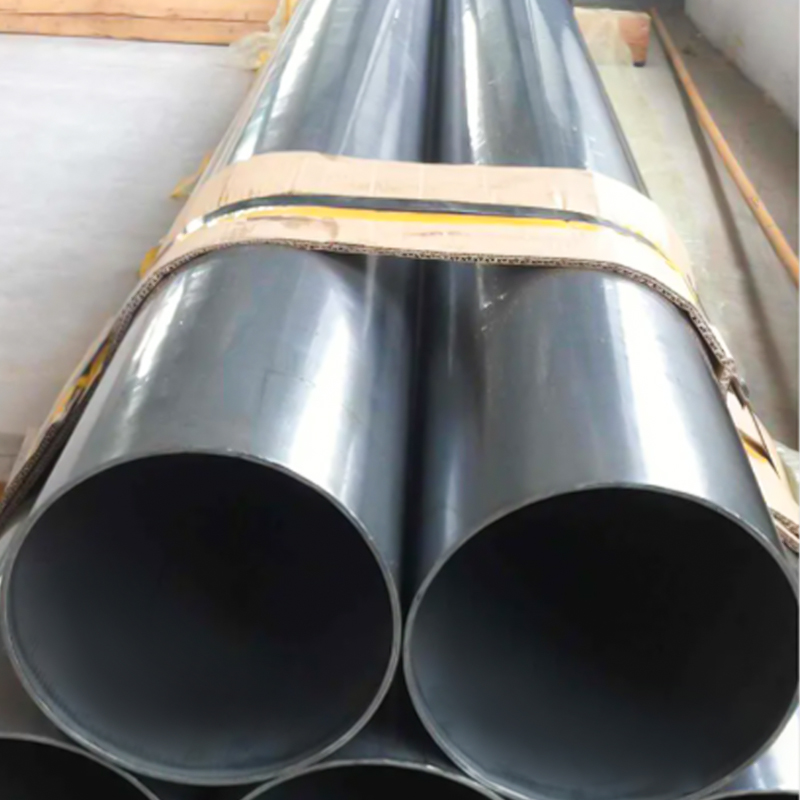
Cold-Rolled Steel Tube – ASTM A513 Type 2 Grades 1010, 1015, 1020, 1026 (1” x 0....
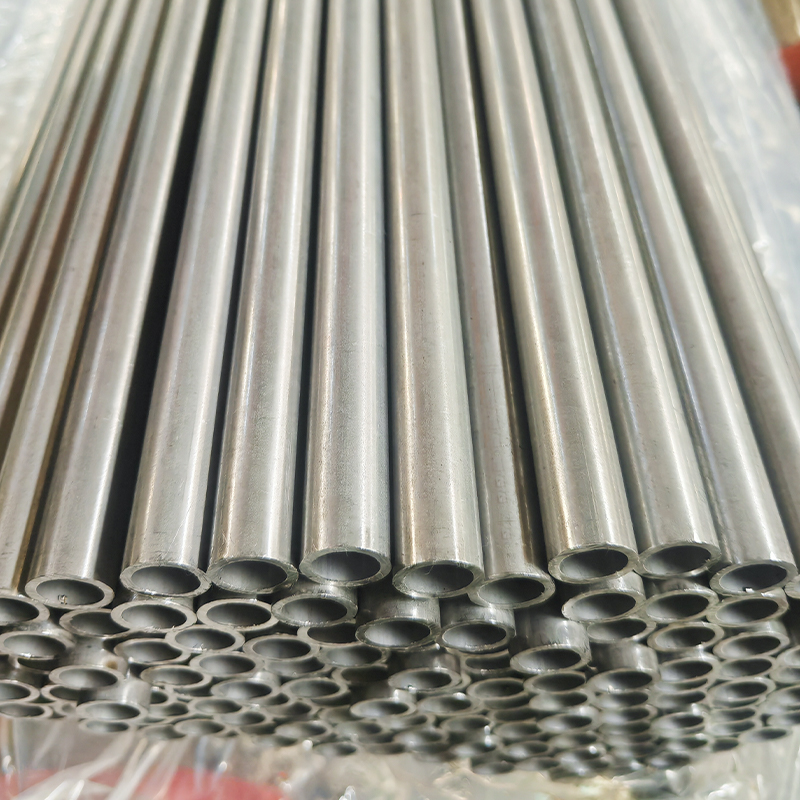
Our ASTM A519 1020 cold-drawn seamless hydraulic tubes are engineered for high-p...
ASTM A519 Grade 4130 Geotechnical Drill Pipe – Ø89 mm x 6 mm for Soil Sampling
Our ASTM A513 Cold Drawn Welded (CDW) Honed & SRB Tubes are precision-
Cold-Drawn Stainless Steel Precision Tube – ASTM A269 TP304, TP316L (100 mm OD x...


