
 English
 Español
 русский
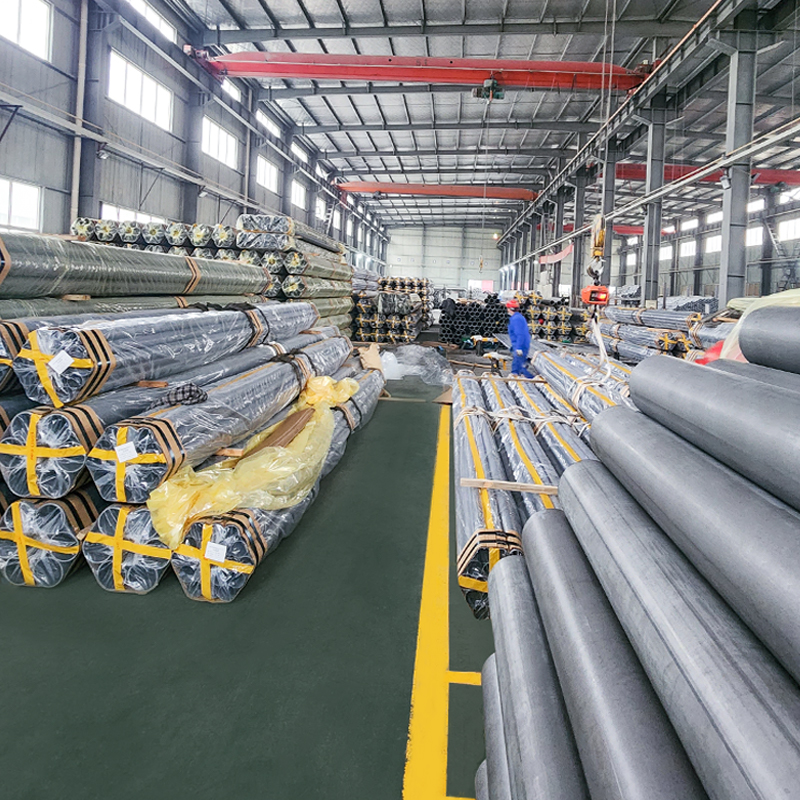
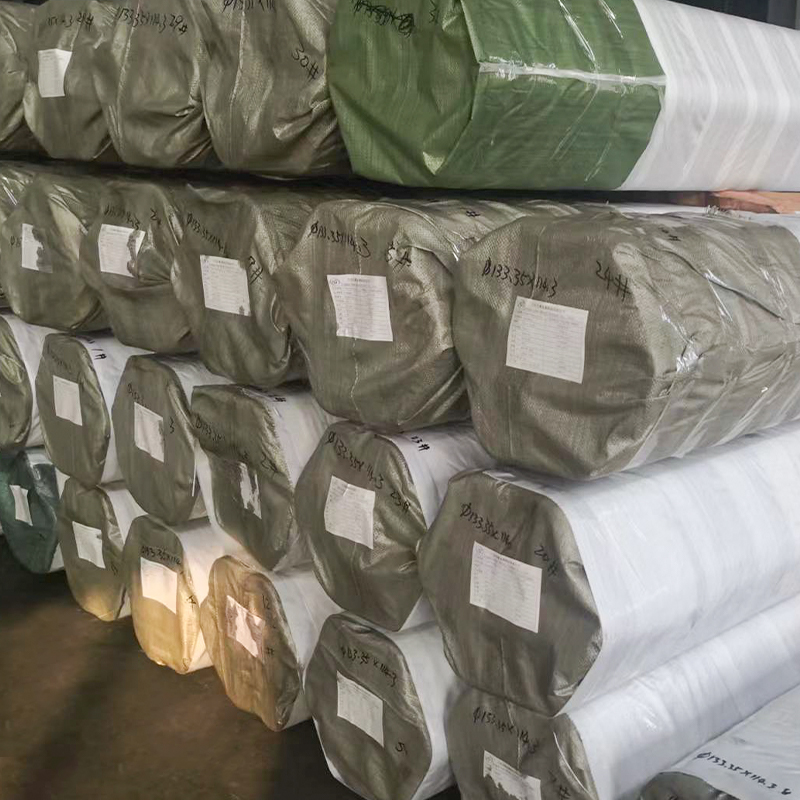
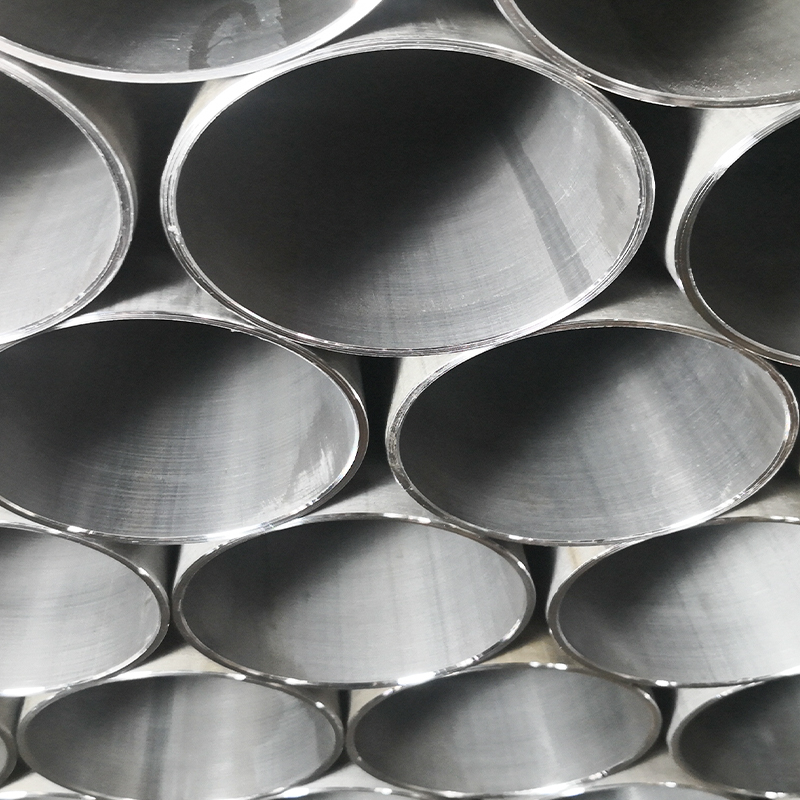
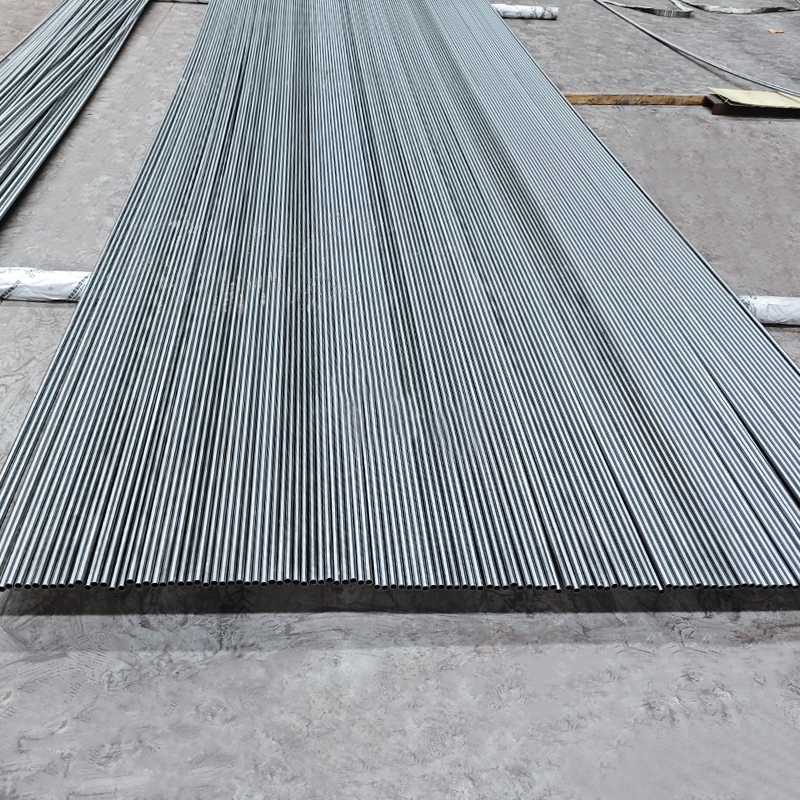
Cold Drawn Welded Steel Tube (CDW) DIN 2393 ASTM A513 Grade ST37-2 ST52.3
Cold Drawn Welded Steel Tube (CDW) – DIN 2393 | ASTM A513 (ST37-2, ST52-3)High-P...

Content
A hydraulic cylinder tube that yields mid-stroke costs more than any machine downtime calculation can measure. DOM ST52.3 tube bridges the gap between commodity welded tubing and expensive seamless product, delivering the yield strength and dimensional precision fluid power systems demand.
DOM stands for Drawn Over Mandrel. The process begins with a flat steel strip that is roll-formed and electric-resistance welded into a hollow. That tube is then drawn over a hardened mandrel — cold working the weld zone, refining grain structure, and setting both ID and OD to tight tolerances. ST52.3 is a European-sourced low-alloy carbon-manganese steel grade equivalent to DIN 2393 / EN 10305-2 E355, widely adopted under ASTM A513 Type 5 for North American supply.
What separates DOM from standard ERW (Electric Resistance Welded) tube is wall uniformity. In ERW product, flat-strip gauge variation carries through to the finished wall. DOM cold drawing over a mandrel reduces that variation to a single plane, effectively eliminating the spiraling eccentricity that plagues cold-drawn seamless tube. Engineers specifying hydraulic cylinder tube select DOM because the straight, consistent bore directly lowers scraper and seal wear.
A direct process comparison helps frame the advantage:
| Process | OD Tolerance | Wall Tolerance | ID Straightness |
|---|---|---|---|
| ERW as-welded | ±1% | ±10% | Variable — weld flash present |
| DOM (A513 Type 5) | ±0.5% (or ±0.005 in) | ±10% | Excellent — bore runs parallel |
| CDS (Seamless) | ±0.75% | ±12.5–15% | Good — but spiral eccentricity remains |
ST52.3 grade chemistry itself targets a controlled carbon equivalent, which provides the necessary strength without sacrificing weldability — a critical attribute when end fittings, trunnions, or port blocks are welded onto the cylinder body.
The ST52.3 designation carries a guaranteed minimum yield strength of 355 MPa (51.5 ksi) and a minimum tensile strength of 490 MPa (71 ksi), with elongation typically above 22%. These values are measured on the finished DOM tube after cold drawing and stress-relief annealing (SRA). The combination of high yield and generous elongation means the tube can handle both static pressure loads and the fatigue cycles common in mobile hydraulics.
Two other grades regularly enter the same specification conversation: 1026 and E355. While 1026 DOM tube is a staple in the US market, its yield strength ceiling sits lower — around 310 MPa. E355, on the other hand, is nearly identical to ST52.3 chemically, and many mills dual-certify to both EN 10305-2 and ASTM A513 Type 5 for the same heat.
| Property | ST52.3 / E355 | 1026 | 1020 |
|---|---|---|---|
| Yield Strength (min) | 355 MPa (51.5 ksi) | 310 MPa (45 ksi) | 250 MPa (36 ksi) |
| Tensile Strength (min) | 490 MPa (71 ksi) | 483 MPa (70 ksi) | 414 MPa (60 ksi) |
| Elongation (min) | 22% | 18–20% | 25% |
| Hardness (HRB, typical) | 80–90 | 72–82 | 60–70 |
| Weldability | Good — preheat recommended for heavy sections | Excellent — low carbon | Excellent |
What makes ST52.3 particularly suited to hydraulics is not just the yield number, but the post-yield behavior. In a cylinder subjected to occasional pressure spikes, the material’s higher tensile-to-yield ratio provides a margin before permanent deformation. The fine grain structure of the drawn-over-mandrel tube also improves resistance to crack propagation at the weld line — an area where ERW tube without drawing can exhibit brittleness.
A recurring question from purchasing managers is whether to pay the premium for ST52.3 over the more common 1026 DOM. The answer rests on four decision factors: required yield strength, welding scope, operating environment, and budget tolerance for initial vs. lifecycle cost.
1026 DOM tube makes economic sense in non-safety-critical mechanical applications like conveyor rollers, bushings, and drive shafts where 310 MPa yield is sufficient. But in hydraulic cylinders, the pressure envelope quickly demands ST52.3. A 4-inch bore cylinder operating at 3,000 PSI generates a hoop stress that on thin-wall 1026 can exceed safe design margins. Upgrading to ST52.3 adds roughly 10–15% to the raw tube cost yet often eliminates the need for a thicker wall, offsetting material weight and machining effort.
| Criterion | ST52.3 DOM | 1026 DOM |
|---|---|---|
| Yield Strength | 355 MPa — suited for pressures above 2,500 PSI with moderate wall factors | 310 MPa — typically limited to lower-pressure or larger-wall designs |
| Welding | Good; preheat (150–200 °C) recommended above 6 mm wall to avoid martensite formation | Excellent; low carbon content permits welding without preheat in most cases |
| Machinability | Good — slightly higher manganese content reduces tool wear compared to 1020 | Good — consistent machinability; slightly softer |
| Cost Index | Base + 10–15% | Base |
| Best Application | Hydraulic cylinders, fluid power tubes, high-cycle structural members | Drive shafts, bushings, conveyor rollers, general mechanical tubing |
If the application involves dynamic side-loading or long stroke length where bending stiffness matters, the choice may further tilt toward ST52.3 because its higher yield allows the designer to maintain a thinner, lighter wall without violating the 3:1 or 4:1 safety factor. For rotating components such as drive shaft tube, 1026 continues to dominate on a value basis, while ST52.3 finds its niche where torque and shock loading combine.
Stock programs across major service centers typically cover an OD range from 3/16 inch (4.76 mm) up to 14 inches (355.6 mm), with wall thicknesses from 0.028 inch to 0.625 inch. In hydraulic cylinder production, the sweet spot resides between 2.0 and 8.0 inch OD with wall between 0.188 and 0.500 inch.
Commonly stocked imperial dimensions include:
Standard lengths run from 17 to 24 feet random, with cut-to-length options available. When a design requires non-catalog dimensions — a 5.125" OD with 0.312" wall, for instance — the path typically involves a mill quantity run. Custom size lead times for ST52.3 DOM tube average 4 to 6 weeks, and minimum order quantities often start around 500 to 1,000 kg depending on the mill schedule. The cost adder for a non-stock size can be significant (20–30% above stock pricing), but it pays off when the alternative would force a heavier, more costly standard size that demands extra machining stock.
Metric dimensions aligned with ISO 4394 and EN 10305-2 are equally supported. Common metric DOM ST52.3 tube sizes include 50x5, 63x7, 80x8, 100x10, and 125x12.5 mm. In some supply chains, the material is dual-marked as E355 to simplify compliance with European standards.
Selecting the correct wall thickness for a hydraulic cylinder tube is a straightforward engineering exercise, yet too many shops still rely on “what we used last time.” A disciplined calculation prevents both catastrophic failure and unnecessary material waste.
The starting point is Barlow’s formula, modified for cylinder service:
t = (P × ID) / (2 × S − P)
Where:
For ST52.3 DOM tube with a 355 MPa (51,500 PSI) yield, the safety factor typically follows NFPA or ISO recommendations. Mobile hydraulics commonly use a 4:1 factor on yield, giving an allowable stress of 12,875 PSI. Industrial stationary cylinders sometimes drop to 3:1, raising allowable stress to 17,167 PSI. A practical example illustrates the difference:
If a 3:1 safety factor is justifiable, the required wall drops to 0.354 inch — and a 0.375 inch wall can be used, saving weight and cost. This is precisely where ST52.3’s higher yield pays off: the margin allows the designer to reduce wall without crossing risk thresholds.
Wall thickness alone does not guarantee seal life. The tube’s internal surface finish is equally important. A honed or SRB tube delivered at Ra ≤ 0.4 µm dramatically extends rod-seal and piston-seal longevity compared to a raw DOM ID at Ra 1.6 µm. When the cylinder operates in dusty or high-cycle environments, pairing ST52.3 DOM with a honed and SRB tube to EN 10305-1 E355 H8 specification eliminates break-in wear and provides a consistent lubrication film.
| Finish Type | ID Roughness (Ra) | ID Tolerance | Seal Life Impact |
|---|---|---|---|
| DOM as-drawn | 1.0–1.6 µm | ±0.002–0.003 in | Baseline — acceptable for low-cycle |
| Honed (H8) | 0.2–0.4 µm | H8 (±0.001 in on 2–4 in ID) | Extended — recommended for all dynamic cylinders |
| SRB (Skived & Roller Burnished) | ≤0.2 µm | H8 or tighter | Maximum — mirror finish for high-cycle, high-pressure |
The base DOM tube often serves as a precursor to a value-added finishing operation. Selecting the right surface treatment depends on whether the priority is internal sealing performance, external corrosion resistance, or both.
Internally, the three dominant processes are honing, skiving and roller burnishing (SRB), and super-smooth inner diameter (SSID) processing. Externally, phosphating, electro-deposition coating (E-coat), and hard chrome plating are the most common for hydraulic cylinder tube.
The relationship between finishing and final tube cost is non-linear. Honing a 4-inch bore ST52.3 tube might add $15–$25 per foot in volume quantities, whereas a full SRB + E-coat package can increase the per-foot price by 40–60%. Matching the finish to the actual duty cycle avoids over-specification.
ST52.3 DOM tube’s combination of strength, straightness, and material consistency makes it a natural fit across an array of industries where fluid power is the central motive force.
In hydraulic cylinder manufacturing, the tube serves as the barrel — the largest single component that must contain pressure without bal- looning and guide the piston rod with minimal friction. Construction equipment, agricultural machinery, waste handling, and material handling all rely on ST52.3 DOM cylinders for predictable performance under shock loads.
Automotive shock absorbers and strut tubes represent a high-volume application where the tube’s ID smoothness directly correlates with damping consistency. The cold-drawn DOM structure resists fatigue cracking at the weld seam even after millions of cycles. For semi-active suspension systems, tighter tolerances on ID roundness keep the piston band seal functional across temperature extremes.
Conveyor rollers and pulley tubes use the DOM product for its concentricity — an off-center bore on a high-speed roller causes vibration, bearing failure, and noise. ST52.3 grade can be substituted for 1026 where the roller diameter is large and deflection under belt load becomes a concern.
Mechanical power transmission applications, such as drive shafts and hollow shafting, also benefit from the ST52.3 DOM’s balance of torsional strength and machinability. When the shaft must transmit high torque in a constrained envelope, the higher yield allows a thinner wall and lower rotational inertia.
Purchasing DOM ST52.3 tube involves more than a commodity RFQ. A reliable supply chain for hydraulic cylinder tube rests on three pillars: material traceability, stock depth, and secondary processing capability.
Before placing an order, verify the following:
The ST52.3 DOM tube market is mature, but lead times still fluctuate with mill schedules. Building a relationship with a distributor that carries multi-month inventory across popular diameters can protect your production line from supply-chain disruptions.
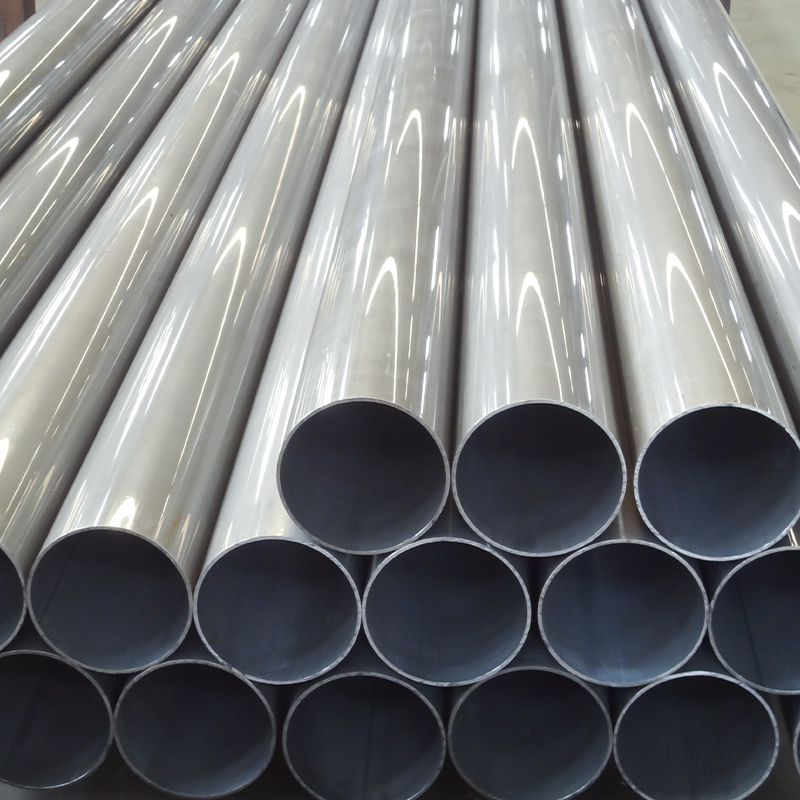
Cold Drawn Welded Steel Tube (CDW) – DIN 2393 | ASTM A513 (ST37-2, ST52-3)High-P...
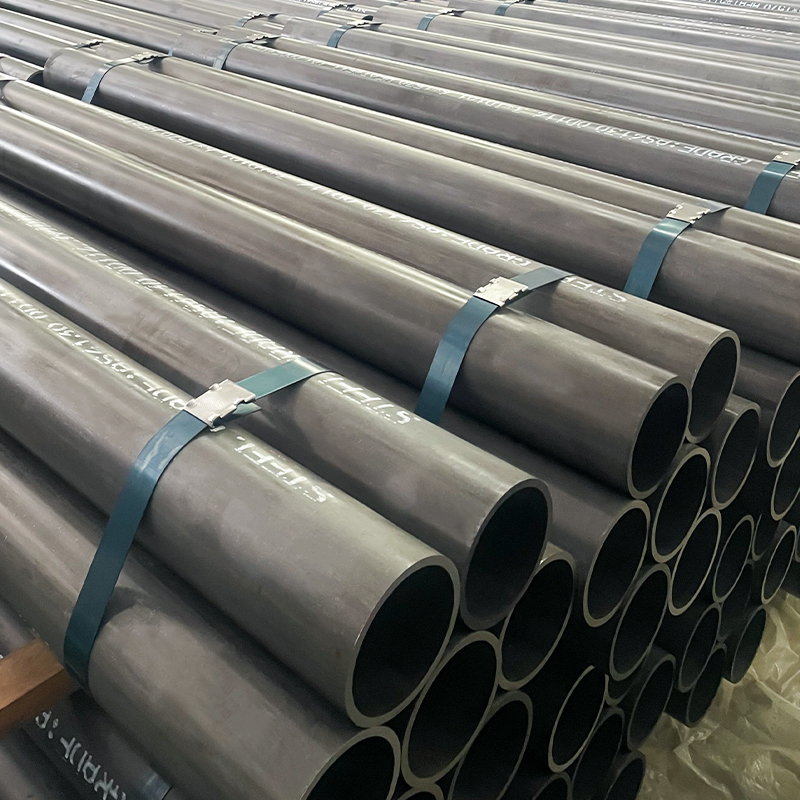
Cold Drawn Seamless Steel Tube (CDS) - DIN 2393 & ASTM A519 (Grades ST37-2, ...
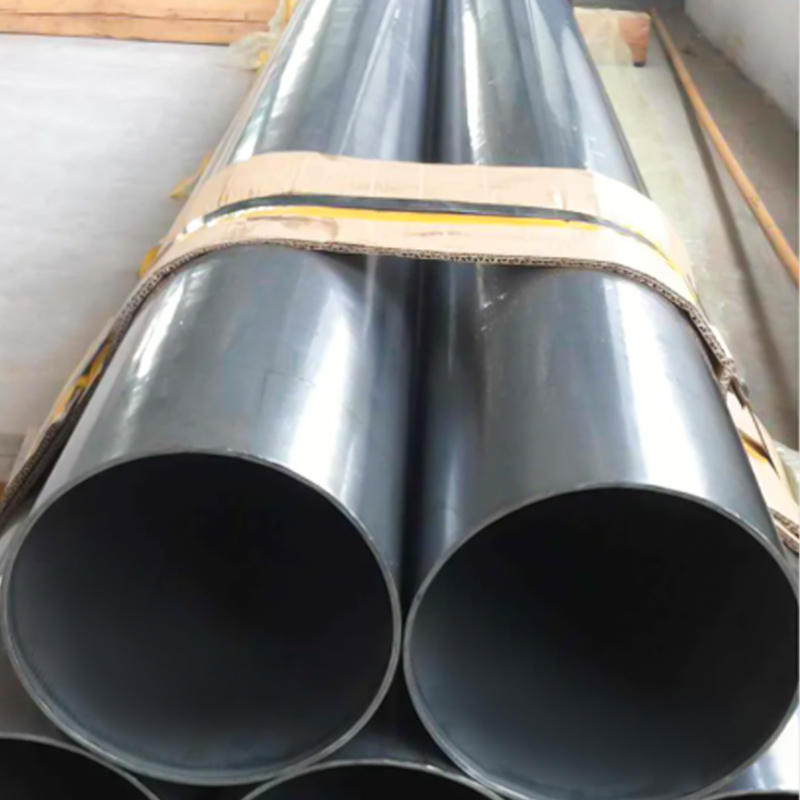
Cold-Rolled Steel Tube – ASTM A513 Type 2 Grades 1010, 1015, 1020, 1026 (1” x 0....
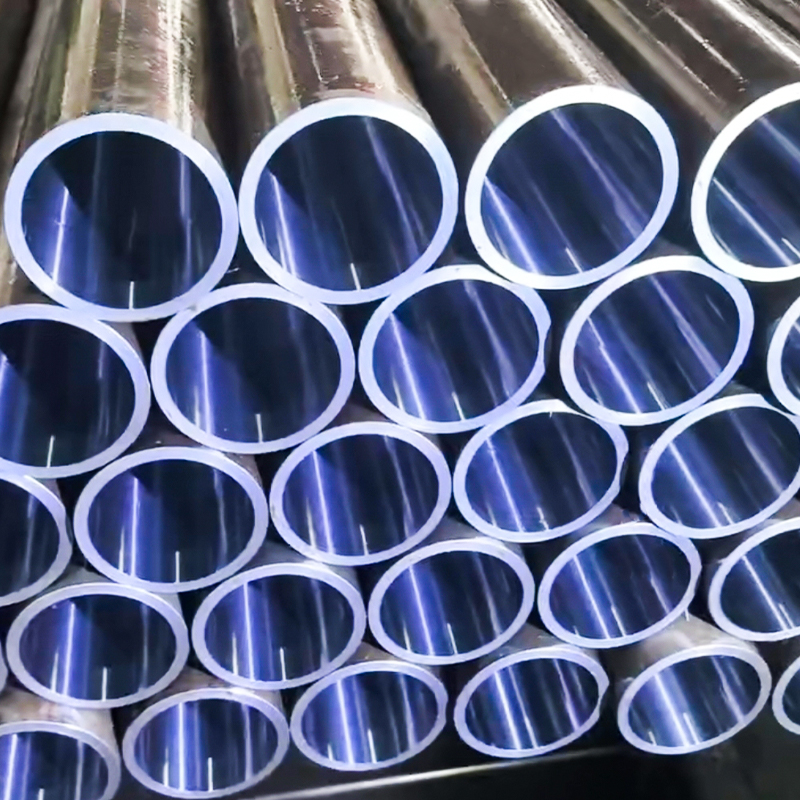
Our ASTM A513 Cold Drawn Welded (CDW) Honed & SRB Tubes are precision-
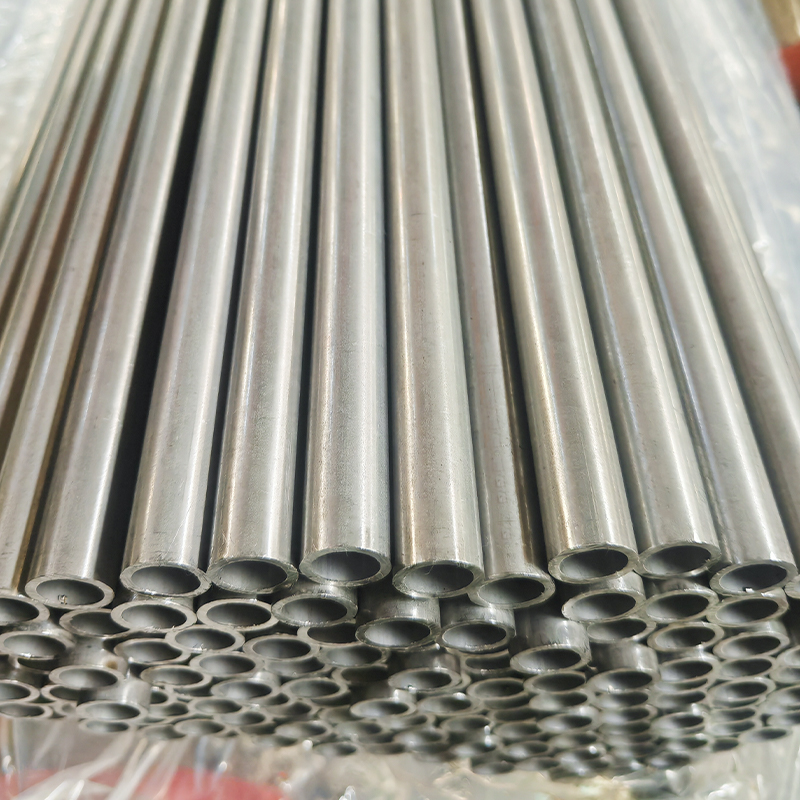
Our ASTM A519 1020 cold-drawn seamless hydraulic tubes are engineered for high-p...
Our Stainless Steel Heat Exchanger Tubes are engineered for applications requiri...


