
 English
 Español
 русский
ASTM A513 Type 2 Cold-Rolled Tube – Grade 1010, 1” x 0.065” DOM Finish for Automotive Components
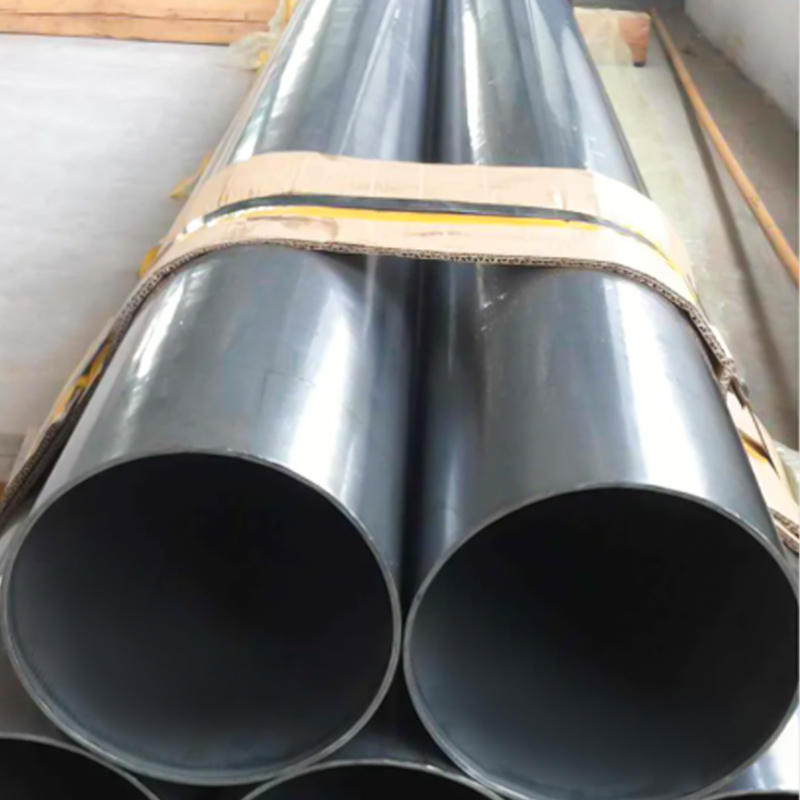
Cold-Rolled Steel Tube – ASTM A513 Type 2 Grades 1010, 1015, 1020, 1026 (1” x 0....

Content
Mechanical properties define how a DOM steel tube responds to load, deformation, and wear. For engineers and buyers specifying Drawn Over Mandrel tubing under ASTM A513 Type 5, four metrics drive 90% of selection decisions: tensile strength, yield strength, elongation, and hardness. Tensile strength is the maximum stress the tube can withstand before fracture. Yield strength marks the point of permanent deformation — the 0.2% offset method under ASTM E8 determines this value. Elongation measures ductility, reported as percent stretch over a 2-inch gauge length. Hardness, typically Rockwell B (HRB), gauges resistance to indentation and correlates with machinability and wear life. Together these numbers dictate whether a tube survives a hydraulic pressure spike, resists fatigue in a rotating shaft, or tolerates a tight press-fit assembly.
DOM tubing achieves higher mechanical properties than standard welded tube because cold drawing work-hardens the steel and refines the grain structure. The mandrel step eliminates internal weld bead, creating uniform wall thickness and improved stress distribution. A typical cold-drawn 1026 DOM tube shows tensile strength near 85,000 psi — about 15–20% higher than the same grade in as-welded condition. Understanding the interplay among these values lets you balance strength, formability, and cost without over-engineering.
ASTM A513 Type 5 covers electric-resistance-welded carbon and alloy steel tubing that has been cold drawn over a mandrel. The standard does not prescribe a fixed set of mechanical properties for all grades; instead, properties are agreed upon between producer and purchaser. However, decades of mill practice have established reliable typical values for the most specified grades. The table below shows representative minimums for 1020, 1026, and 4130 DOM tubing in the as-drawn condition. These numbers align with commercial specifications and can be used for preliminary design.
| Grade | Tensile Strength (psi) | Yield Strength, 0.2% offset (psi) | Elongation in 2" (%) | Hardness (HRB) |
|---|---|---|---|---|
| 1020 | 55,000 | 45,000 | 25 | 65–75 |
| 1026 | 85,000 | 75,000 | 15 | 80–90 |
| 4130 | 95,000 | 75,000 | 15 | 90–95 (HRB) / HRC 15–20 |
1026 DOM tube is the workhorse for hydraulic cylinders and structural components where cost and strength must balance. It delivers up to 85 ksi tensile and 75 ksi yield in the as-drawn state, which directly supports higher working pressures without increasing wall thickness. 1020 offers superior ductility — 25% elongation means it can absorb forming and welding stresses better than 1026. 4130 alloy DOM tube adds higher hardenability. Its 95 ksi tensile strength in the as-drawn condition makes it suitable for parts that undergo subsequent heat treatment for even higher strength-to-weight ratios.
Cold drawing raises strength but can leave the material in a stressed, less ductile state. Heat treatment unlocks a wider property window for the same base chemistry. Three common thermal processes — annealing, normalizing, and quench-and-temper — each shift the strength-ductility balance in a predictable way. The table below illustrates the effect on 1026 DOM tubing.
| Condition | Tensile Strength (psi) | Yield Strength (psi) | Elongation (%) | Hardness |
|---|---|---|---|---|
| As-Drawn | 85,000 | 75,000 | 15 | HRB 80–90 |
| Annealed | 65,000 | 50,000 | 28 | HRB 60–70 |
| Normalized | 75,000 | 60,000 | 22 | HRB 70–78 |
| Quenched & Tempered | 110,000 | 95,000 | 12 | HRC 25–30 |
Annealing softens the tube and restores maximum ductility — critical if the part will see heavy cold forming or welding. Normalizing relieves internal stress while retaining moderate strength, often used before machining. Quenching and tempering pushes yield strength close to 100 ksi while still leaving workable elongation. For a hydraulic cylinder rod requiring hardness above HRC 25 for wear resistance, a Q&T process on 1026 or 4130 becomes the clear pathway. The same tube in as-drawn condition would be too soft and risk galling under high-cycle operation. A buyer who knows the specific heat treat state can avoid ordering an over-hardened tube that cracks during forming or an under-strength tube that fails in service.
Both DOM and cold drawn seamless tubing are cold-finished for dimensional accuracy, but they start from different raw forms. DOM begins as flat-rolled strip, formed and welded, then cold drawn — the weld line becomes indistinguishable. CDS is made from a pierced billet, drawn without a weld. The presence of a weld in DOM does not weaken the tube; cold drawing erases the cast structure of the weld zone. In fact, DOM 1026 often exhibits 10–15% higher yield strength than CDS 1026 because the cold work from drawing acts on both the base metal and the recrystallized weld area. The table below puts the numbers side by side.
| Property | DOM 1026 (As-Drawn) | CDS 1026 (Cold Drawn) |
|---|---|---|
| Tensile Strength (psi) | 85,000 | 75,000 |
| Yield Strength (psi) | 75,000 | 60,000 |
| Elongation (%) | 15 | 20 |
| Hardness (HRB) | 80–90 | 70–80 |
| Cost per foot (relative) | Lower | Higher |
DOM holds an edge where high yield strength reduces required wall thickness, cutting weight and cost. The slightly lower elongation of DOM rarely matters in static or low-cycle fatigue applications. CDS still wins when the part demands maximum ductility for flaring or severe bending, or when a seamless pedigree is a customer requirement. For most mechanical applications — hydraulic cylinder barrels, drive shafts, conveyor rollers — DOM provides the better strength-to-cost ratio. The key is matching the elongation figure to your forming process. If your shop bends tube to a 2D centerline radius, DOM 1026 at 15% elongation succeeds; at a 1D radius, you may need annealed DOM or CDS.
Mechanical properties don’t exist in a vacuum. A tube’s ability to hold pressure or endure cyclic loading hinges on wall thickness and ovality. DOM tubing is supplied to tighter OD and wall tolerances than as-welded tube — typically ±0.005 in. on OD and ±10% on wall. Those numbers translate directly into safety margins. Using Barlow’s formula for thin-wall pressure vessels, you can calculate the allowable internal pressure: P = (2 × S × t) ÷ D, where S is the allowable stress (often 50% of yield), t is the minimum wall, and D is the maximum OD.
Consider a 2.000 in. OD × 0.120 in. wall 1026 DOM tube with 75,000 psi yield. S = 37,500 psi. At nominal dimensions, P = (2 × 37,500 × 0.120) ÷ 2.000 = 4,500 psi. Now factor tolerances: min wall allowed 0.108 in. (-10%), max OD 2.005 in. P_min = (2 × 37,500 × 0.108) ÷ 2.005 = 4,040 psi — a 10% drop in safe working pressure from a small tolerance stack. For a fatigue-sensitive part like a shock absorber tube, wall variation shifts the stress amplitude. Tighter tolerances keep the part inside the intended design envelope without requiring a jump to the next larger wall thickness.
| Wall Condition | Wall Thickness (in.) | OD (in.) | Allowable Pressure (psi) |
|---|---|---|---|
| Nominal | 0.120 | 2.000 | 4,500 |
| Min (-10% wall, max OD) | 0.108 | 2.005 | 4,040 |
When specifying DOM tube for a pressure boundary, always design to the minimum tolerance condition, not the nominal. Requesting a wall-thickness tolerance tighter than ASTM default — for instance ±7% — may add cost but eliminates hidden risk in high-cycle hydraulic systems.
Rather than fixating on a single property, successful material selection weighs the combination of tensile strength, hardness, elongation, and dimensional stability against the loads, forming steps, and surface requirements of the finished assembly. The decision matrix below connects four common DOM tube applications with the property priorities and the recommended grade and heat treatment.
| Application | Primary Mechanical Demand | Secondary Demand | Recommended Grade & Condition |
|---|---|---|---|
| Hydraulic cylinder barrel | High yield strength, tight ID tolerance | Good surface finish for seal life | 1026, as-drawn or stress-relieved; consider cold drawn steel tube for hydraulic cylinder |
| Drive shaft | High torsional yield, fatigue resistance | Straightness, balance | 1026 Q&T or 4130 normalized; see drive shaft tube options |
| Shock absorber cylinder | Excellent ID surface, dimensional accuracy | Controlled hardness for honing | 1020 or 1026, annealed or normalized; explore hydraulic shock absorber tube |
| Structural member (roll cage, frame) | High strength-to-weight, ductility | Weldability | 1020 DOM, as-drawn or annealed |
In hydraulic cylinders, the barrel must resist hoop stress without permanent deformation. The 75 ksi yield of as-drawn 1026 DOM allows thinner walls for a given bore pressure, while its surface finish — typically 30–50 Ra after skiving and roller burnishing — reduces seal friction. ID tolerances of ±0.002 in. on DOM honed tube keep the piston seal contact consistent. For a drive shaft, torsional strength dominates. A Q&T 1026 DOM tube pushes yield to 95 ksi, letting the designer reduce OD and save rotational inertia without sacrificing fatigue life. In shock absorbers, ID roughness directly controls damping consistency; an annealed 1026 tube with hardness HRB 70 hones uniformly to Ra 0.2–0.4 µm. For structural roll cages, the 25% elongation of 1020 DOM absorbs crash energy through plastic deformation before fracture, a property no strength number alone can guarantee.
DOM tube selection turns on more than a data sheet. The raw properties depend on starting grade, cold work level, and thermal history. 1026 gives you 85 ksi tensile and 75 ksi yield in as-drawn form, enough for most pressure and structural uses. 4130 opens the door to post-draw hardening for wear-prone parts. Heat treatment can shift elongation from 12% to 28%, giving you control over formability. And tolerance choices directly alter safe operating pressures, often by 10% or more. When you combine these factors with the specific demands of your application — cylinder, shaft, absorber, or frame — you stop guessing and start engineering with data. For precise grade, heat treat, and dimensional requirements backed by mill test reports, consult a specialist who can supply DOM tube with the exact mechanical properties your design needs.
Cold-Rolled Steel Tube – ASTM A513 Type 2 Grades 1010, 1015, 1020, 1026 (1” x 0....
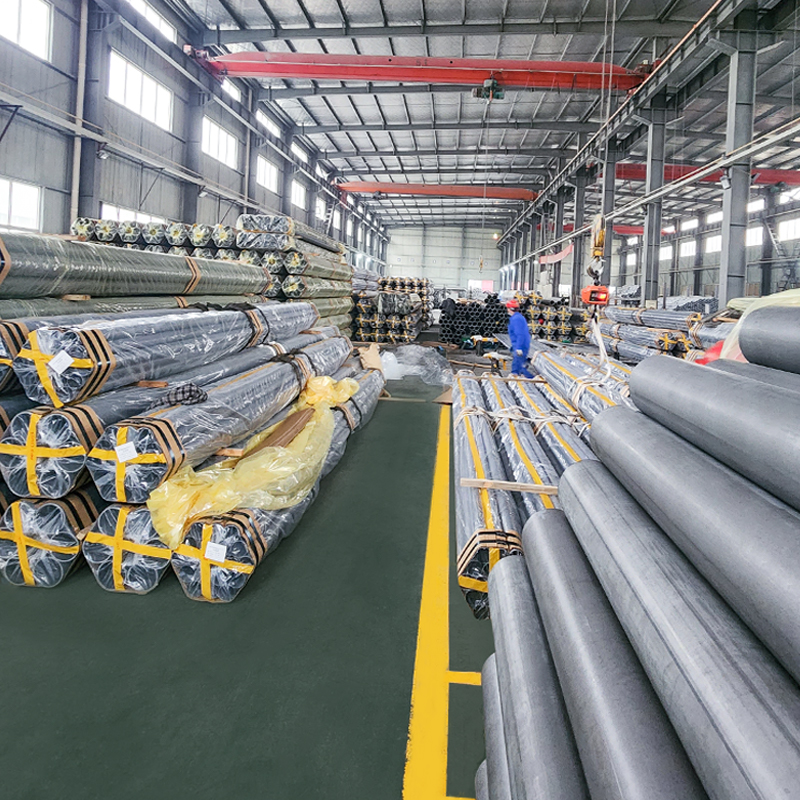
ASTM A513 Grade 1010 Precision Gravity Conveyor Roller Tubing – 2 in x 0.065 in
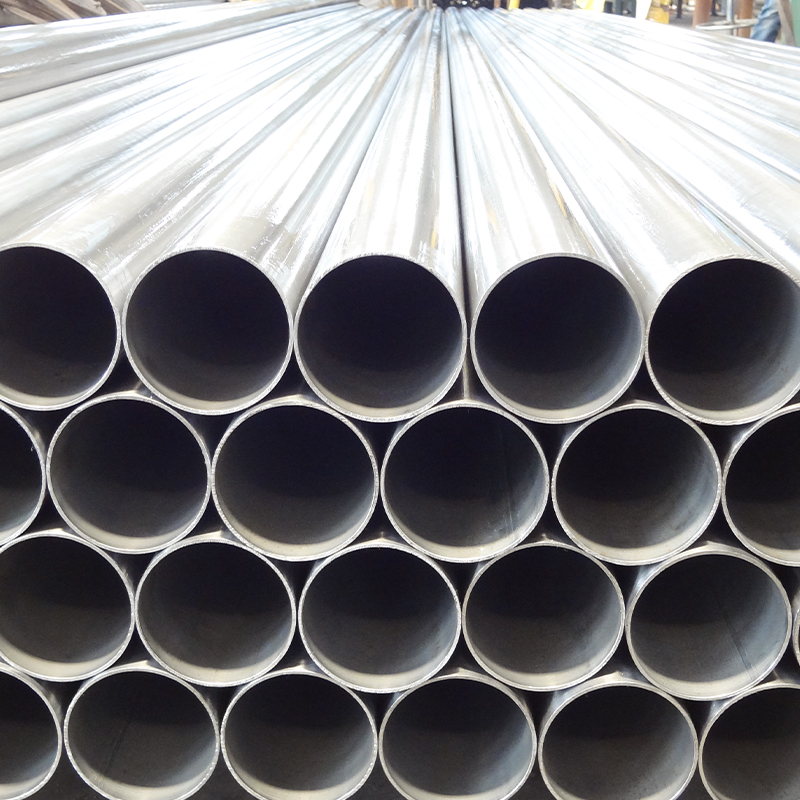
ASTM A513/A519 Precision Drive Shaft Tubing – 1026, 1020, 1015, 4130 (7 x 0.120 ...
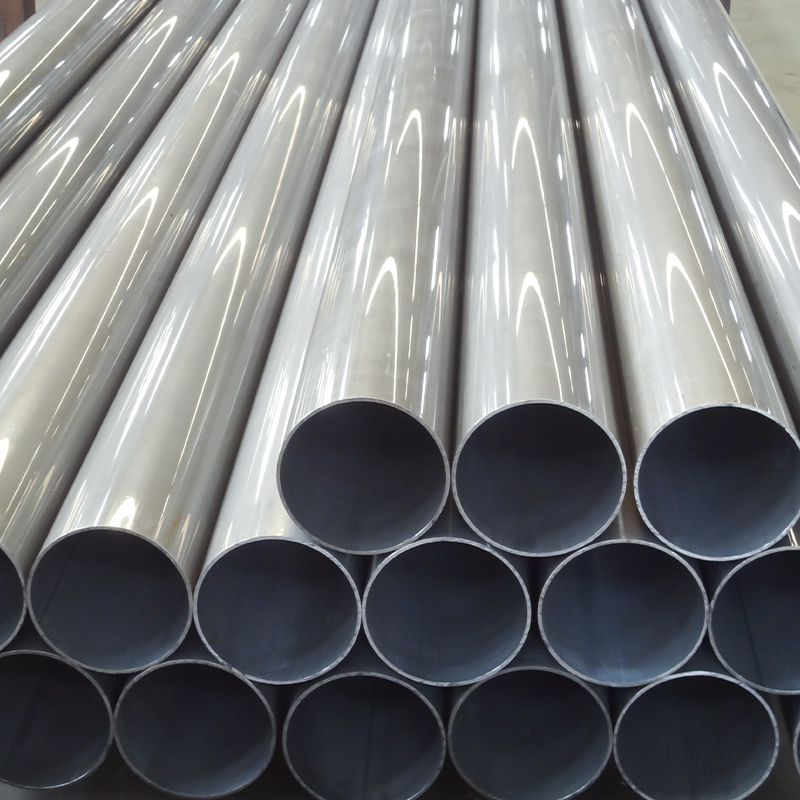
Cold Drawn Welded Steel Tube (CDW) – DIN 2393 | ASTM A513 (ST37-2, ST52-3)High-P...
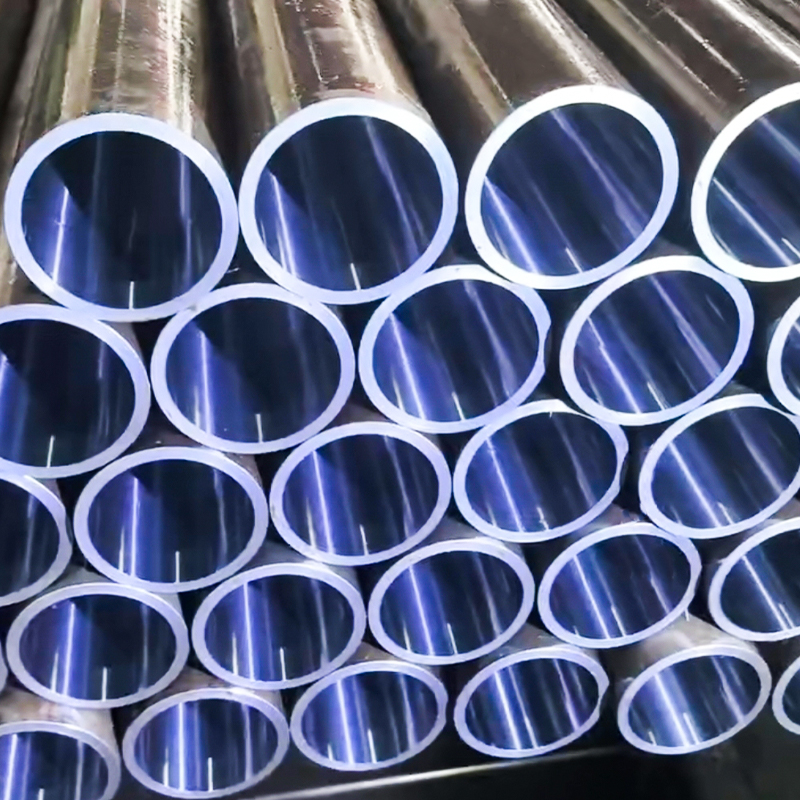
Our ASTM A513 Cold Drawn Welded (CDW) Honed & SRB Tubes are precision-
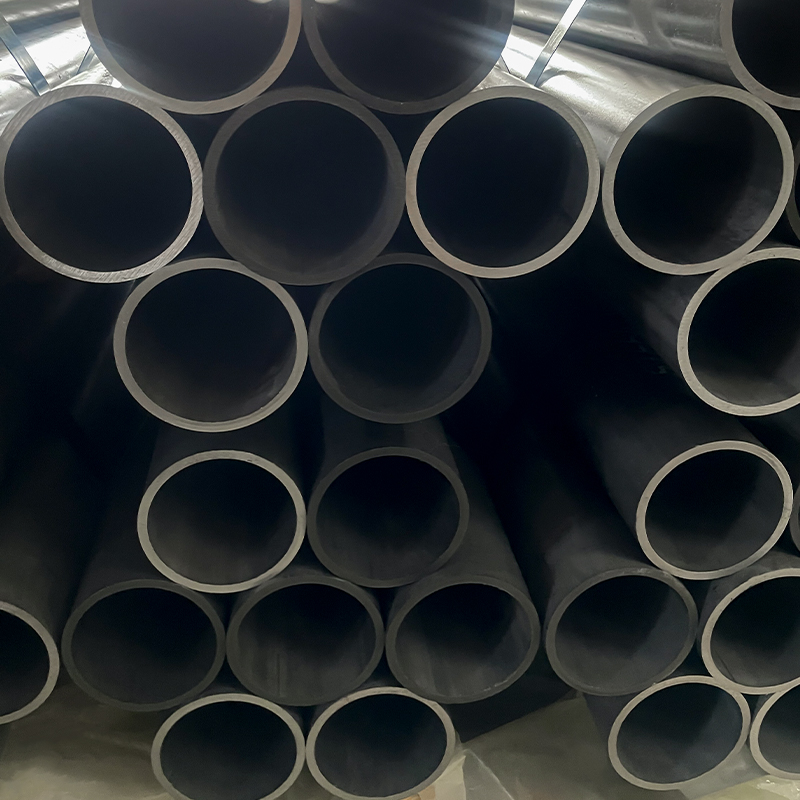
ASTM A519 Grade 4130 Geotechnical Drill Pipe – Ø89 mm x 6 mm for Soil Sampling


